
AI‑Designed Proteins: How Programmable Biology Is Rewriting the Rules of Life
AI‑driven protein design has rapidly become one of the most talked‑about frontiers in biotechnology. Built on the breakthroughs of structure‑prediction systems such as DeepMind’s AlphaFold and UW’s RoseTTAFold, the field is now moving beyond prediction to true molecular creation: algorithms propose entirely new amino‑acid sequences, optimized for specific structures and functions, which are then synthesized and tested in the lab.
This shift from analysis to design is drawing intense interest across social media platforms like X, LinkedIn, YouTube, and specialized Discord communities. Long‑form explainers, lab vlog series, and open‑source tool walkthroughs are making what used to be the domain of elite structural biology labs accessible to a much broader technical audience.
Mission Overview: From Prediction to Programmable Biology
The core “mission” of AI‑driven protein design is simple to state but technically profound: make biology programmable. Just as software developers specify functions in code, protein engineers aim to specify biochemical behaviors in amino‑acid sequences. The vision is to be able to write:
- Enzymes that perform non‑natural chemical reactions for green manufacturing.
- Binding proteins that target cancer markers or viral proteins with high precision.
- Self‑assembling nanostructures for drug delivery or biomaterials.
- Sensor proteins that report on cellular states in real time.
“We are entering a phase where proteins can be designed the way engineers design bridges—guided by principles, simulated in silico, and then built and tested.” — Adapted from David Baker, Institute for Protein Design
Unlike traditional protein engineering, which relied heavily on trial‑and‑error mutagenesis, AI models can propose starting designs that are already close to functional, compressing years of exploratory work into weeks or even days.
Technology: How AI Designs New Proteins
Modern AI protein design systems are inspired by both large language models (LLMs) and image‑generation diffusion models. Conceptually, amino‑acid sequences are treated like “biological text,” while 3D structures are treated like “images” or spatial graphs.
Key Model Classes and Architectures
- Protein Language Models (pLMs): Transformers trained on tens of millions of protein sequences (e.g., ESM models from Meta, ProtGPT‑2, ProGen). They learn the “grammar” of sequences and can generate or score new ones.
- Diffusion Models for Structures: Generative models such as RFdiffusion (from the Baker lab) iteratively add and remove noise to produce 3D backbones conditioned on a design goal, like binding a specific epitope.
- Sequence–Structure Joint Models: Architectures that co‑design sequence and structure, sometimes using equivariant graph neural networks to respect 3D rotation and translation symmetries.
- Physics‑informed Hybrids: Pipelines that combine deep learning with Rosetta energy calculations, molecular dynamics (MD), or quantum chemistry for fine‑grained stability and binding predictions.
Typical Design Workflow
- Define the target function — e.g., “bind to the SARS‑CoV‑2 spike RBD,” “catalyze a Diels–Alder reaction,” or “self‑assemble into an icosahedral cage.”
- Condition the AI model — provide structural constraints, target pockets, or sequence motifs as prompts.
- Generate candidate sequences/structures — sample thousands of designs in silico.
- Filter and score — use model‑based likelihoods, energy functions, and predicted stability metrics to down‑select top candidates.
- Build and test — synthesize DNA, express proteins in cells or cell‑free systems, and measure binding affinity, catalytic rate, or stability.
- Iterate with directed evolution — introduce mutations, select improved variants, and feed data back into the model.
The feedback loop between AI proposals and experimental results is central. Each design–build–test cycle produces labeled data that can further train or fine‑tune models, gradually pushing the frontier outward into regions of sequence space that nature never explored.
Visualizing AI‑Designed Proteins
The inherently three‑dimensional and colorful nature of protein structures has helped AI protein design go viral—rendered helices and sheets look like art from a science‑fiction film, making them ideal for social and educational media.
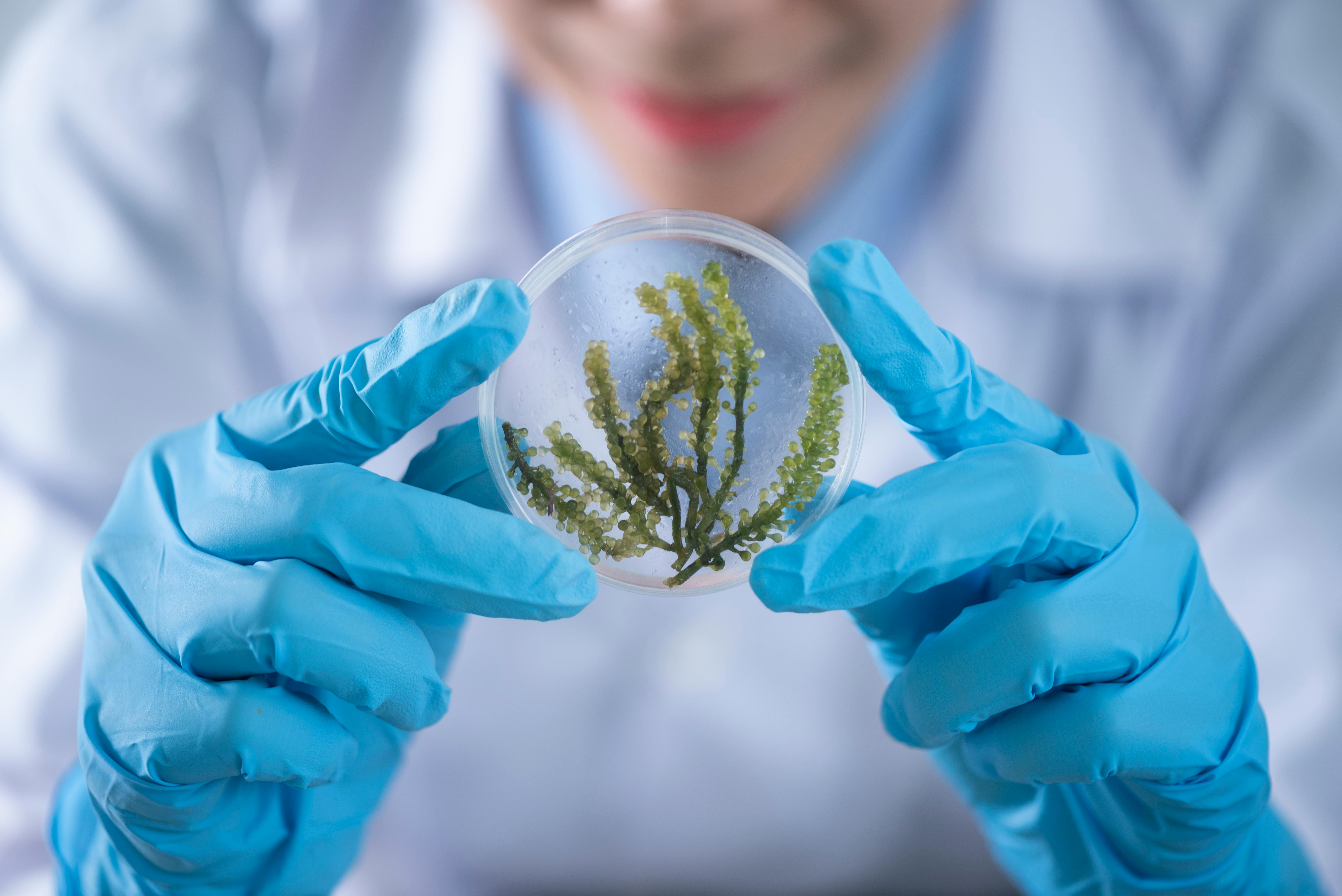

Many groups now accompany preprints with interactive 3D viewers or YouTube explainers, helping both scientists and non‑specialists understand what an “AI‑invented” protein actually looks like.
Scientific Significance: Why AI‑Designed Proteins Matter
AI‑driven protein design is not just a computational curiosity; it transforms how we approach core problems in biology, medicine, and materials science.
1. Next‑Generation Therapeutics
Custom proteins can act as:
- Targeted binders that recognize specific cancer antigens or viral proteins.
- Enzyme replacement therapies tuned for half‑life, stability, and reduced immunogenicity.
- De novo immunogens—protein scaffolds that precisely present viral epitopes for vaccines.
For example, the Institute for Protein Design and collaborators have created de novo antiviral binders against SARS‑CoV‑2 spike protein that rival or outperform some monoclonal antibodies in early studies. These designs could, in principle, be rapidly re‑targeted as new variants or entirely new pathogens emerge.
2. Enzymes for Green Chemistry
Synthetic enzymes designed to catalyze non‑natural reactions could:
- Replace harsh industrial catalysts with mild, water‑based biocatalysts.
- Enable more efficient synthesis of pharmaceuticals and fine chemicals.
- Break down stubborn pollutants or plastics that resist natural decay.
“The promise of de novo enzymes is not just copying what nature already does, but creating entirely new catalytic functions tailored to human needs.” — Paraphrased from recent protein engineering reviews
3. Tools for Genetics and Cell Biology
AI‑designed proteins are increasingly used as tools inside cells:
- Fluorescent or luminescent biosensors that report on ion concentrations, metabolites, or signaling states.
- Programmable transcription factors and epigenetic modifiers for precise gene regulation.
- Protein cages and scaffolds that organize metabolic pathways for increased flux.
This toolbox expands what geneticists and systems biologists can measure and control, revealing dynamic processes that were previously invisible.
AI Meets Evolution: Design Coupled with Directed Evolution
AI models rarely get everything right on the first try. Instead, they provide high‑quality starting points that evolution can polish. The workflow typically looks like this:
- Generate a family of AI‑designed protein sequences targeting a desired function.
- Express and test them experimentally to identify “good but not perfect” candidates.
- Subject those candidates to directed evolution: iterative rounds of mutation, selection, and amplification.
- Sequence the winners from each round and feed the data back into the model.
This synergy is powerful. AI jumps to promising regions of sequence space that natural evolution never explored, and then experimental evolution fine‑tunes fitness at an accelerated pace. Conference talks and podcasts routinely emphasize how this combination shortens R&D timelines dramatically.
Milestones: Landmark Achievements in AI Protein Design
Several high‑profile milestones have shaped the current excitement around AI‑designed proteins:
- AlphaFold and RoseTTAFold (2020–2021) — Breakthroughs in protein structure prediction, making accurate 3D models of natural proteins widely available. AlphaFold’s open database now covers hundreds of millions of sequences.
- RFdiffusion and related de novo design tools — Generative models capable of designing new backbones and interfaces, enabling de novo binders, nanocages, and symmetric assemblies.
- De novo antivirals and vaccine scaffolds — Published examples of AI‑designed proteins that neutralize viruses or present antigens for next‑generation vaccines.
- Open‑source ecosystems — GitHub repositories, Colab notebooks, and community tools (e.g., from the Baker lab, ESM, and others) that let small labs and advanced hobbyists run sophisticated design workflows.
- Industry adoption — Biotech startups and large pharmaceutical companies integrating AI protein design into drug‑discovery pipelines, often highlighted in investor reports and press releases.
Each milestone has generated waves of social media content: animated structures, code tutorials, and explainer threads that further amplify public and professional interest.
Community and Open Tools: From Elite Labs to Cloud Notebooks
One reason this topic trends so strongly online is the rapid democratization of tools. Instead of needing a full‑scale structural biology lab, users can often:
- Run small design jobs on consumer GPUs or cloud instances.
- Use web‑based platforms that abstract away much of the low‑level complexity.
- Follow step‑by‑step tutorials published on YouTube, GitHub, and blogs.
High‑engagement channels include:
- LinkedIn Learning bioinformatics content and posts from biotech leaders.
- YouTube channels by structural biologists and computational chemists explaining new methods and preprints.
- X (Twitter) threads by researchers at labs like DeepMind, EMBL‑EBI, and the Institute for Protein Design.
Open‑source code also means that methodologies are scrutinized, forked, and extended rapidly, leading to an innovation cycle reminiscent of the early deep‑learning boom.
Practical Tooling: Hardware, Software, and Learning Resources
For researchers, students, and technically inclined professionals, getting hands‑on with AI protein design involves a mix of computational and experimental tools.
Software Ecosystem
- Python, PyTorch, and JAX for model development and experimentation.
- Frameworks like Rosetta, OpenMM, and MDAnalysis for structural modeling and simulation.
- Colab notebooks and web UIs wrapping models such as AlphaFold, ESMFold, and RFdiffusion.
Recommended Reading and Courses
- Review articles in journals such as Nature Reviews: Protein Engineering.
- Online lecture series from universities on protein engineering and structural biology (many available free on YouTube).
- Technical blogs from AI‑first biotech companies covering case studies and pitfalls.
Helpful Hardware for Local Experimentation
Running modern protein language models or structure predictors is GPU‑intensive. For serious hobbyists or small labs, a workstation‑class GPU can significantly speed up experimentation. For example, NVIDIA’s RTX 4090 cards are commonly used by machine‑learning practitioners and can comfortably handle many mid‑scale protein design workloads. A high‑end prebuilt workstation such as the MSI Aegis RS Gaming & AI Workstation with RTX 4090 offers ample GPU power and RAM for this type of research.
Challenges: Hype, Uncertainty, and Safety
Despite the excitement, AI‑designed proteins face substantial challenges that deserve clear discussion.
1. Experimental Failure Rates
Many AI‑generated designs fail in the lab—misfolding, aggregating, or showing weak functional performance. Key issues include:
- Insufficient modeling of cellular context (chaperones, degradation pathways, post‑translational modifications).
- Approximate energy functions that miss subtle but crucial interactions.
- Distribution shift when venturing far from natural sequence space.
2. Over‑Hype and Miscommunication
Eye‑catching 3D visualizations can give the impression that an AI‑designed protein is “solved” once the model proposes a structure. In reality, true validation requires:
- Biophysical characterization (melting temperature, aggregation behavior).
- Functional assays under realistic conditions.
- In vivo testing, where appropriate, to assess safety and efficacy.
“An in silico design is, at best, a hypothesis. Biology still has the final vote.” — Common sentiment among experimental protein engineers
3. Dual‑Use and Biosecurity Risks
A central topic in policy and ethics discussions is dual‑use potential: the same tools that design beneficial proteins might, in principle, be misused to design harmful molecules. Concerns include:
- Lowering barriers to designing potent toxins or immune‑evasive proteins.
- Difficulty in monitoring a rapidly decentralizing, open‑source ecosystem.
- Information hazards from publishing highly detailed design recipes.
In response, many organizations advocate for:
- Sequence screening by DNA synthesis providers.
- Responsible publication norms and red‑teaming of new tools.
- International coordination on standards for AI‑bio safety.
Work from groups such as the Johns Hopkins Center for Health Security and policy analyses from journals like Science and Nature are shaping this emerging governance landscape.
The Future: Toward Fully Programmable Cells and Materials
Looking ahead, AI‑designed proteins are likely to be just one layer in a stack of programmable biological technologies. Emerging directions include:
- Multi‑scale design: Jointly designing proteins, RNA elements, and regulatory circuits to control entire cellular behaviors.
- AI‑designed biomaterials: Self‑assembling protein lattices and fibers for tissue engineering, filtration, and responsive materials.
- Closed‑loop robotic labs: Automated systems where AI designs, robots execute experiments, and algorithms learn from results with minimal human intervention.
- Personalized therapeutics: Tailoring protein drugs and vaccines to individual genomes, tumor profiles, or immune repertoires.
As these systems mature, the distinction between “natural” and “designed” biology will blur. The key question will not be whether something is artificial, but whether it is safe, effective, and ethically deployed.
Conclusion: Navigating the New Era of Programmable Biology
AI‑designed proteins sit at the intersection of deep learning, molecular biology, and ethics. The ability to generate novel molecules with specified functions has already produced promising antiviral binders, bespoke enzymes, and advanced research tools. At the same time, technical limitations, experimental uncertainty, and real dual‑use risks demand sober, responsible stewardship.
For scientists and engineers, this is a uniquely creative moment: sequence space is vast, but no longer opaque. For policymakers and the broader public, it is a time to engage with how powerful generative technologies should be developed, shared, and regulated. If we succeed, programmable biology could become as foundational to the 21st century as programmable computers were to the 20th.
Additional Resources and Practical Next Steps
To dive deeper into AI‑driven protein design:
- Follow leading labs such as the Institute for Protein Design and DeepMind.
- Explore open‑access talks from conferences like NeurIPS, ICLR, and synthetic biology meetings on YouTube.
- Experiment with smaller models or web tools to gain intuition, while respecting all relevant biosafety and ethical guidelines.
For students, a strong foundation in biochemistry, statistics, and machine learning opens many doors in this space. For professionals in adjacent fields—software, data science, or hardware engineering—collaboration with wet‑lab teams can be a powerful way to contribute without directly handling biological materials.
References / Sources
- Jumper, J. et al. (2021). “Highly accurate protein structure prediction with AlphaFold.” Nature. https://www.nature.com/articles/s41586-021-03819-2
- Baek, M. et al. (2021). “Accurate prediction of protein structures and interactions using a three-track neural network.” Science. https://www.science.org/doi/10.1126/science.abj8754
- Institute for Protein Design — Research and tools. https://www.ipd.uw.edu/
- Meta ESM Protein Language Models. https://github.com/facebookresearch/esm
- RFdiffusion: Generative modeling of protein structures. https://github.com/RosettaCommons/RFdiffusion
- Johns Hopkins Center for Health Security — Reports on AI and biosecurity. https://www.centerforhealthsecurity.org/our-work/publications
