
AI Year-in-Review 2025: Breakthroughs, Backlash, and What It Means for the Future of Work, Education, and Society
In 2025, artificial intelligence moved from “disruptive technology” to embedded infrastructure, shaping how we work, learn, create, and govern. This year-in-review distills the biggest breakthroughs—multimodal frontier models, on-device assistants, and AI agents—alongside the fiercest backlash, from regulation and copyright lawsuits to election misinformation fears, to help you understand what changed and how to prepare for 2026.
Executive Summary: How AI Redefined 2025
Across search, social media, and news platforms, “AI year-in-review” content is trending because AI permeated nearly every sector. 2025 was the year:
- Multimodal frontier models unified text, image, audio, and video in a single interface, making AI feel far more “general-purpose.”
- On-device and hybrid AI assistants arrived on mainstream phones and laptops, enabling partially offline, privacy-preserving experiences.
- AI became deeply integrated into productivity suites, coding tools, and customer workflows, compressing the time from idea to execution.
- Governments passed landmark AI regulations, while courts grappled with copyright, training data, and liability.
- Public concern surged around deepfakes, AI-generated misinformation, and employment disruption—especially ahead of major elections.
This review is organized around five pillars:
- Frontier and open-source AI models in 2025.
- On-device assistants and AI-infused productivity tools.
- Regulation, copyright, and AI safety debates.
- Cultural impact: work, education, entertainment, and politics.
- Actionable strategies to navigate 2026’s AI landscape.
1. The State of AI in 2025: From Hype Cycle to Infrastructure
AI in 2025 resembled the early internet in the late 1990s: no longer a curiosity, but not yet fully mature infrastructure. According to reporting from The Verge, The New York Times, and McKinsey, enterprise AI adoption continued to climb, but so did scrutiny around safety, quality, and governance.

While precise model usage metrics are dispersed across vendors, several trends are clear from public disclosures, analyst reports, and platform announcements:
- Monthly active users for leading consumer-facing AI apps crossed into the hundreds of millions globally.
- Enterprise AI spending grew significantly year-over-year, with cloud providers reporting AI as a primary growth driver.
- Specialized domain models (for code, legal, medical, and scientific tasks) gained traction alongside general-purpose chat interfaces.
| Dimension | 2025 Trend | Implication for 2026 |
|---|---|---|
| Model capabilities | Multimodal, longer context, tool use, code proficiency | More complex workflows and automation become viable. |
| Deployment | Shift from pure cloud to hybrid and on-device inference | Latency drops, privacy improves, hardware differentiation rises. |
| Governance | New regulations, model evaluations, and audit frameworks | Compliance, documentation, and monitoring become table stakes. |
| Public sentiment | Excitement about productivity, anxiety about jobs and misinformation | Demand for trustworthy, explainable, and controllable AI intensifies. |
“We’re moving from ‘Can AI do this?’ to ‘How do we integrate this safely, reliably, and profitably into everything we do?’”
— Summary of 2025 enterprise AI sentiment from industry analyst reports
2. Frontier Models and Open-Source: The Multimodal Breakthrough
2025’s defining technical story was multimodality. The most advanced frontier models released this year could understand and generate text, images, audio, and video within a single unified interface, and increasingly they could call tools, browse the web, and interface with external systems.
In parallel, open-source AI—backed by major chipmakers, nonprofits, and community contributors—continued to close the gap with proprietary systems, especially for specialized and edge deployments.

2.1 What Multimodal AI Actually Changed
Multimodal models unlocked workflows that previously required multiple tools and manual handoffs. Examples include:
- Analyzing a PDF report, related charts, and a recorded meeting transcript in one conversation.
- Designing, editing, and animating marketing assets directly from a brand brief and product photos.
- Debugging code by inspecting screenshots, log files, and spoken bug descriptions together.
For users, the experience shifted from “prompt engineering” around text to natural, mixed-media conversations: dragging in files, dictating feedback, and asking the system to cross-reference multiple sources at once.
2.2 Frontier vs. Open-Source: A Snapshot
While proprietary models typically led on raw benchmark performance and integrated cloud tooling, open-source models excelled in:
- Customization: Fine-tuning on proprietary data under full enterprise control.
- Cost and control: Running models on-premises or in self-managed clouds to manage costs and latency.
- Transparency: Greater visibility into model weights, architectures, and limitations.
| Aspect | Frontier (Proprietary) | Open-Source |
|---|---|---|
| Performance | Highest scores on general-purpose benchmarks and multimodal tasks. | Competitive on many tasks, especially text and code, slightly behind on cutting-edge multimodal. |
| Deployment | Primarily cloud-based APIs with managed infrastructure. | Flexible: on-prem, self-hosted cloud, or integrated into products. |
| Cost structure | Usage-based API billing; optimized but opaque pricing. | Compute and storage costs borne by deployer; more predictable at scale. |
| Governance | Provider-defined safety layers and content filters. | Customizable guardrails; greater responsibility for implementers. |
For 2026, the key question is less “Which camp will win?” and more “How will organizations blend frontier and open-source models to meet different needs?” Many are already adopting a portfolio approach—frontier models for complex reasoning and creativity, open-source models for sensitive or cost-sensitive workloads.
3. On-Device AI Assistants and Productivity: AI in Your Pocket
Another defining trend of 2025 was the shift from AI living “in the cloud” to living directly on your devices. Flagship smartphones and laptops launched with dedicated NPUs (neural processing units) marketed in terms of “trillions of operations per second” specifically for AI workloads.

3.1 Hybrid AI: Local + Cloud
Most mainstream assistants adopted a hybrid architecture:
- On-device models handled wake words, simple queries, quick summaries, and personalization data.
- Cloud models handled deeper reasoning, complex multimodal tasks, and heavy generation workloads.
This approach balanced three competing needs:
- Latency: Users expect instant responses for simple tasks.
- Privacy: Sensitive data (like messages, photos, and emails) often stays on device.
- Capability: Frontier models in the cloud tackle complex, compute-heavy operations.
3.2 Productivity Tools: AI as a Default Layer
In 2025, “AI features” stopped being separate apps and became a default layer across productivity suites:
- Documents and spreadsheets gained AI co-authors for drafting, cleaning data, and generating analysis.
- Email clients offered automatic summarization, suggested replies, and intent-based inbox organization.
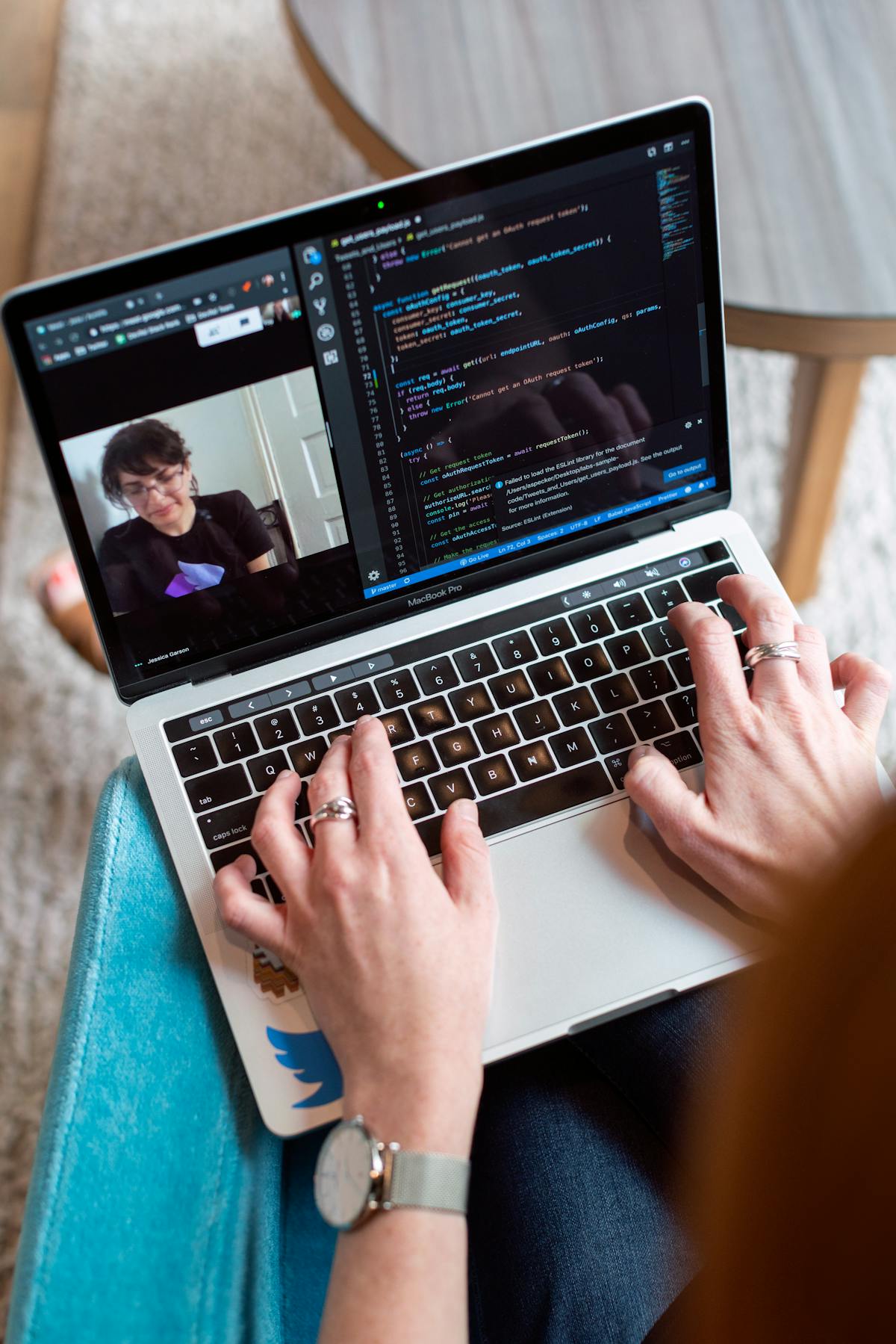
- Integrated development environments (IDEs) embedded AI pair programmers as the default coding partner.
3.3 Actionable Playbook: Using AI Assistants Effectively in 2026
To capitalize on these capabilities while avoiding pitfalls, individuals and teams can adopt a structured approach:
- Map your workflows: List repetitive, text-heavy, or research-heavy tasks (e.g., summarizing meetings, drafting proposals, cleaning data).
- Assign “AI-first” candidates: Identify 3–5 workflows to deliberately try with AI tools each week.
- Define quality bars: For each task, specify what “good enough” looks like so you can reliably review AI output.
- Keep a human-in-the-loop: Treat AI as a collaborator, not an oracle—especially for decisions with legal, financial, or safety implications.
- Document patterns: Capture prompts, settings, and configurations that work well so your team can reuse them.
Organizations that treat AI as a process redesign problem—not just a tooling upgrade—are already seeing the most sustainable productivity gains.
4. Regulation, Copyright, and Safety: 2025’s Backlash
As AI systems became more powerful and pervasive, 2025 brought an equally powerful regulatory and legal response. This backlash was not simply anti-technology; it reflected legitimate concerns about data usage, misinformation, accountability, and systemic risk.
4.1 Global Regulatory Landscape
Governments across regions moved from exploratory white papers to concrete rules. Themes included:
- Risk-based categorization: Systems used in critical domains (e.g., healthcare, hiring, credit scoring) faced stricter requirements.
- Transparency requirements: Obligations to disclose AI-generated content and provide documentation about model behavior.
- Data protection alignment: Ensuring AI deployments complied with existing privacy and data protection laws.
For detailed coverage and analysis, sources like CoinDesk Policy & Regulation, Politico’s AI Decoded, and Lawfare on AI tracked the evolution of bills, enforcement actions, and guidance throughout the year.
4.2 Copyright and Training Data
One of 2025’s most hotly debated issues was whether and how AI companies could lawfully use copyrighted text, images, audio, and video for training. Multiple lawsuits and collective actions argued that:
- Training on copyrighted works without consent or compensation infringes creators’ rights.
- Generated outputs might substitute for original works, impacting earnings.
- Models could memorize and reproduce copyrighted content in rare cases.
In response, platforms experimented with:
- Opt-out and opt-in mechanisms for creators and websites.
- Licensing deals with media companies and stock content providers.
- Technical mitigations to reduce memorization and direct copying.
4.3 Safety, Alignment, and Elections
2025 also saw growing concern around AI-generated misinformation, especially deepfakes and synthetic media that could influence elections or public opinion. Research labs, civil society organizations, and regulators focused on:
- Content provenance: Watermarks, metadata, and cryptographic signatures for AI-generated media.
- Model evaluations: Systematic testing for harmful behaviors, bias, and potential misuse.
- Red-teaming and incident reporting: Structured ways to probe for vulnerabilities and share findings.
For 2026, organizations deploying AI—especially in public-facing or high-stakes contexts—will need robust governance frameworks that cover:
- Clear risk assessments for each AI use case.
- Documented model and data lineages.
- Ongoing monitoring and human oversight mechanisms.
5. Cultural Impact: Work, Education, Entertainment, and Politics
Beyond technical and regulatory milestones, AI became a central cultural storyline in 2025. On YouTube, long-form explainers and documentaries dissected the year’s biggest AI developments. On X (Twitter) and TikTok, viral clips highlighted both delightful and disturbing applications.
5.1 Work and Jobs
AI’s impact on work was nuanced:
- Knowledge workers in fields like software development, marketing, design, and research saw large productivity boosts when combining domain expertise with AI tooling.
- Operational and back-office roles that involved repeatable, rules-based tasks faced increased automation pressure.
- New roles emerged around AI operations, governance, evaluation, and prompt/interaction design.
Surveys from consulting firms and research organizations indicated that while many workers feared job loss, a majority were already using AI at work in some capacity—even when not formally sanctioned by their employers.
5.2 Education and Assessment
Education systems worldwide spent 2025 recalibrating around AI’s presence:
- Universities revised plagiarism and academic integrity policies to distinguish between legitimate AI assistance and unacceptable outsourcing.
- Schools piloted AI tutors that adapted lessons to individual students, while teachers debated the right balance between assistance and independence.
- Assessment formats shifted toward oral exams, project-based evaluations, and in-class work less susceptible to AI-generated submissions.
5.3 Entertainment, Media, and Deepfakes
AI had a dual impact on entertainment:
- Creative acceleration: Musicians, filmmakers, and game studios used AI tools for ideation, pre-visualization, and rapid prototyping.
- Authenticity concerns: AI-generated music, voices, and likenesses raised questions about consent, royalties, and artistic identity.
Several high-profile cases of AI-cloned voices or faces going viral without consent sparked public debate and prompted calls for stronger legal protections for likeness and performance rights.
5.4 Elections and Information Integrity
As major elections approached in multiple countries, fears about AI-generated misinformation intensified. Key responses included:
- Platforms introducing stricter labeling and detection tools for synthetic content.
- Newsrooms building internal AI verification and forensics capabilities.
- Civil society campaigns educating the public about deepfakes and media literacy.
Despite these efforts, the information environment became more complex, reinforcing the need for critical thinking skills and trusted intermediaries.
6. Key Metrics and Visualizing 2025’s AI Shift
While exact figures vary by source, we can summarize directional trends that characterized AI’s growth in 2025. These numbers synthesize publicly reported data and industry analyses from outlets like Messari (for AI–crypto intersections), arXiv (for research output), and cloud provider earnings reports.
| Indicator | 2025 Directional Change | Notes |
|---|---|---|
| AI research publications | Continued growth, especially in multimodal learning and alignment. | arXiv and major conferences reported record submissions. |
| Enterprise AI pilots & deployments | Significant year-over-year increase. | Cloud vendor earnings cited AI as a main growth narrative. |
| Consumer AI app usage | Hundreds of millions of MAUs across leading platforms. | Driven by chat interfaces and integrated assistants. |
| AI regulation and guidance documents | Sharp increase in new laws, draft regulations, and standards. | From national governments, standards bodies, and regulators. |
7. Actionable Strategies for 2026: How to Navigate What Comes Next
With AI now embedded in everyday tools and workflows, the key for 2026 is not chasing every new model release but building resilient strategies around capability, governance, and skills.
7.1 For Individuals
- Develop AI literacy, not blind reliance: Learn how systems work at a high level, where they excel, and where they fail.
- Treat AI as a multiplier: Use it to draft, brainstorm, and analyze, but keep final judgment and responsibility human.
- Invest in complementary skills: Critical thinking, domain expertise, communication, and ethics become more—not less—valuable.
7.2 For Organizations
- Create an AI governance framework: Define policies for acceptable use, data protection, model selection, and monitoring.
- Experiment with clear guardrails: Run pilots with specific success metrics and robust oversight before scaling.
- Blend technical and non-technical perspectives: Involve legal, compliance, and frontline teams in AI design and deployment.
7.3 For Policymakers and Educators
- Update curricula & training: Ensure students and workers understand how to use AI responsibly and verify its outputs.
- Promote transparency and accountability: Encourage or require clear labeling, documentation, and audit trails for high-impact systems.
- Support research on safety and alignment: Fund interdisciplinary work at the intersection of technical AI, law, and social sciences.
8. Conclusion: From Recap to Readiness
Looking back at 2025, AI’s story is not just one of spectacular technical progress but also of society’s rapid, sometimes uneasy adaptation. Multimodal frontier models, on-device assistants, and AI-infused productivity tools expanded what individuals and organizations can do, while regulation, litigation, and public debate pushed for more responsible development and deployment.
As we move into 2026, the most effective strategy is to stay informed, experiment thoughtfully, and anchor decisions in clear principles around safety, transparency, and human impact. The question is no longer whether AI will shape your work and life—but how intentionally you will shape your relationship with it.
