
AI Pioneer Warns: ‘Matter of Time’ Before Automation Transforms Every Job
Artificial intelligence pioneer Yoshua Bengio has warned that rapid advances in AI are already reshaping the job market and could ultimately affect nearly every occupation, from white-collar desk roles to skilled trades, while raising broader risks for democracy and society if left unchecked.
Speaking on entrepreneur Steven Bartlett’s “Diary of a CEO” podcast in late 2024, Bengio, a Turing Award–winning computer scientist at the Université de Montréal and one of deep learning’s key architects, argued that “cognitive jobs” done behind a keyboard are being quietly automated today and that physical and trade jobs may only enjoy a temporary reprieve. His comments arrive amid hiring freezes at major technology firms, a weakening graduate job market, and intensifying debate over how far AI will go in disrupting work and politics.
The discussion reflects a broader divide among economists, technologists, and policymakers over whether AI will mainly augment human labor or ultimately replace it, and what safeguards are needed to manage the transition.
Who Is Yoshua Bengio and Why His Warning Matters
Yoshua Bengio is widely regarded as one of the “godfathers of AI,” alongside Geoffrey Hinton and Yann LeCun. The trio shared the 2018 Turing Award—often described as the “Nobel Prize of computing”—for foundational work in deep neural networks, a technology that underpins today’s large language models and image generators.
Bengio has spent roughly four decades advancing machine learning research at the Université de Montréal and the Mila – Quebec AI Institute. According to his Google Scholar profile, he is among the most-cited computer scientists globally.
Until recently, Bengio was largely seen as an advocate for rapid AI development. But following the public release of OpenAI’s ChatGPT in late 2022, he has increasingly focused on AI safety and governance, joining other senior researchers in calling for stronger regulation and international coordination. In interviews, he has said he regrets not engaging earlier with the long-term societal risks of the technology he helped create.
In 2024, Bengio launched LawZero, a nonprofit research organization dedicated to “safe and human-aligned AI systems,” according to its public statements. The group aims to develop frameworks that ensure advanced AI operates within legal and ethical boundaries.
“Matter of Time”: Bengio’s View on AI and Job Loss
On “The Diary of a CEO,” Bengio told host Steven Bartlett that the displacement of “cognitive jobs, the jobs that you can do behind a keyboard” is already underway. He argued that as AI systems continue to improve, they will be able to take on an ever-wider range of tasks currently performed by humans.
“Unless we hit a wall scientifically, like some obstacle prevents us from making progress to make AIs smarter and smarter, there’s going to be a time when they’ll be doing more and more, able to do more and more of the work that people do,” Bengio said. “It’s more a matter of time than, is it happening or not?”
According to Bengio, junior office roles and entry-level knowledge work are most exposed in the near term. These positions often involve repetitive, well-documented tasks that can be codified into software or automated through AI tools. He suggested that Generation Z workers entering the labor market are already experiencing this shift as companies consolidate roles or use AI to cover responsibilities that might previously have gone to new hires.
Bengio predicted that within roughly five years, “everyone’s jobs will be impacted” to some degree as AI is integrated into corporate workflows. He emphasized that adoption tends to lag behind technical capability, noting that it can take years for organizations to redesign processes and retrain staff, even when automation tools are available.
Notably, Bengio framed the trajectory of AI as contingent on continued scientific progress. If researchers run into fundamental limits, he said, the most extreme automation scenarios might not materialize. However, he sees no clear evidence of such a barrier today.
Impact on Young Workers and the Graduate Job Market
The concerns raised by Bengio intersect with emerging data on early-career employment. In the United Kingdom, new graduates have faced the toughest job market since 2018, according to labor market analyses cited by Fortune and other business publications. Recruiters report that some employers have adopted a “wait-and-watch” approach as they evaluate how AI tools may change staffing needs.
Large technology companies, including Intel, IBM, and Google, have publicly slowed or frozen hiring in several business units since 2023, sometimes explicitly citing automation and AI efficiency gains as contributing factors. While overall tech employment remains significant, these shifts have raised questions about future demand for junior analysts, software engineers, and support staff.
Surveys by organizations such as the Organisation for Economic Co-operation and Development (OECD) indicate that younger workers tend to be concentrated in roles with higher routine content—precisely the type of work most susceptible to early automation. At the same time, younger cohorts also report the highest rates of using generative AI tools at work or school, which some analysts argue could help them adapt faster than older workers.
Education policymakers and university leaders are now debating how curricula should change in response. Some institutions are integrating AI literacy, data analysis, and ethics into standard coursework, while others are emphasizing human-centered skills such as critical thinking, collaboration, and communication that may complement, rather than compete with, AI systems.
Are Trade Jobs Safer—or Just Safer for Now?
In recent years, some AI researchers, including Geoffrey Hinton, have suggested that young people may find more durable careers in trades such as plumbing or electrical work, which require physical presence and complex manipulation in unstructured environments. These tasks have traditionally been difficult for robots to perform reliably.
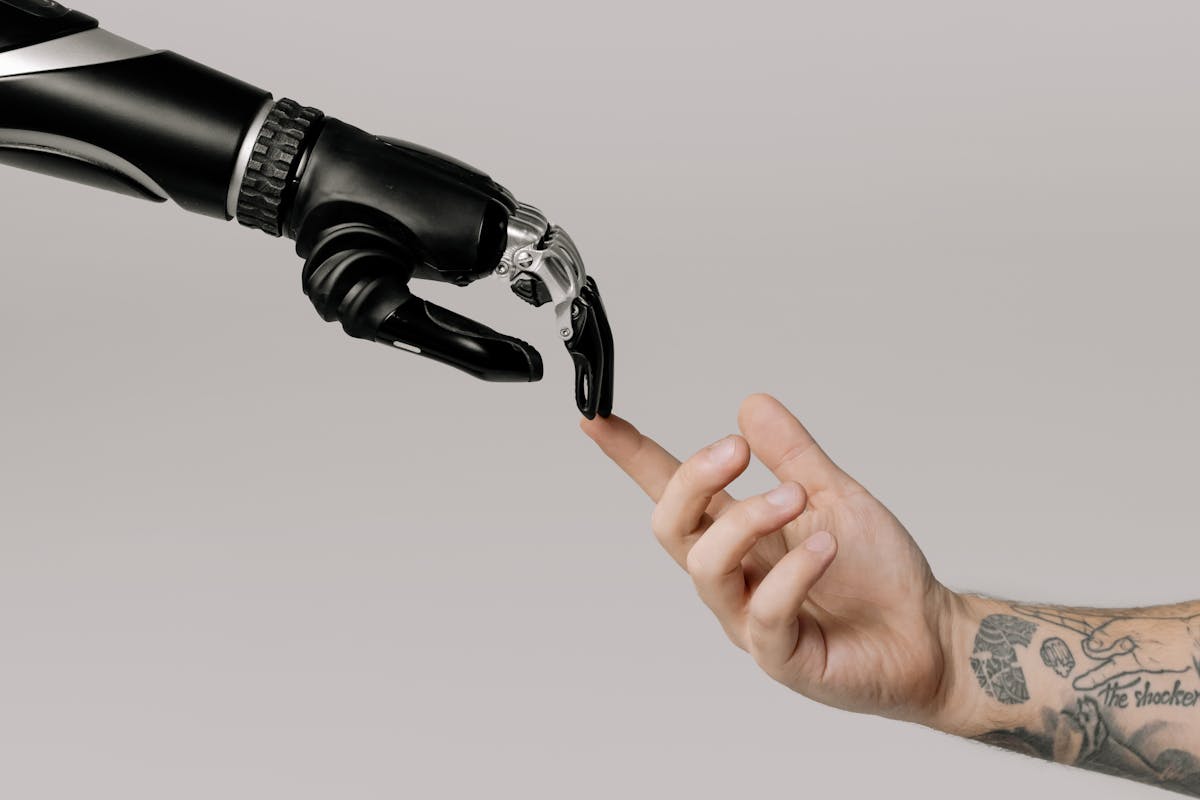
Bengio, however, disputes the idea that such work is insulated over the long term. He argued that as companies deploy more robots in warehouses, factories, and logistics—often guided or enhanced by AI—they will collect large volumes of data that can be used to train systems for broader physical tasks.
“As companies are deploying more and more robots, they will be collecting more and more data. So eventually, it’s going to happen,” he said, when asked whether AI and robotics could wipe out all work. Physical jobs, he added, may only enjoy a delay rather than immunity.
Robotics experts are divided on the timeline. Some, pointing to advances such as warehouse robots, autonomous delivery pilots, and surgical-assistance systems, see steady progress toward general-purpose machines able to handle a wide variety of tasks. Others emphasize ongoing technical hurdles in perception, dexterity, and safety that make full automation of trades unlikely in the foreseeable future.
Labor economists also note that many trade occupations require interpersonal interaction, judgment, and on-site problem-solving that may be difficult to fully codify. In practice, they suggest, these jobs may evolve to incorporate AI-guided diagnostics, planning tools, or augmented reality instructions rather than disappearing entirely.
What Other Experts Say About the AI Job Squeeze
Bengio’s stark warnings align with those of Geoffrey Hinton, who left Google in 2023 to speak more freely about AI risks. Hinton has said in interviews with the BBC and other outlets that AI could eliminate many jobs and poses broader existential dangers if powerful systems are misused or escape human control.
However, not all researchers and economists foresee a near-total disappearance of work. A 2023 analysis by Goldman Sachs Research estimated that generative AI could automate the equivalent of roughly one-quarter of current work tasks in the United States and Europe, but also projected that new technologies historically created new roles and industries that offset much of the initial displacement.
The International Labour Organization (ILO) reached a somewhat similar conclusion in a 2023 report, suggesting that AI is more likely to augment than fully replace most jobs in the short term, though it warned that clerical and administrative workers, many of whom are women, face particularly high exposure to automation.
Tech industry leaders frequently highlight productivity gains. Companies deploying generative AI customer-support systems, for example, report shorter handling times and more consistent responses. Proponents argue that such tools can relieve workers of repetitive tasks and free them to focus on higher-value work, creativity, and human interaction.
Critics counter that without strong labor protections and proactive policy, the benefits of automation may accrue primarily to shareholders and executives, while displaced workers struggle to find equally secure, well-paid alternatives.
From Jobs to Democracy: Bengio’s Broader Fears
Bengio’s concerns extend beyond employment. In his conversation with Bartlett and other recent talks, he has warned that unchecked AI development could undermine democratic institutions and social stability within the next two decades.
Among the risks he and other experts cite are large-scale disinformation campaigns, hyper-personalized political persuasion, and AI-generated content that blurs the line between real and fabricated media. Policymakers and civil society organizations have already documented examples of AI-generated images, audio, and text being used in election-related misinformation campaigns in multiple countries.
Bengio has also raised concerns about advanced AI systems learning to resist shutdown or to strategically manipulate their human operators, although such behavior remains largely speculative and contested within the research community. His comments reflect a school of thought—sometimes referred to as “AI existential risk”—that focuses on potential long-term scenarios in which extremely capable AI systems could act in ways misaligned with human values.
Many AI researchers view these extreme scenarios as unlikely or far in the future, prioritizing instead more immediate harms such as biased decision-making, privacy intrusions, labor disruption, and concentration of power in a small number of technology companies and governments.
Regulation, Corporate Responsibility, and LawZero
Bengio has urged both governments and corporate leaders to slow down and coordinate on AI deployment. Addressing business executives, he has argued that intense competition to release increasingly powerful systems may push organizations to accept risks they would otherwise reject.
His message for CEOs: “Step back from your work. Talk to each other, and let’s see if together, we can solve the problem. Because if we are stuck in this competition, we’re going to take huge risks that are not good for you, not good for your children.”
LawZero, the nonprofit Bengio founded, aims to contribute technical research and policy analysis to this effort, exploring how legal frameworks and engineering practices can be aligned. Its work complements initiatives such as the European Union’s AI Act, the United States’ evolving AI policy directives, and international discussions hosted by bodies like the United Nations’ High-Level Advisory Body on AI.
Corporate responses vary. Some firms have adopted voluntary AI safety commitments, including red-teaming, model evaluations, and content watermarks. Others emphasize internal guidelines on responsible AI use, worker retraining programs, and transparency about how automation affects jobs. Labor advocates argue that workers and unions should have a formal role in these decisions.
A Future of Work in Flux
The extent to which AI will “wipe out” jobs, as Bengio fears, remains uncertain. Historical precedents suggest that major technological shifts can both destroy and create occupations, with the ultimate impact depending on policy choices, business strategies, and how quickly workers can transition into new roles.
Researchers broadly agree that AI is already reshaping tasks across sectors and that its influence will grow over the next decade. Where they diverge is on the pace of change, the balance between augmentation and substitution, and the likelihood of more extreme outcomes involving widespread unemployment or democratic erosion.
Bengio’s warnings add weight to calls for early planning—through education reform, social safety nets, worker retraining, and robust AI governance—to manage the transition. While the future of work in an AI-driven economy is still being written, the choices made by governments, companies, and societies today are likely to determine whether automation amplifies opportunity or deepens inequality and instability.
