
AI-Generated Music Is Here: How Voice Cloning and Algorithms Are Rewriting the Recording Industry
Mission Overview: Why AI Music Matters Now
Over the past two years, generative AI systems have learned not only to imitate music, but to produce entire tracks—lyrics, arrangements, and convincing vocal performances—in seconds. What began as a fringe experiment on research forums now shapes viral hits on TikTok, policy debates in Brussels and Washington, and emergency strategy meetings in major record labels.
Tools like Suno, Udio, and Stable Audio can turn a short text prompt into chart-ready songs. Voice cloning services can learn a singer’s timbre and phrasing from a few minutes of audio, then render new vocals in almost any language or style. This convergence of accessibility and quality has turned AI music into a live test case for how society will govern generative AI in all creative fields.
“Music has always been where digital disruption hits first. What’s happening with AI tracks today is the rehearsal for how we’ll handle AI in film, games, and beyond.” — paraphrased from coverage in Wired
In this article, we unpack the core technologies, current legal and economic battles, emerging platform policies, and the deeper questions of artistic identity and consent that will define AI’s role in the recording industry.
Technology: How AI Generates and Clones Music
Modern AI music tools rely on deep learning architectures similar to those powering large language models, adapted for audio and music structure. While implementations differ, most systems follow a common pipeline: encode sound into a compressed representation, learn patterns over huge music datasets, and decode new signals that resemble the training data.
Core Model Types
- Text-to-music models: Systems like MusicLM and commercial platforms such as Udio map natural-language prompts (e.g., “90s-style R&B ballad with female vocals”) to full-length audio. Many use transformer-based architectures with diffusion or autoregressive decoding over audio tokens.
- Voice cloning / voice conversion models: Models learn a continuous representation of vocal timbre (a “voiceprint”) and then apply it to new linguistic content. Techniques include speaker embeddings, neural voice conversion, and zero-shot text-to-speech with models like Voicebox-style architectures.
- Stem generation and style transfer: Other tools generate specific stems (drums, bass, pads) or apply “style transfer” to re-render existing recordings in different genres, tempos, or sonic textures.
Training Data and Representation
Training typically uses:
- Large corpora of commercial and non-commercial music across genres and eras.
- Isolated stems or vocals, when available, to better disentangle instruments and voices.
- Metadata (genre, mood, tempo, era) and aligned text (lyrics, descriptions, tags) to link audio patterns to concepts and prompts.
Many state-of-the-art models tokenize audio into discrete units (e.g., via VQ-VAE or similar tokenizers), allowing transformers—originally created for text—to learn long-range structure in music.
Why Quality Has Suddenly Spiked
- Access to far larger datasets of recorded music and stems.
- More efficient audio tokenization and diffusion models optimized for long-form signals.
- Consumer hardware and cloud infrastructure that can render high-fidelity tracks in near real time.
- Integration into user-friendly web apps, DAW plugins, and mobile tools, lowering the skill barrier.
Mission Overview: The Recording Industry at an Inflection Point
The recording industry has weathered multiple waves of technological disruption: physical-to-digital formats, peer-to-peer file sharing, and the pivot to streaming. AI-generated music poses a qualitatively different challenge because it does not just change distribution—it changes who (or what) is considered an artist, what counts as an original work, and how rights are assigned.
Why AI-Generated Music Is Trending Now
- Accessibility: Anyone with a browser can produce songs that sound like mainstream releases.
- Virality: Clips spread rapidly on TikTok, YouTube Shorts, and Instagram Reels, often detached from clear attribution.
- Legal ambiguity: Copyright law was not designed for models trained on millions of existing recordings whose sonic fingerprints are diffused across parameter space.
- Economic pressure: Artists already struggling with low streaming payouts see a new wave of supply flooding the same platforms, potentially diluting attention and revenue.
Viral incidents—such as anonymous creators releasing tracks that convincingly imitate famous rappers or pop stars—have forced labels and platforms into reactive, case-by-case responses, often via takedown notices and evolving policy updates.
Scientific Significance and Legal Frameworks: Copyright, Voice, and Data
From a legal-technological perspective, AI music sits at the intersection of copyright, data protection, and emerging “voice and likeness” rights. Courts and regulators in the U.S., EU, and Asia are grappling with similar core questions.
Key Legal Questions
- Training data legality: Is it lawful to train a commercial AI model on copyrighted recordings without explicit licenses? Supporters invoke “fair use” or text-and-data-mining exemptions, while rights-holders argue that large-scale ingestion of entire catalogs is an unlicensed exploitation of their works.
- Output infringement: When does an AI-generated track infringe copyright?
- If it reproduces a recognizable melody or sample.
- If it imitates a distinctive performance style closely enough to be considered an unauthorized sound-alike.
- Voice and persona rights: U.S. state-level “right of publicity” and new AI-specific bills (e.g., Tennessee’s ELVIS Act) seek to protect an artist’s voice and likeness from unauthorized cloning.
- Authorship and ownership: If a track is generated with minimal human input, is it copyrightable at all? Current U.S. policy leans toward “no” for purely machine-generated works without meaningful human creative control.
“Copyright law has never required that authors be biological—but it has always required that works reflect human creative choices.” — paraphrased from USPTO guidance on AI and copyright
Licensing Experiments
Facing legal uncertainty, some companies are piloting consent-based models:
- Licensed voice models: Artists explicitly authorize use of their voice for AI generation, with contractual revenue sharing. For example, platforms like Voicemod and several label-backed initiatives are experimenting with “official” AI voices for fan remixes and brand campaigns.
- Collective licensing for training: Industry groups are exploring models akin to performance-rights organizations where rights-holders collectively license works for AI training in exchange for fees or a share of downstream revenue.
- Opt-out registries and watermarking: Technical standards working groups are exploring content credentials and watermarks so artists can declare training preferences and platforms can signal AI involvement to listeners.
Technology Meets Policy: How Platforms Are Responding
Streaming and social platforms are de facto regulators of AI music because they control distribution, discovery algorithms, and monetization. Their policies will heavily influence which AI practices become normalized.
Platform Policy Trends
- Disclosure and labeling: YouTube has announced that certain AI-generated or AI-assisted content must be labeled, particularly when it simulates a real person. TikTok and Meta are testing automatic labeling and user-declared tags.
- Content moderation and takedowns: Major labels are issuing DMCA-style takedown notices for unlicensed AI clones of their artists. Platforms are improving fingerprinting and acoustic matching tools to detect near-duplicate tracks.
- Royalty allocation: Streaming services are exploring:
- Different payout tiers for human vs. AI-only content.
- Limits on “functional” or low-engagement AI tracks flooding the catalog.
- Requirements for human involvement to qualify for the same royalty pools as traditional releases.
- AI music catalogs and playlists: Some services are experimenting with AI-only playlists for background listening (study beats, ambient, workouts), segregating them from editorial and algorithmic recommendations that push human artists.
All of this is technically challenging because reliable AI-content detection remains imperfect, especially when models generate fully original audio rather than copying existing recordings.
Artist Economics and Identity in the Age of Voice Cloning
For working musicians, the key questions are practical: Will AI help me create and earn more, or will it compress my income further and dilute my artistic identity?
How Artists Are Using AI Today
- Ideation and demos: Quickly generating chord progressions, melodies, and arrangement sketches.
- Sound design: Creating unusual soundscapes and textures that would be expensive or time-consuming to record traditionally.
- Language expansion: Using voice conversion to perform songs in multiple languages while preserving vocal character.
- Fan engagement: Officially sanctioned AI duets, personalized songs, and interactive experiences.
“I don’t see AI as a replacement for artists, but as a new kind of instrument. The real question is: who controls the instrument, and who benefits from its use?” — inspired by ideas from artist-researcher Holly Herndon
Risks and Concerns
- Market saturation: If millions of AI-generated tracks compete for recommendation slots, discovery becomes even harder for emerging artists.
- Unlicensed clones: Artists risk reputational harm if AI tracks imitate their voice to deliver lyrics or messages they would never approve.
- Power asymmetries: Major catalogs and tech firms may capture most of the value from AI systems trained on broad swaths of musical culture, while individual creators receive little or no compensation.
- Posthumous releases: Estates and labels may be tempted to release “new” songs from deceased artists via AI, raising hard questions about consent and legacy.
Milestones: Key Moments in AI Music’s Rise
Several events over the last few years have crystallized public attention on AI-generated music and voice cloning.
Notable Technical Milestones
- Early research efforts such as OpenAI’s Jukebox showed that unsupervised models could learn stylistically coherent music from raw audio.
- Google’s MusicLM and similar systems demonstrated high-fidelity, long-form music generation from text descriptions.
- Public platforms like Suno and Udio made near-professional AI music accessible to non-technical users via simple web interfaces.
Industry and Policy Milestones
- Viral AI tracks imitating major artists triggered aggressive takedowns and public statements from record labels.
- Tech and music companies convened task forces on AI ethics, watermarking, and creator compensation structures.
- Governments introduced or updated legislation to address AI’s use of voice, images, and copyrighted works.
- Collective management organizations began studying how to adapt licensing frameworks for AI-generated repertoires.
Challenges: Detection, Attribution, and Governance
Even if the industry aligns on broad principles—consent, compensation, transparency—the implementation details are technically and politically complex.
Technical Challenges
- Detection limits: Distinguishing AI-generated audio from human-performed recordings with high confidence is difficult, particularly when models avoid direct copying.
- Robust watermarking: Watermarks must survive compression, editing, and remixing, and must be hard to forge or strip, all without degrading audio quality.
- Attribution at scale: If a model is trained on millions of tracks, attributing influence from specific artists or recordings for compensation purposes is a nontrivial research challenge.
Ethical and Governance Challenges
- Informed consent: How can artists meaningfully opt in or out of training datasets when models and datasets are often proprietary?
- Global fragmentation: Different jurisdictions (e.g., EU vs. U.S. vs. Asia-Pacific) are adopting divergent approaches to AI and copyright, creating compliance complexity.
- Cultural equity: There is a risk that music from underrepresented communities is mined for data without adequate benefit sharing or recognition.
- Labor impacts: Session musicians, jingle writers, and sound designers may see parts of their work displaced by low-cost AI alternatives unless new roles and protections emerge.
Technology in Practice: Tools for Creators and Researchers
For artists and technologists who want to work responsibly with AI music, a growing ecosystem of tools and resources is available.
Recommended Reading and Learning
- Magenta (Google’s open research project on music and art generation) for technical deep dives and code.
- The book Creative AI: Music, Art, and the Machine for an accessible overview of generative AI in the arts and its cultural implications.
- The YouTube channel Twisted Electrons and similar creators for practical workflows combining hardware, DAWs, and AI tools.
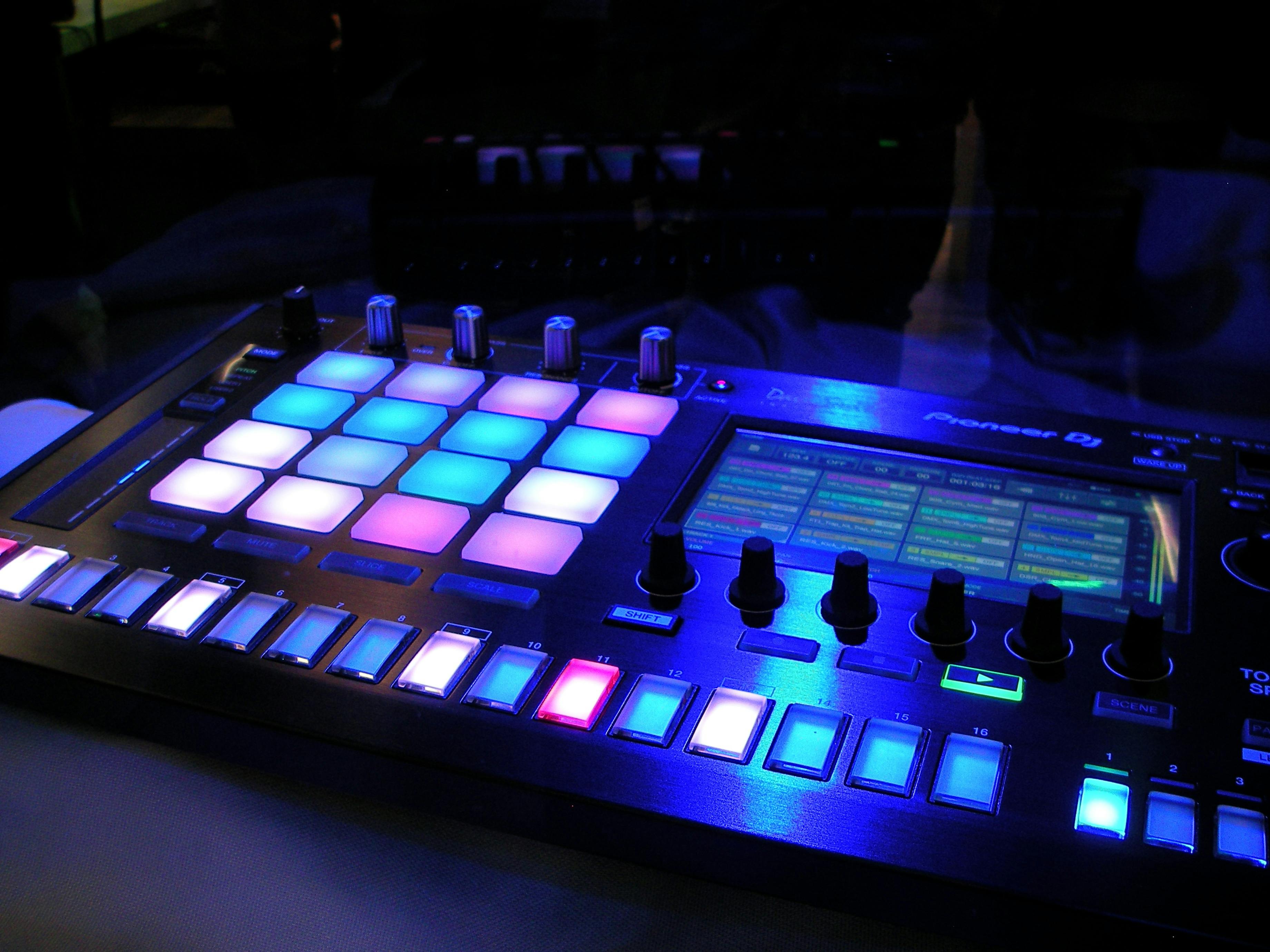
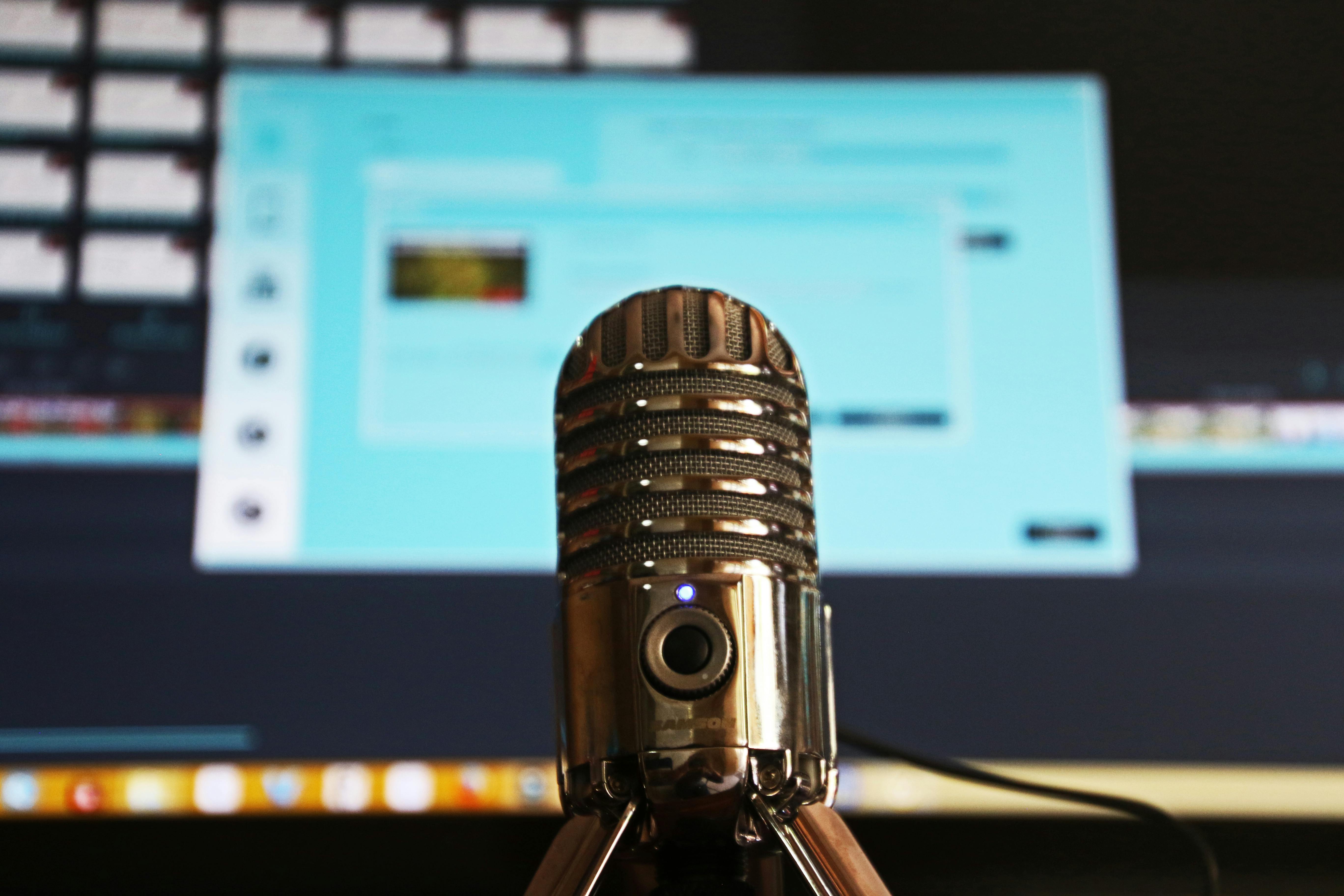
Helpful Hardware for an AI-Enabled Studio
While AI tools run largely in the cloud, a responsive local setup still matters. Many producers rely on:
- A solid audio interface such as the Focusrite Scarlett 2i2 (3rd Gen) for low-latency recording of vocals and instruments.
- Studio headphones like the Audio-Technica ATH‑M50X for reliable monitoring when evaluating AI-generated stems and mixes.
- A MIDI controller such as the Novation Launchkey 25 MK3 to blend generative ideas with hands-on performance.
Visualizing AI Music: Illustrative Media


Conclusion: Toward a Hybrid Future of Human and Machine Creativity
AI-generated music will not simply replace human artists; it will reorganize the creative and economic landscape around them. The most likely future is hybrid: humans set intent, direction, and emotional narrative, while machines accelerate iteration, expand sonic possibilities, and personalize experiences at scale.
The stakes are high. If AI music evolves without robust consent mechanisms, fair compensation models, and clear labeling, it risks eroding trust between artists, audiences, and platforms. Conversely, if the industry can align on principled standards—transparent training practices, opt-in licensing, protective regulation for voice and likeness, and value-sharing frameworks—AI could become a powerful new instrument rather than a zero-sum competitor.
For listeners, the most important role may be cultural rather than technical: demanding clarity about what we hear, supporting artists who disclose how they use AI, and valuing human stories and performance even when algorithms can approximate their sound. The future of the recording industry will be written not just in code and contracts, but in the choices that creators, companies, and fans make together.
Additional Resources and Practical Guidelines
For Artists and Producers
- Document which AI tools you use in a project and how, to avoid future disputes about authorship and rights.
- Consider including clauses about AI training and voice cloning in contracts with labels, publishers, and collaborators.
- Engage with industry groups and unions that are shaping AI guidelines, so your interests are represented.
For Labels and Rights-Holders
- Audit catalogs for AI training permissions and develop clear licensing offers for reputable AI companies.
- Invest in technologies for watermarking, content credentials, and attribution to support transparent reporting.
- Provide artists with opt-in official AI voice and style models, coupled with fair and simple revenue sharing.
For Policymakers and Researchers
- Support interdisciplinary research that combines copyright law, audio signal processing, and economics.
- Encourage open standards for content labeling and provenance to avoid fragmented, incompatible solutions.
- Ensure that regulatory frameworks protect individual creators while still allowing responsible innovation.
References / Sources
Further reading and sources referenced or related to topics in this article:
- Wired – Artificial Intelligence and Music Coverage
- The Verge – AI Music Articles
- TechCrunch – Generative AI Coverage
- OpenAI – Jukebox: A Generative Model for Music
- Google Research – MusicLM
- USPTO – Artificial Intelligence and Intellectual Property Policy
- Magenta – Music and Art Generation with Machine Learning
- YouTube – AI-Generated Music Examples
- U.S. Copyright Office – Artificial Intelligence Initiative
