
AI-Designed Proteins: How Generative Models Are Turning Biology Into Code
From AlphaFold to De Novo Biology
After the success of DeepMind’s AlphaFold in solving protein-structure prediction for natural sequences, the frontier of computational biology has shifted decisively toward AI-designed, de novo proteins. Instead of only asking, “What shape does this natural sequence fold into?”, scientists now ask, “What sequence will fold into this shape and perform this function?”
This shift transforms proteins into a kind of programmable substrate—nanoscopic machines whose behavior can be specified by sequence. Generative AI models, including diffusion models, large protein language models, and structure-aware transformers, are trained on millions of known sequences and structures to learn the rules of folding and function. They can then propose novel amino-acid sequences that:
- Fold into target 3D geometries with high confidence.
- Bind to chosen molecules or epitopes with designed affinity.
- Catalyze specific chemical reactions as custom enzymes.
- Self-assemble into larger architectures such as cages, fibers, or lattices.
The result is a new discipline often called programmable biology or generative protein design, which sits at the intersection of structural biology, machine learning, synthetic biology, and bioengineering.
“We are moving from reading and editing biology to writing it from scratch.” — David Baker, Institute for Protein Design
Why AI-Designed Proteins Are Trending in 2025
In 2025, AI-designed proteins dominate conversations on Twitter/X among computational biologists, in YouTube explainers, and in specialist newsletters tracked by tools like BuzzSumo. Several converging trends explain this surge in interest:
- High-profile publications and startups
Peer-reviewed papers and high-impact preprints have shown that AI-designed enzymes, binders, and scaffolds can match or outperform natural counterparts. At the same time, startups positioned as “protein design as a service” or “programmable biology platforms” have raised large funding rounds, drawing attention from tech and business media. - From in silico demos to in vivo success
Early work relied heavily on simulations or in vitro assays. More recent studies show AI-designed proteins functioning inside living cells and animal models—for example, de novo therapeutic binders with in vivo efficacy, or metabolic enzymes that rewire cellular pathways. - Open-source tools and democratization
Cloud-hosted notebooks, GitHub repositories, and community frameworks for generative protein design have lowered barriers for academic labs and highly skilled hobbyists. Tutorials on YouTube and social media have accelerated adoption, similar to the way Stable Diffusion lowered the barrier for image generation. - Ethical and safety debates
As with any powerful dual-use technology, programmable proteins have triggered discussions on biosecurity, governance, and responsible innovation. These debates extend far beyond the lab, engaging policymakers, ethicists, and the broader public.
The narrative has shifted from “AI can predict structures” to “AI can invent functional biological components on demand,” with major implications for drug discovery, green chemistry, and new biomaterials.
Mission Overview: What AI-Designed Proteins Aim to Achieve
The overarching mission of AI-driven de novo protein design is to turn protein engineering into a predictable, programmable discipline. Rather than relying on trial-and-error mutagenesis, researchers aim to specify desired properties and let the model propose candidate sequences.
Programmable Enzymes
Enzymes are nature’s catalysts—proteins that accelerate chemical reactions with exquisite specificity and efficiency. AI-designed enzymes promise:
- Biocatalysts for pharmaceutical synthesis that reduce waste and energy usage.
- Enzymes that function in extreme environments (high temperature, solvent, pH) where natural enzymes fail.
- Tailor-made catalysts for environmental applications, such as breaking down plastics or capturing CO2.
Bioprocess engineers are already exploring AI-designed enzymes to streamline manufacturing pipelines and replace harsh chemical processes with more sustainable biocatalysis.
Therapeutic and Diagnostic Binders
AI-designed binders are compact proteins that latch onto disease-related molecules—viral spikes, cancer markers, or immune receptors. They can function as:
- Therapeutics, analogous to monoclonal antibodies but smaller and easier to manufacture.
- Diagnostics, enabling sensitive tests that detect biomarkers at very low concentrations.
- Targeting domains, guiding drugs or nanoparticles to specific tissues or cell types.
These binders can be engineered to avoid regions that might trigger unwanted immune responses, or to bind multiple targets simultaneously for enhanced efficacy.
Vaccine Scaffolds and Immunogen Design
De novo scaffolds can present viral epitopes in optimally spaced, multivalent geometries, boosting immune recognition. AI-designed nanoparticle vaccines have been investigated for influenza, SARS-CoV-2, RSV, and other pathogens, offering:
- Improved stability and shelf life compared to some traditional vaccine platforms.
- Fine-grained control over antigen display and spacing.
- Rapid redesign when new variants emerge.
Self-Assembling Materials
Beyond medicine, AI-designed proteins can self-assemble into fibers, sheets, cages, and crystalline lattices, functioning as:
- Biomaterials with tunable mechanical or optical properties.
- Scaffolds for tissue engineering and regenerative medicine.
- Templates for organizing inorganic components, bridging biology and nanotechnology.
Technology: How Generative Models Design Proteins
Modern AI-designed proteins build on ideas from deep learning, natural language processing, and computer vision. At a high level, there are three interconnected pillars: sequence models, structure-aware models, and feedback loops with wet-lab data.
Protein Language Models
Large protein language models (PLMs) treat amino-acid sequences like text. By training transformers on hundreds of millions of sequences in databases like UniProt and metagenomic datasets, they learn statistical patterns associated with:
- Secondary and tertiary structure (helices, sheets, folds).
- Functional sites such as active sites, binding pockets, and motifs.
- Evolutionary constraints that indicate which mutations are tolerated.
These models can generate new sequences, fill in masked residues, or suggest mutations likely to preserve or improve function, much like how large language models complete sentences.
Diffusion Models and Structure-Aware Transformers
Diffusion models, popularized in image generation, are adapted to protein design by operating directly on 3D coordinates or on graph representations of protein backbones. They iteratively denoise random structures into valid backbones, conditioned on:
- A desired topology or fold class.
- A target-binding interface or epitope geometry.
- Symmetry constraints for self-assembling architectures.
Structure-aware transformers jointly model sequence and structure, learning how small sequence changes propagate through 3D space. They can be conditioned on partial structures, binding partners, or functional annotations, enabling conditional generation of proteins tailored to specific tasks.
Joint Sequence–Structure Generation
Cutting-edge systems do not separate “Design structure first, then fill in sequence.” Instead, they generate sequence and structure together, ensuring:
- Internal consistency between residue interactions and overall fold.
- Compatibility with bound partners, such as antigens or ligands.
- Better robustness to mutations and sequence variation.
Many of these models are validated by feeding their designs back into high-accuracy predictors (like AlphaFold2/3) to estimate confidence scores prior to synthesis.
Active Learning and Wet-Lab Feedback
In practical workflows, AI models are embedded in a design–build–test–learn (DBTL) loop:
- Design: models propose thousands of candidate sequences.
- Build: top candidates are synthesized as DNA constructs and expressed in cells or cell-free systems.
- Test: high-throughput assays measure activity, binding, stability, or toxicity.
- Learn: experimental results are fed back to update the model, focusing on promising regions of sequence space.
This integration enables in silico directed evolution, where the model guides the exploration of sequence space more efficiently than random mutagenesis or brute-force screening.
“The real power emerges when models are coupled to rapid experimentation, turning protein engineering into an iterative, data-driven process.” — Computational protein design researcher, Cell Reports Methods
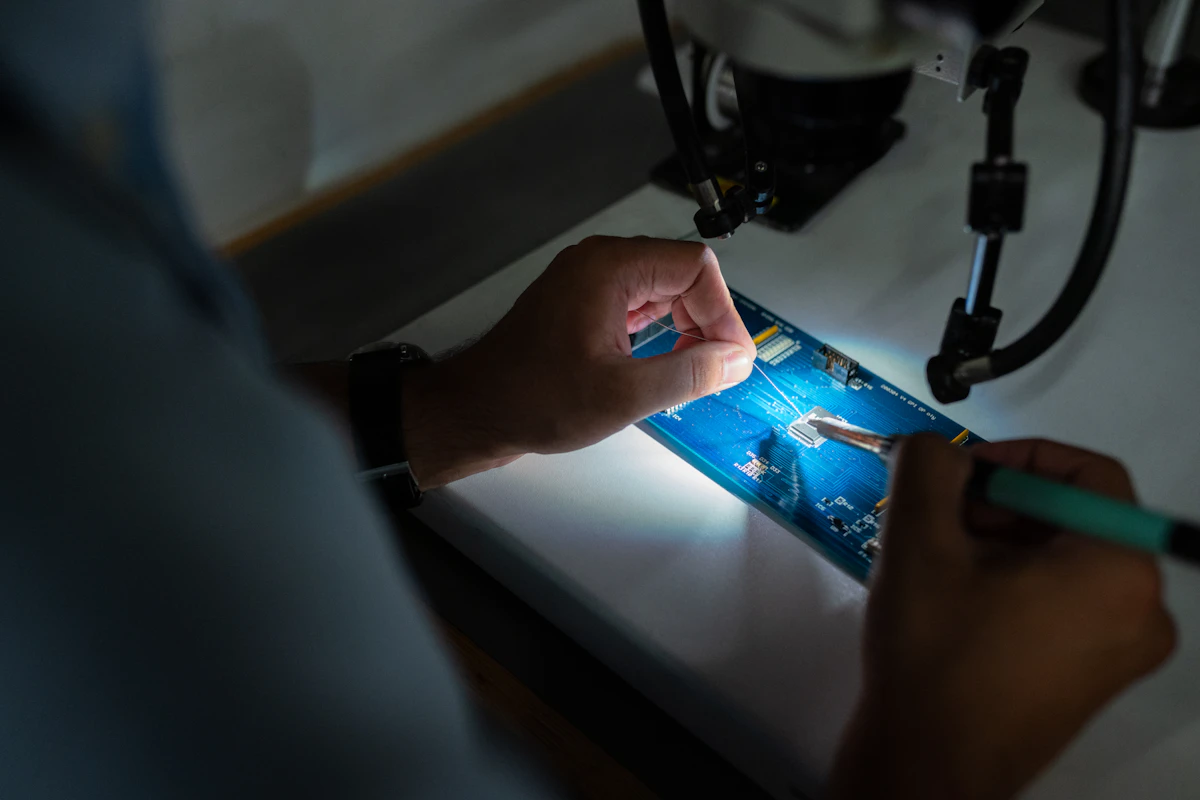
Visualizing AI-Designed Proteins and Workflows

Scientific Significance: Proteins as Programmable Nanomachines
Conceptually, AI-designed proteins push biology closer to an engineering discipline. Instead of merely cataloging what evolution has produced, scientists are beginning to write new biological functions into existence.
Exploring Beyond Natural Evolution
Natural evolution explores sequence space under constraints of historical contingency, ecology, and survival. AI models can explore radically different regions of sequence space, discovering:
- Folds never observed in nature but physically realizable.
- Minimal scaffolds that perform specific functions with fewer residues.
- Novel combinations of motifs and interaction surfaces.
These discoveries inform fundamental questions in biophysics: How dense is the space of foldable proteins? How many ways can a given function be implemented?
Accelerating Drug Discovery
In pharmaceuticals, AI-designed proteins have several strategic advantages:
- Rapid iteration: Once a target is known, models can generate many binders or enzymes for screening, compressing timelines from years to months.
- Tunable properties: Stability, solubility, half-life, and potential immunogenicity can be optimized in silico before synthesis.
- Alternative formats: De novo binding proteins can be smaller and more stable than conventional antibodies, broadening delivery options.
Some biotech companies are already advancing AI-designed binders and enzymes into preclinical pipelines, supported by preprints and early-stage conference data as of late 2025.
Industrial and Environmental Applications
Beyond human health, AI-designed enzymes and structural proteins contribute to:
- Biomanufacturing of chemicals, materials, and fuels using engineered microbes.
- Bioremediation strategies that degrade pollutants or capture greenhouse gases.
- Biobased materials with improved sustainability profiles compared to petrochemical products.
These applications align with broader trends in the bioeconomy and climate-focused innovation.
Recent Milestones and Showcase Projects
Since 2021, several landmark achievements have defined the field of AI-designed proteins. While details evolve rapidly, a few categories of milestones stand out.
Functional De Novo Enzymes
Research teams have demonstrated:
- Enzymes designed by diffusion-based models that catalyze reactions not known in nature.
- Improved catalytic efficiency and thermal stability compared with earlier hand-designed enzymes.
- Successful expression and function in bacterial and yeast systems, closing the loop from in silico to in vivo.
High-Affinity Binders and De Novo Scaffolds
Building on protein design frameworks such as Rosetta and newer generative models, studies have reported:
- Compact binders against viral antigens with nanomolar or better affinity.
- Scaffolds presenting conserved epitopes to attempt broadly neutralizing responses in vaccines.
- Multi-specific designs that engage two or more targets simultaneously.
Integration With Automated Labs
Some labs and startups now combine generative protein design with:
- Robotic liquid handlers for automated cloning, expression, and purification.
- Next-generation sequencing readouts for massively parallel activity assays.
- Cloud-based experiment management platforms that log every design–test iteration.
This automation turns protein design into a largely software-driven process, with robots executing many of the repetitive tasks.
Methodologies: A Typical AI-First Protein Design Workflow
Although workflows vary by group and application, a representative AI-first de novo design project might follow these steps:
- Problem definition
Specify the biological goal: for example, “design an enzyme that catalyzes reaction X at 60 °C” or “design a binder to the RBD of virus Y that blocks receptor interaction.” - Target and constraint specification
Gather structural data (e.g., crystal structures, cryo-EM maps, AlphaFold predictions) and define constraints such as binding interfaces, symmetries, or disallowed regions (e.g., to avoid cross-reactivity). - Model selection and conditioning
Choose appropriate generative models (diffusion, PLM-based, joint models) and configure conditioning signals—such as 3D backbone fragments, epitope geometries, or sequence motifs. - Batch generation
Generate thousands to millions of candidate sequences and corresponding structural predictions. Use internal scoring (e.g., model likelihood) to filter out poor candidates. - Computational filtering
Apply additional filters based on:- Predicted stability and folding confidence (pLDDT, PAE metrics).
- Interface quality measures such as buried surface area and hydrogen-bonding patterns.
- Sequence-level heuristics related to expression, solubility, or immunogenicity.
- Experimental testing
Synthesize DNA, express proteins, and measure activity, binding, or other functional endpoints using high-throughput assays. - Model refinement
Update the generative model or a separate surrogate model with experimental results, guiding the next round of design toward more promising regions of sequence space.
This cyclical process exemplifies how AI and experimental biology co-evolve, each informing the other.
Tools and Learning Resources for Practitioners
For researchers and advanced students interested in de novo protein design, several learning pathways and resources are available as of late 2025.
Software and Frameworks
- Open-source protein design frameworks and AlphaFold-based structure predictors hosted on GitHub and major cloud providers.
- Jupyter and Colab notebooks demonstrating basic workflows, shared by university labs and community projects.
- Integration into popular ML libraries (PyTorch, JAX, TensorFlow) enabling custom architectures and experiments.
Online Courses, Talks, and Videos
- Conference talks from venues such as NeurIPS, ICML, and ISMB that focus on generative models for proteins (many available on YouTube).
- Tutorials from institutes like the Institute for Protein Design explaining Rosetta-based and deep-learning-based methods.
- Public lectures by AI and biology leaders, including talks by Demis Hassabis and David Baker on the future of programmable biology.
Hardware and Lab Gear (for Wet-Lab Validation)
While many readers will focus on modeling, validating designs requires basic molecular biology infrastructure. For labs and serious hobbyists operating within legal and ethical frameworks, typical equipment includes:
- Reliable pipettes and tips for precise liquid handling.
- Benchtop incubators and shakers for microbial culture.
- Plate readers or simple fluorescence/absorbance instruments for activity assays.
For example, in many US labs, a durable multichannel pipette like the Eppendorf Research Plus Pipette is commonly used for high-throughput experiments, though specific equipment choices should be guided by institutional standards and safety requirements.
Challenges, Limitations, and Safety Considerations
Despite impressive progress, AI-designed proteins face significant scientific, technical, and ethical challenges.
Biophysical and Modeling Limitations
- Incomplete training data: Even with massive sequence databases, many protein families and functions remain under-sampled, limiting model generalization.
- Dynamic behavior: Most models emphasize static structures, while many proteins function through conformational changes and dynamics that are hard to capture.
- Context dependence: Function depends on cellular environment, post-translational modifications, and interaction networks, which are challenging to model accurately.
Experimental Bottlenecks
Even when in silico design is cheap, wet-lab validation is not. Constraints include:
- Throughput limits on cloning, expression, and purification.
- Assay development time for new activities or targets.
- Costs of DNA synthesis, reagents, and personnel.
Automated labs and miniaturized assays mitigate these issues but are not yet universally accessible.
Ethics, Governance, and Biosecurity
Programmable biology raises important questions:
- Dual-use concerns: Could tools for beneficial design be misused to create harmful agents or enhance virulence? Responsible publication practices and access controls are active topics of discussion.
- Access and inequality: Advanced design capabilities might concentrate in a few well-funded institutions or companies, creating disparities in biomedical innovation.
- Regulatory frameworks: Regulators must evolve guidance around gene synthesis screening, lab automation, and AI-assisted design to balance innovation with safety.
“The pace of change in synthetic biology demands proactive governance to ensure benefits are realized while minimizing risks.” — WHO guidance on responsible life sciences research
Many professional societies now publish recommendations on responsible AI-in-biology research, emphasizing transparency, risk assessment, and community norms.
Future Directions: Toward Fully Programmable Cells
Looking ahead, AI-designed proteins will likely be one layer in a broader stack of programmable biology technologies.
Integration With Genomics and Cell Engineering
Designed proteins are encoded on DNA, inserted into genomes, and expressed in engineered cells. This naturally integrates with:
- CRISPR-based genome editing and base editing technologies.
- Programmable gene circuits controlling expression patterns.
- Chassis organisms optimized for biomanufacturing or therapeutic delivery.
In time, researchers may routinely design entire metabolic pathways or cellular systems, with de novo proteins as core components.
Toward Multi-Scale Modeling
A key frontier is connecting:
- Atomic-level models of proteins and complexes.
- Cellular models capturing signaling pathways and gene regulation.
- Tissue- and organism-level models for pharmacokinetics and safety.
Multi-scale models could allow researchers to simulate not just whether a protein folds and binds, but how it behaves in a physiological environment, further reducing trial-and-error in drug development.
Community and Open Science
Open-source tools, preprint servers such as bioRxiv, and accessible educational content on platforms like YouTube and LinkedIn are fostering a global community of practitioners. Many leading labs share code and datasets, accelerating collective progress while also prompting important conversations about responsible access.
Conclusion: A New Era of De Novo Biology
AI-designed proteins signal a profound change in how we relate to biology. Instead of only cataloging and modestly editing what evolution has produced, researchers can increasingly write new biological components from scratch. Generative models—diffusion, sequence-based, and structure-aware—treat proteins as programmable nanomachines, opening possibilities in medicine, industry, and materials science.
Yet this power comes with responsibility. Biophysical uncertainties, experimental bottlenecks, and ethical considerations must be addressed through rigorous science, transparent governance, and international collaboration. If guided wisely, de novo protein design could underpin a more sustainable, healthier future, where biology is not just observed but engineered with precision and care.
Additional Reading and Practical Tips
For readers who want to stay current or get hands-on:
- Follow researchers and institutes on professional networks like LinkedIn and X/Twitter, such as David Baker’s group at the Institute for Protein Design.
- Subscribe to specialized newsletters on computational biology and AI in drug discovery, many of which are indexed by content-tracking tools like BuzzSumo.
- Explore open educational material from universities that offer courses in structural bioinformatics, machine learning for biology, and synthetic biology.
- When experimenting in silico, begin with benign targets and clearly beneficial applications, and adhere to institutional biosafety and ethics guidelines before any wet-lab work.
As tools become more user-friendly, the key differentiators will be biological insight, thoughtful problem selection, and adherence to high standards of safety and responsibility.
References / Sources
Selected reputable sources for deeper exploration:
- Nature News Feature on AI-designed proteins: https://www.nature.com/articles/d41586-023-02172-9
- Institute for Protein Design (University of Washington): https://www.ipd.uw.edu/
- DeepMind AlphaFold information: https://www.deepmind.com/research/highlighted-research/alphafold
- bioRxiv preprints in synthetic biology and protein design: https://www.biorxiv.org/collection/synthetic-biology
- WHO guidance on responsible life sciences research: https://www.who.int/publications/i/item/9789240023577
