
AI-Designed Proteins: How Generative Models Are Rewriting Synthetic Biology
From AlphaFold’s revolution in structure prediction to today’s generative transformers and diffusion models, researchers can now ask the inverse question—“what sequence will do the job I want?”—and then rapidly test these designs in automated labs, effectively steering evolution in silico and in the wet lab.
AI‑designed proteins and enzymes sit at the cutting edge of synthetic biology, where computational design meets genetic engineering. By combining powerful generative models with high‑throughput experimentation, scientists can propose entirely new amino‑acid sequences, synthesize the corresponding genes, and express them in cells to create functional biomolecules that have never existed in nature.
This article explores how AI‑driven protein design works, why it matters for biology, medicine, and industry, and what challenges and ethical questions the field must address as it scales.

Mission Overview: What Are AI‑Designed Proteins?
Protein design has long been a goal of molecular biology: to move from “reading” natural sequences to “writing” new ones. AI‑designed proteins extend this mission by using machine learning to generate sequences that are:
- Novel – not found in any known organism.
- Functional – predicted to catalyze reactions, bind targets, or form specific structures.
- Optimized – tuned for stability, solubility, expression, or other desirable traits.
These capabilities underpin a new generation of enzymes for green chemistry, programmable nanostructures for drug delivery, and therapeutic proteins tailored to disease‑relevant pathways.
Background: From Structure Prediction to Generative Design
The current wave of AI‑driven protein design builds on breakthroughs in structure prediction. Systems like AlphaFold2 and RoseTTAFold demonstrated that deep learning could map an amino‑acid sequence to a 3D fold with remarkable accuracy.
The frontier has now shifted to the inverse problem: given a desired function or structure, can we generate a sequence that will adopt that fold and carry out that activity?
“We are moving from predicting what nature has already written to composing wholly new proteins that push into unexplored regions of sequence space.” — David Baker, Institute for Protein Design
Conceptually, this reframes evolution as a search process in an immense space of possible sequences. AI provides new ways to navigate this space, proposing candidates that natural evolution might never reach on realistic timescales.
Technology: How Generative Models Design Proteins
AI‑driven protein design uses generative architectures trained on large datasets of natural sequences and structures, such as UniProt, Protein Data Bank (PDB), and metagenomic databases. Key model classes include:
Transformer‑Based Sequence Models
Transformers treat proteins as “biological text,” learning statistical patterns of amino‑acid usage and long‑range dependencies:
- Protein language models like ESM (Meta), ProtBERT, and ProtT5 learn representations that correlate with structure and function.
- They can generate sequences token‑by‑token, conditionally guided by prompts, constraints, or desired properties.
Diffusion Models for Structure and Sequence
Diffusion models, popular in image generation, have been adapted to protein backbones and complexes:
- They iteratively “denoise” random noise into structured 3D coordinates or paired sequence‑structure representations.
- Tools like RFdiffusion can design protein binders to specific targets, such as viral proteins or receptors.
Variational Autoencoders (VAEs) and Generative Flows
VAEs embed protein sequences into a continuous latent space:
- Once trained, researchers can explore this space, interpolate between known proteins, or optimize for specific traits using gradient‑based methods.
- Normalizing flows and energy‑based models provide alternative generative formulations with tighter control over distributions.
Design Pipeline: From In Silico to In Vivo
- Specification – Define the goal (e.g., enzyme to hydrolyze PET plastic at ambient temperature, binder for a cancer‑relevant receptor).
- Generation – Use AI models to propose thousands to millions of candidate sequences and sometimes 3D structures.
- In Silico Screening – Filter by predicted stability, folding confidence, binding energy, or catalytic geometry using tools like AlphaFold2, Rosetta, or molecular dynamics.
- Gene Synthesis – Encode selected sequences as DNA, synthesize them, and clone into expression vectors.
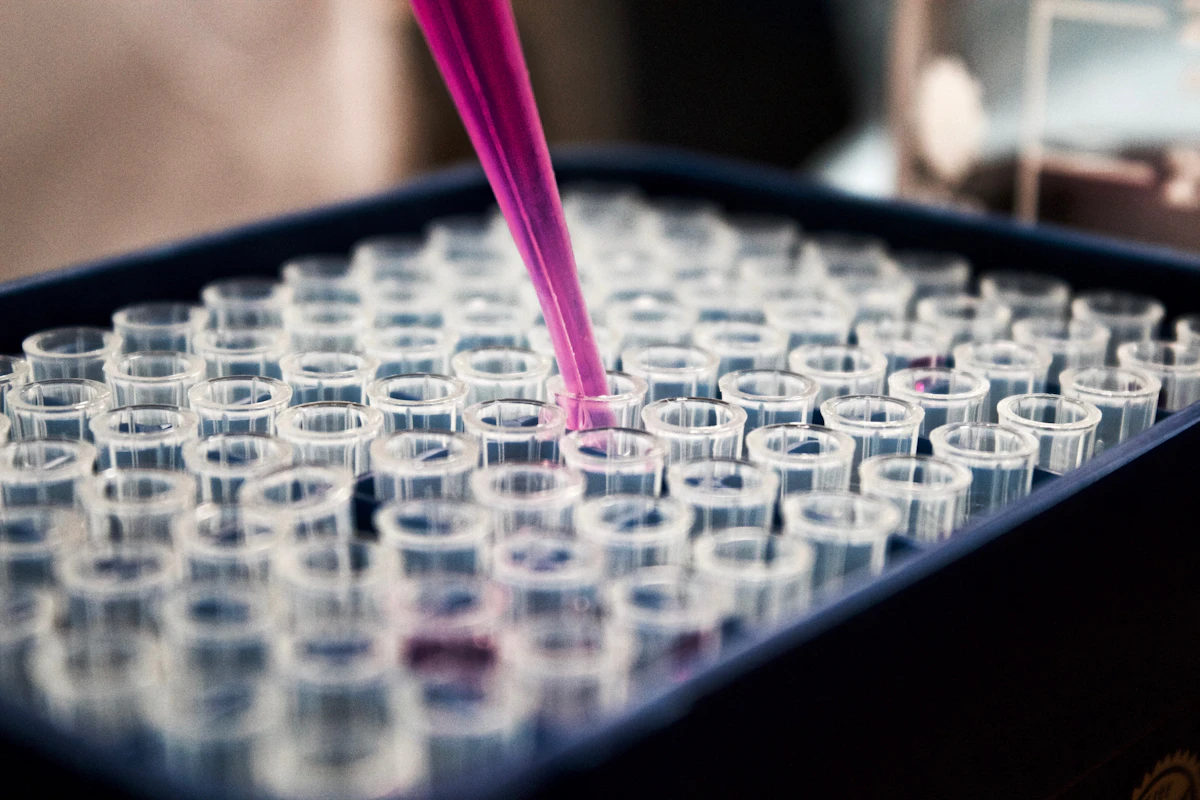
- Expression & Assay – Express in microbial or mammalian cells, then measure activity, stability, and specificity using high‑throughput assays.
- Feedback & Optimization – Feed experimental results back into the models, often coupling AI with directed evolution to refine the best candidates.
Mission Overview in Practice: Key Application Areas
AI‑designed proteins span multiple sectors, from environmental remediation to precision medicine. Several high‑profile demonstrations have driven scientific and public interest.
1. Enzymes for Green Chemistry and Pollution Control
- Plastic‑degrading enzymes: AI‑enhanced variants of PETases and cutinases exhibit higher activity and stability, enabling faster breakdown of polyethylene terephthalate (PET) under mild conditions.
- Industrial biocatalysts: Custom enzymes for asymmetric synthesis, C–H activation, or CO2 fixation can reduce reliance on precious metal catalysts and harsh reagents.
- Pollutant remediation: Enzymes tailored to degrade pesticides, dyes, or pharmaceuticals in wastewater can support circular bioeconomies.
2. Therapeutic Proteins and Biologics
AI‑designed binders and scaffolds can target receptors, enzymes, or viral proteins with high specificity:
- De novo protein binders to viral spike proteins or immune checkpoints.
- Engineered cytokines with modified receptor specificity to reduce side effects.
- Next‑generation antibody mimetics with smaller size and improved tissue penetration.
For readers interested in the experimental side, benchtop tools such as the Opentrons OT‑2 lab robot can help automate pipetting and small‑scale screening workflows in research environments.
3. Programmable Nanostructures and Biomaterials
Proteins designed to self‑assemble into cages, fibers, or lattices open the door to:
- Drug‑delivery vehicles that present targeting ligands on their surface.
- Vaccine scaffolds that display antigens in highly ordered arrays, improving immune responses.
- Functional materials like conductive protein nanowires or responsive hydrogels.
Scientific Significance: Rethinking Evolution and Protein Space
On the genetics side, synthetic genes encoding AI‑designed proteins are integrated into microbial or mammalian cells, linking digital design to cellular phenotypes. This convergence has deep implications for how we think about evolution and genetic diversity.
Researchers often describe evolution as a walk through a high‑dimensional sequence space, where each point is a possible amino‑acid sequence and neighboring points differ by a mutation. Natural evolution explores this landscape slowly, biased by historical contingencies.
AI‑assisted design offers a complementary search strategy:
- Global exploration of regions far from known sequences, guided by learned representations.
- Multi‑objective optimization balancing activity, stability, immunogenicity, and manufacturability.
- Hybrid strategies combining model‑guided design with lab evolution, akin to providing evolution with “better starting points.”
“Generative models are beginning to let us sketch the outline of proteins that nature never sampled, then ask cells to fill in the details.” — Frances Arnold, Nobel laureate in Chemistry
Milestones: Recent Breakthroughs and Case Studies
The field has accelerated quickly, with multiple proof‑of‑concept studies shaping expectations for what AI‑designed proteins can achieve.
Plastic‑Degrading and Industrial Enzymes
- Engineered PETases and cutinases with improved thermostability and activity, supporting enzymatic recycling of PET bottles and textiles.
- Biocatalysts designed for pharmaceutical synthesis, reducing steps and solvent usage compared with traditional chemistry.
De Novo Therapeutic Scaffolds
Several groups have reported de novo proteins that:
- Bind specific cytokine receptors to modulate immune signaling.
- Target viral entry proteins, potentially blocking infection pathways.
- Display antigens in vaccine candidates that elicit robust neutralizing responses in animal models.
Integrating Robotics, Omics, and AI
Modern synthetic biology labs increasingly combine:
- Robotic liquid handlers for automated cloning and expression.
- Next‑generation sequencing to read out variant performance in pooled assays.
- Machine‑learning feedback loops to iteratively improve models using real experimental data.
This closed‑loop paradigm is sometimes called a self‑driving laboratory, where human scientists specify goals and constraints, and integrated AI‑lab systems explore candidate solutions.
Technology Metrics: How Researchers Evaluate AI‑Designed Proteins
To move from interesting designs to reliable tools and therapies, researchers track multiple quantitative metrics:
- Sequence novelty: How far the design lies from natural proteins in sequence space, often measured by similarity scores to databases like UniRef.
- Folding confidence: Predicted local and global structural accuracy, using metrics such as pLDDT and PAE from AlphaFold‑style models.
- Stability and solubility: Melting temperature (Tm), aggregation propensity, and expression yield.
- Functional assays: Catalytic turnover numbers (kcat), C50/KM, binding affinities (KD), and on/off rates (kon/koff).
- Specificity and off‑target effects: Especially important for therapeutic candidates to minimize toxicity.
Many labs integrate these metrics into multi‑objective optimization frameworks, balancing trade‑offs to meet application‑specific targets.
Challenges, Ethics, and Biosecurity
Alongside excitement, AI‑designed proteins raise important ethical and societal questions, especially when design tools converge with inexpensive DNA synthesis and automation.
Dual‑Use and Biosecurity
The same methods that enable greener chemistry and new therapies could, in principle, be misused to design harmful proteins. Current discussions focus on:
- Access control for high‑capability design tools and models.
- DNA synthesis screening to detect and block orders for sequences with known or predicted dangerous functions.
- Responsible publication practices that share scientific advances while avoiding step‑by‑step misuse instructions.
Data Bias and Model Limitations
Generative models inherit biases from training data:
- Under‑representation of certain protein families or environmental niches can skew design outcomes.
- Fitness landscapes remain rugged; high predicted scores do not always translate into real‑world function.
- Models can “hallucinate” structures or activities if extrapolating too far beyond data regimes.
Regulation and Clinical Translation
For therapeutic proteins, stringent regulatory pathways apply:
- Extensive preclinical testing for safety, immunogenicity, and off‑target effects.
- Clinical trials to validate efficacy and monitor rare adverse events.
- Regulatory frameworks that must adapt to proteins without natural counterparts.
“Powerful generative tools make it imperative that we invest in guardrails—technical, ethical, and legal—at the same pace as innovation.” — Hypothetical synthesis of positions from biosecurity experts
Practical Tools and Learning Resources
For scientists and advanced students wanting to explore this space, several accessible resources exist:
- Open‑source models: ESM protein language models, ProteinMPNN, and RFdiffusion have public implementations or preprints.
- Cloud notebooks: Many labs share Colab notebooks that demonstrate end‑to‑end design workflows, from sequence generation to structural prediction.
- Educational content: Talks and tutorials on YouTube, such as presentations from the AlphaFold and protein design conferences, provide accessible introductions.
- Professional networking: Platforms like LinkedIn host active synthetic biology and AI‑for‑science communities where researchers share preprints and case studies.
On the hardware side, tools like high‑quality micropipettes and cold storage are essential for reproducible experiments; sets such as the Eppendorf Research plus adjustable pipette set remain widely used in molecular biology labs.
Conclusion: Steering Biology with Algorithms
AI‑designed proteins and enzymes mark a pivotal shift in how we interact with biology. Instead of merely decoding what evolution has produced, scientists are beginning to compose new molecular “sentences” in the language of proteins, guided by generative models and constrained by physical reality.
The likely near‑term impacts include:
- Faster discovery of therapeutic proteins and vaccine candidates.
- More sustainable industrial processes using custom biocatalysts.
- Novel materials and assemblies with properties tuned from the atomic level up.
Realizing these benefits responsibly will require careful attention to ethics, regulation, and biosecurity, as well as continued investment in transparent, reproducible research.
Further Reading and Extra Insights
To stay current with rapid developments in AI‑driven protein design and synthetic biology:
- Follow leading labs and researchers on Twitter/X and LinkedIn, where preprints and datasets are often announced first.
- Monitor preprint servers like bioRxiv for tags such as “protein design,” “machine learning,” and “synthetic biology.”
- Watch recorded conference talks from meetings like SynBioBeta, NeurIPS “AI for Science” workshops, and protein engineering symposia on YouTube.
For those designing curricula or workshops, pairing conceptual lectures on generative models with hands‑on exercises in simple protein design notebooks can effectively bridge the gap between theory and practice, preparing the next generation of scientists to operate fluently at the interface of AI, genetics, and molecular engineering.
References / Sources
Selected references and resources for deeper exploration:
- Jumper et al., “Highly accurate protein structure prediction with AlphaFold.” Nature (2021). https://www.nature.com/articles/s41586-021-03819-2
- Baek et al., “Accurate prediction of protein structures and interactions using a three-track neural network.” Science (2021). https://www.science.org/doi/10.1126/science.abj8754
- Watson et al., “De novo design of protein structure and function with RFdiffusion.” Science (2023). https://www.science.org/doi/10.1126/science.ade9097
- Arnold, F. H., “Directed Evolution: Bringing New Chemistry to Life.” Angewandte Chemie (2018, Nobel Lecture). https://onlinelibrary.wiley.com/doi/full/10.1002/anie.201802331
- Meta AI, “Evolutionary-scale prediction of atomic-level protein structure with ESMFold.” https://www.biorxiv.org/content/10.1101/2022.07.20.500902v1
- Baker Lab – Institute for Protein Design. https://www.ipd.uw.edu
