
AI-Designed Proteins: How AlphaFold Sparked the Next Wave of Synthetic Biology
AI‑driven protein design sits at the intersection of machine learning, structural biology, and synthetic biology. Instead of passively predicting how natural proteins fold, new models actively generate sequences that are predicted to fold into desired 3D shapes and carry out specific biochemical functions.
This shift—from prediction to creation—marks a profound change in how we approach biology. Proteins are no longer just read from genomes; they can now be written as digital designs, printed via DNA synthesis, and tested in living cells or cell‑free systems.
Mission Overview: From Protein Prediction to Programmable Biology
The core “mission” of AI‑driven protein design is to compress the decades‑long, trial‑and‑error workflow of protein engineering into a fast, iterative, and largely computational process. Key goals include:
- Designing de novo proteins (not found in nature) with well‑defined structures and functions.
- Optimizing stability, solubility, and expressibility across host organisms.
- Targeting specific molecular interactions, such as binding a viral protein, metabolite, or receptor.
- Enabling programmable microbes that can perform custom tasks in health, agriculture, and industry.
- Exploring the “dark matter” of sequence space to understand what makes proteins evolvable and robust.
“We are now at the beginning of a new era in which AI systems will help us understand and design biological machinery at a level of detail that was previously unimaginable.” — Adapted from public statements by Demis Hassabis, CEO of DeepMind.
Technology: How AI Designs New Proteins
Modern protein design pipelines are built from multiple AI components that work together to move from concept to sequence:
- Structure and function specification – The scientist defines the desired outcome: a catalytic site geometry, a binding pocket, or a target surface to be recognized.
- Generative sequence modeling – AI proposes sequences predicted to adopt the target structure or property.
- In silico screening – Thousands to millions of candidates are rapidly filtered using structure prediction, docking, and physics‑based modeling.
- Experimental validation – The best candidates are synthesized and tested in vitro or in vivo, feeding data back into the models.
AlphaFold, RoseTTAFold, and Beyond
DeepMind’s AlphaFold2 and related systems such as RoseTTAFold proved that transformer‑based neural networks can infer accurate 3D structures from sequences. These models:
- Leverage multiple sequence alignments (MSAs) to capture evolutionary covariation.
- Use attention mechanisms to reason over pairwise residue interactions.
- Output atomic coordinates and per‑residue confidence metrics.
AlphaFold’s success created the structural foundation that current generative models use as an oracle: for each proposed sequence, “Will this fold as intended?”
Generative and Diffusion Models for De Novo Design
State‑of‑the‑art AI design systems now include:
- Protein language models (e.g., ESM, ProtT5) trained on millions of natural sequences to learn an implicit grammar of functional proteins.
- Diffusion models like RFdiffusion, which iteratively refine random structures into well‑folded proteins subject to user‑defined constraints.
- Reinforcement learning, where candidate sequences are rewarded for binding a target, exhibiting stability, or passing multi‑objective design criteria.
“Diffusion models allow us to sculpt protein backbones with unprecedented control, effectively turning protein design into a 3D generative art form grounded in physics.” — Paraphrasing from recent de novo design literature.
Recommended Reading & Tools
- AlphaFold Protein Structure Database
- ColabFold notebooks for accessible structure prediction.
- RFdiffusion GitHub repository for backbone‑level design.
Synthetic Biology Applications: Reprogramming Microbes with AI‑Designed Proteins
Once a protein design exists digitally, it can be encoded as DNA and installed into cells. Synthetic biology uses this principle to create engineered microbes and cell systems with novel functions.
Biocatalysts for Greener Chemistry
De novo enzymes designed via AI can catalyze reactions that are hard or wasteful using traditional chemistry. Examples include:
- Enzymes that break down plastics like PET more efficiently, supporting circular recycling.
- Biocatalysts for stereoselective synthesis of pharmaceuticals, reducing the need for heavy metals and harsh conditions.
- Pathway enzymes tuned for high flux and stability in industrial microbes such as E. coli or yeast.
Next‑Generation Therapeutics and Diagnostics
AI‑designed binding proteins, often called miniproteins or binders, can be engineered to attach tightly and specifically to disease targets:
- Antiviral binders that latch onto viral spike proteins, a concept extensively explored during and after the COVID‑19 pandemic.
- Immune‑modulating proteins that steer T‑cells or NK cells toward tumors.
- Diagnostic capture reagents that enhance sensitivity in lateral‑flow tests and biosensors.
For wet‑lab scientists and students, hands‑on experimentation is increasingly paired with AI tools. Benchtop equipment such as the miniPCR DNA Discovery System makes it easier to move from designed sequences to real DNA and proteins in an educational or small‑lab setting.
Microbial Cell Factories and Environmental Applications
Microbiologists are integrating AI‑designed proteins into microbial genomes to:
- Enhance carbon capture via engineered RuBisCO variants or synthetic CO2-fixing cycles.
- Produce valuable chemicals and materials (e.g., bioplastics, fragrances, nutraceuticals) with improved yield.
- Enable microbes to detect and degrade pollutants by expressing custom sensors and enzymes.
Scientific Significance: Probing the Limits of Protein Evolution
AI‑generated proteins are not just tools; they are experiments in evolutionary theory. They allow scientists to ask: How “unnatural” can a protein sequence be and still function?
Exploring Novel Sequence Space
The space of possible 100‑amino‑acid sequences is on the order of 20100, vastly larger than all proteins that have ever existed. AI helps sample this astronomical space in a guided way. Key research directions include:
- Comparing designed proteins to natural families to map “islands” of structure and function.
- Testing robustness and mutational tolerance of designs versus natural proteins.
- Investigating whether there are universal structural motifs that recur even in artificial sequences.
“By venturing into unexplored regions of sequence space, we can test long‑standing hypotheses about how proteins evolve and why life uses the particular motifs it does.” — Based on themes from current evolutionary protein design research.
Implications for Origins-of-Life Research
AI tools are also informing hypotheses about the origin of functional proteins on early Earth:
- Simulating random or low‑complexity sequences and asking how often “foldable” motifs occur.
- Evaluating whether simple design rules can produce protein‑like behavior without long evolutionary histories.
- Designing “primitive” folds that resemble ancestral proteins to test their stability and catalytic potential.
Milestones: Key Breakthroughs and Case Studies
Several milestones have defined the trajectory from structure prediction to design:
AlphaFold and the Protein Structure Revolution
The publication of AlphaFold2’s methods and the subsequent release of the AlphaFold Protein Structure Database—now containing hundreds of millions of predicted structures—gave researchers near‑instant access to structural information that used to require months or years of experimental work.
De Novo Enzymes and Binding Proteins
Recent high‑profile studies have demonstrated:
- De novo enzymes catalyzing reactions with impressive specificity and stability, some rivalling natural enzymes.
- Hyper‑stable miniprotein binders for viral proteins, including SARS‑CoV‑2, showing nanomolar affinities and strong neutralization in vitro.
- Self‑assembling nanomaterials engineered from designed protein subunits that form cages, fibers, or lattices.
Industrial and Startup Ecosystem
A vibrant ecosystem of startups and pharma partnerships has emerged, integrating AI design into drug discovery and biomanufacturing pipelines. Many follow similar patterns:
- Curate proprietary assay datasets of protein activity, stability, and developability.
- Train task‑specific generative models for particular protein classes (e.g., antibodies, enzymes, transporters).
- Automate the design–build–test–learn (DBTL) cycle, with robotics and high‑throughput screening.
Interviews and explainers on platforms like YouTube and discussions on LinkedIn have helped popularize these breakthroughs, emphasizing the convergence of wet‑lab automation and AI.
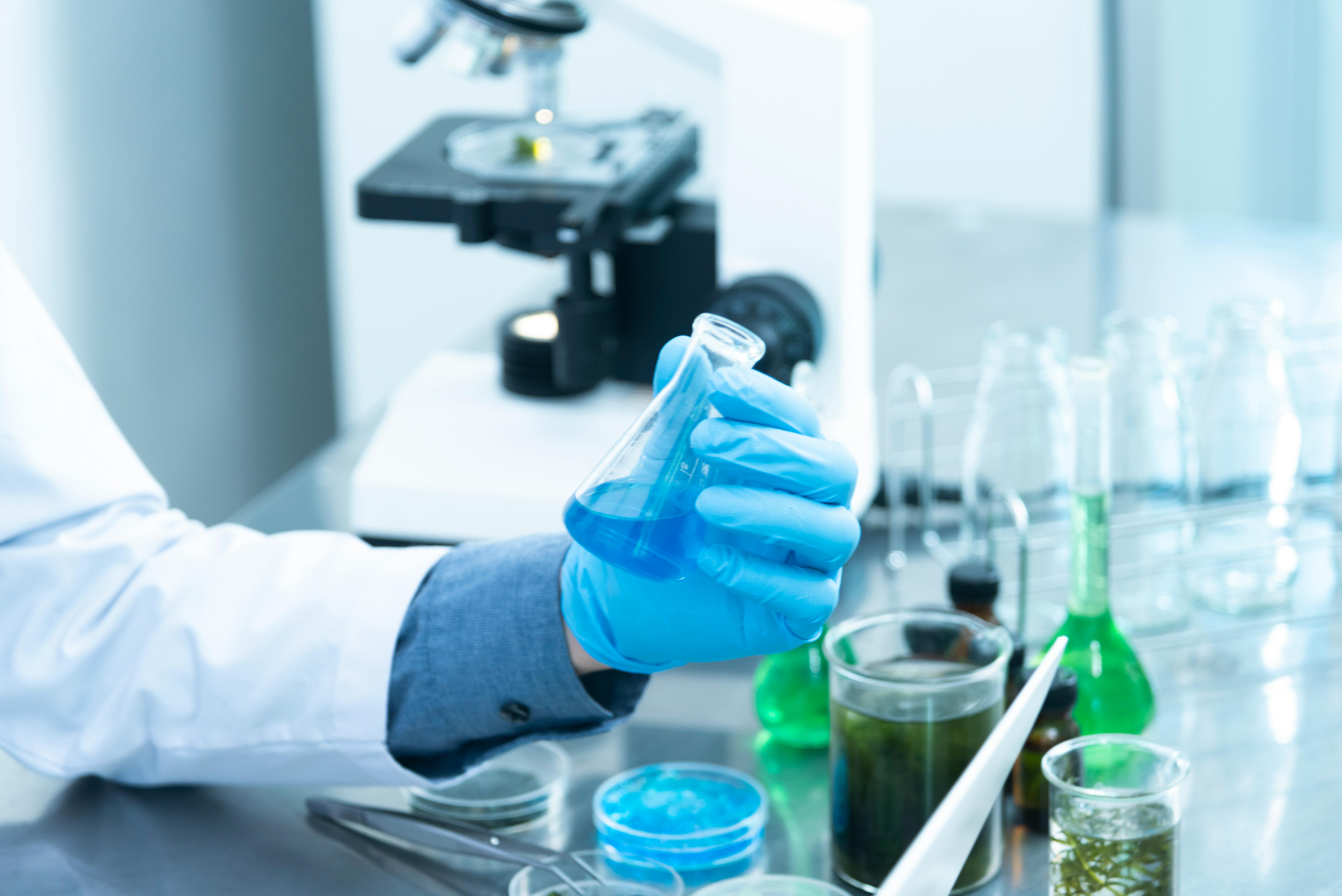
Images: Visualizing AI‑Driven Protein Design

Challenges: Scientific, Technical, and Ethical
Despite its promise, AI‑driven protein design faces major hurdles that span science, engineering, and governance.
Predictive Gaps and Model Limitations
Even the best models have blind spots:
- Dynamics and allostery: Many proteins adopt multiple conformations, especially in membranes or crowded environments. Static structure predictions may miss critical states.
- Post‑translational modifications: Glycosylation, phosphorylation, and other modifications can dramatically alter function but are hard to model generatively.
- Context dependence: The same protein can behave very differently in bacterial, yeast, and mammalian systems.
Data Quality and Bias
AI systems inherit biases from their training data:
- Overrepresentation of model organisms (e.g., human, mouse, E. coli) and well‑studied protein families.
- Scarcity of high‑quality data for membrane proteins, intrinsically disordered proteins, and multi‑component complexes.
- Potential to overfit historical design strategies, limiting exploration of radically new folds or chemistries.
Safety, Dual-Use, and Governance
Because these tools can accelerate biological design, they raise biosafety and biosecurity concerns:
- Risk of misuse in designing harmful or uncontrolled biological agents.
- Need for screening infrastructure for DNA orders and sequence designs, including AI‑assisted threat detection.
- Development of standards, oversight, and norms to manage dual‑use research while enabling beneficial innovation.
“The same systems that let us rapidly generate lifesaving proteins could, in principle, be redirected toward harmful purposes. Governance must evolve together with capability.” — Reflecting consensus views in current biosecurity discussions.
Regulatory and Clinical Translation
For medical applications, regulators must evaluate not only safety and efficacy but also the traceability and interpretability of AI‑designed molecules. Emerging best practices include:
- Maintaining detailed design provenance records for each candidate.
- Using orthogonal validation methods (e.g., cryo‑EM, NMR) to confirm predicted structures.
- Applying risk‑based frameworks that scale oversight with potential impact and novelty.
Practical Tooling: How Researchers and Students Can Get Started
Access to AI‑based protein design is expanding beyond elite labs, thanks to open‑source software, cloud platforms, and affordable hardware.
Computational On‑Ramps
- Google Colab & ColabFold for running AlphaFold‑like predictions with modest resources.
- Protein language model APIs and repositories (e.g., ESM, ProtTrans) for sequence representation and generation.
- Jupyter notebooks and tutorials shared by leading labs and companies on GitHub.
Wet‑Lab and Automation
For experimental follow‑up, small labs are increasingly using compact, modular equipment. For example:
- Portable PCR and qPCR systems for rapid amplification of designed genes.
- Benchtop bioreactors and shakers for culturing engineered microbes.
- Affordable pipettes and microplate readers for activity assays.
Educators interested in integrating AI and synthetic biology into coursework can pair computational modules with hands‑on kits and devices similar to the miniPCR DNA Discovery System, giving students a full digital‑to‑biological design loop experience.
Conclusion: Toward a Programmable Protein Universe
AI‑driven protein design is reshaping how we think about biology—from a descriptive science to an engineering discipline grounded in data and computation. By bridging structure prediction, generative modeling, and synthetic biology, researchers can now:
- Create proteins and pathways that never existed in nature.
- Reprogram microbes and cells to address challenges in health, climate, and manufacturing.
- Test deep theories about evolution, robustness, and the origins of function.
The coming decade will likely see tighter integration of AI with robotics, high‑throughput experimentation, and cloud‑based lab platforms. If guided responsibly—through transparent research, inclusive governance, and strong biosafety norms—AI‑driven protein design could become a cornerstone technology of the 21st century, much like the integrated circuit or the internet in previous eras.
Additional Resources and Next Steps
For readers who want to dive deeper into AI‑driven protein design and synthetic biology, consider exploring:
- Introductory videos on channels like Two Minute Papers and DeepMind, which often cover breakthroughs in protein AI.
- Professional commentary on LinkedIn and X (Twitter) from scientists in structural biology, computational biology, and synthetic biology.
- Community labs and biohacker spaces that offer introductory wet‑lab courses and safety training.
Staying current is essential in this fast‑moving field; preprint servers such as bioRxiv and medRxiv frequently host cutting‑edge work on new models and applications.
References / Sources
Selected foundational and recent resources:
- Jumper et al., “Highly accurate protein structure prediction with AlphaFold.” Nature (2021).
- Baek et al., “Accurate prediction of protein structures and interactions using a three-track neural network.” Science (2021).
- Watson et al., “De novo design of protein structure and function with RFdiffusion.” Nature (2023).
- AlphaFold Protein Structure Database.
- RFdiffusion GitHub repository.
- Policy and governance perspectives on AI in biology (Nature, various authors).
