A Giant Step for Huntington’s Disease: Inside the First Gene Therapy Breakthrough
For decades, families living with Huntington’s disease have heard the same painful message: we can manage some symptoms, but we can’t change the course of the illness. In late 2025, that message began to shift. Data from the first true gene therapy trial for Huntington’s, led by neurologist and researcher Sarah Tabrizi and highlighted in Nature’s 10, point to what many experts are calling a “giant step forward” toward disease‑modifying treatment.
This page unpacks what that breakthrough actually means in everyday language: how the therapy works, what the latest evidence shows, who might benefit, and what realistic hope looks like right now—without hype, and without minimizing the challenges still ahead.
Understanding Huntington’s Disease and Why Gene Therapy Matters
Huntington’s disease (HD) is a rare, inherited, progressive brain disorder caused by an expanded CAG repeat in the HTT gene. This faulty gene produces a toxic form of the huntingtin protein that gradually damages specific brain regions, leading to movement problems, cognitive decline, and emotional changes.
Because we’ve known the exact gene responsible for HD since 1993, researchers have long believed that gene‑targeted therapies could, in theory, slow or prevent the disease—if we could safely reach and adjust that gene in the brain.
“Huntington’s has always been one of the most genetically ‘tractable’ brain diseases we know of. The question was never ‘what causes it,’ but ‘can we reach the gene in time and in the right way?’”
— Clinical neuroscientist, HD research collaborator
The latest gene therapy trial led by Sarah Tabrizi is the first to show compelling, sustained evidence that changing gene activity in the brain of people with Huntington’s can translate into biological effects that may, with more time and data, alter the course of disease.
A Glimpse Inside the Lab: The Scientist Behind the Breakthrough
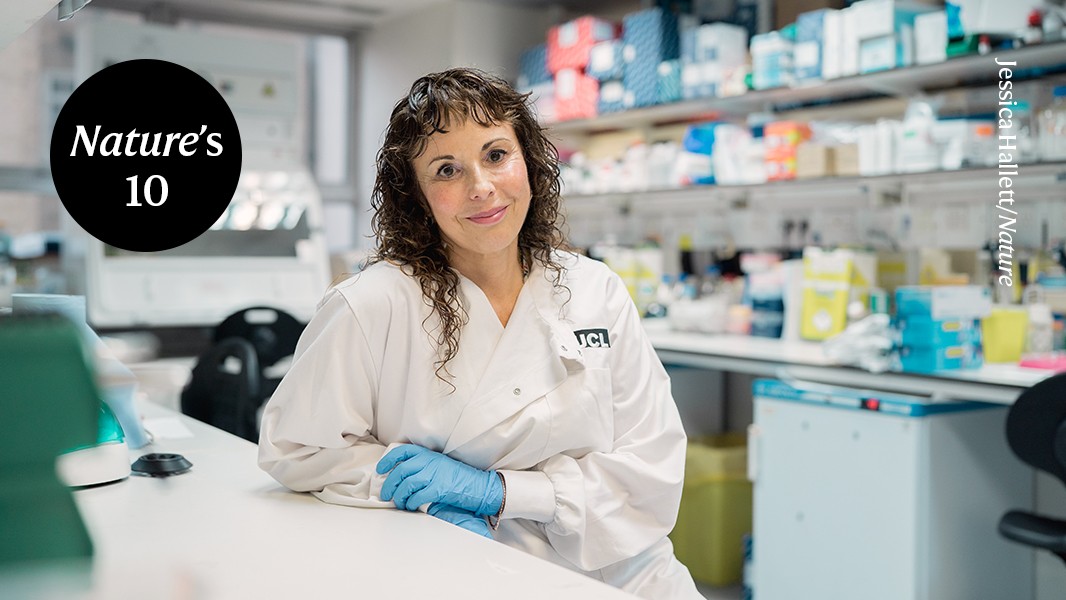
Sarah Tabrizi has spent much of her career at University College London and associated centers working at the intersection of lab science and patient care. Her teams have run some of the most influential Huntington’s natural‑history and biomarker studies, which made it possible to design and measure the impact of gene‑lowering therapies years before obvious symptoms appear.
How the New Huntington’s Gene Therapy Works
Different companies are testing different platforms—antisense oligonucleotides, viral vector gene therapy, and RNA‑targeting approaches—but Tabrizi’s “giant step forward” involves a gene‑targeting therapy delivered directly to the central nervous system. While specific trial details are still emerging in late 2025, the core concepts are similar:
- Target the HTT gene or its RNA.
The therapy is designed to reduce production of the toxic huntingtin protein by interfering with the gene’s instructions (RNA) in brain cells. - Deliver therapy to key brain regions.
Using either an intrathecal (spinal fluid) injection or a viral vector, the treatment reaches areas heavily affected in HD, such as the striatum and cortex. - Lower mutant huntingtin levels.
Researchers track levels of huntingtin and related biomarkers in cerebrospinal fluid (CSF) and blood to confirm the therapy is doing what it’s meant to do. - Monitor brain and functional changes over time.
MRI scans, digital movement tests, cognitive assessments, and everyday function scores provide early hints of clinical benefit.
What the Latest Data Show: Why Experts Call It a “Giant Step”
When Tabrizi reviewed the early‑September data on a video call—data that later helped place her on Nature’s 10 list for 2025—it was the culmination of decades of incremental progress and some painful setbacks, including earlier trials that had to be redesigned after unexpected safety and efficacy signals.
According to reporting in Nature and related conference presentations, the new gene therapy data showed:
- Robust lowering of mutant huntingtin protein in the cerebrospinal fluid, sustained over many months.
- Favourable safety profile relative to earlier approaches, with manageable side effects and no obvious signal of accelerated neurodegeneration in the current follow‑up period.
- Encouraging trends in imaging and functional measures—for example, slower brain‑volume loss in certain regions and stabilization or smaller‑than‑expected declines in clinical scores, especially in people treated earlier.
“This is the first time we’ve seen such compelling, converging signals that gene therapy can move the biomarkers in the right direction and hint at real clinical impact in Huntington’s disease.”
— HD trial investigator, summarizing 2025 data
It’s crucial to note that most of these trials are still in Phase I/II or early Phase II. They are designed primarily to assess safety and biological effect, not yet to deliver definitive proof that people live longer or significantly better. That said, the pattern of results has been strong enough that several experts now refer to this as a “watershed moment” for HD therapeutics.
Before vs. After: How This Changes the Huntington’s Landscape
To understand why this feels so different for many families, it helps to compare the “before” and “after” picture of Huntington’s care.

- Before gene therapy trials:
- Treatment options focused on movement symptoms, mood, sleep, and day‑to‑day function.
- No approved therapies addressed the underlying genetic cause.
- Presymptomatic testing told people if they would likely develop HD, but not how it could be delayed.
- In the emerging gene therapy era:
- Trials aim to intervene earlier, in some cases before major symptoms appear.
- Biomarkers like mutant huntingtin levels and neurofilament light (NfL) provide objective readouts of brain health.
- Conversations in clinic are slowly shifting from “symptom management only” to “how can we slow this down?”
Who Might Benefit First from Huntington’s Gene Therapy?
Most current trials focus on adults who:
- Have a confirmed HTT mutation with an expanded CAG repeat.
- Show either early symptoms or are in the prodromal stage with clear biomarker or imaging changes.
- Are medically fit for procedures like lumbar puncture or neurosurgical delivery, when required.
Over time, if safety and long‑term benefit are confirmed, researchers may explore:
- Treating people earlier in life before major damage accumulates.
- Optimizing doses or dosing schedules to balance benefit and risk.
- Combining gene therapy with neuroprotective drugs, cognitive training, and physical therapy.
Common Concerns and Obstacles: What Patients and Families Ask
Alongside hope, many families feel anxiety and uncertainty. These are some of the most common questions clinicians and researchers hear in HD clinics today.
1. Is gene therapy safe in the long term?
We don’t yet have 10–20 years of follow‑up. Early data for Tabrizi’s program and similar trials suggest that carefully dosed gene‑lowering can be tolerated, but:
- Some platforms have caused inflammation or worsening imaging signals when doses were too high.
- Non‑selective lowering of normal huntingtin may have side effects, because the healthy protein has roles in brain function.
- Continuous monitoring with imaging and blood/CSF biomarkers remains essential.
2. Will it reverse symptoms I already have?
Current therapies are not designed to reverse extensive neuronal loss. The greatest benefit is expected when treatment starts before severe damage. That said, even slowing decline for someone with mild to moderate symptoms could mean:
- Staying independent longer.
- Preserving work and family roles for additional years.
- Delaying the need for more intensive care.
3. What if I’m gene‑positive but still feel “healthy”?
This is one of the most emotionally complex situations. HD centers increasingly offer:
- Genetic counselling before and after testing.
- Regular monitoring with cognitive, imaging, and biomarker assessments.
- Information about observational studies that may lead to future treatment opportunities.
Practical Steps if Huntington’s Affects Your Family
While we wait for larger and longer trials, there are evidence‑informed steps you can take now to position yourself—or your loved one—to benefit from advances like gene therapy.
- Connect with a specialized Huntington’s center.
Multidisciplinary clinics are most likely to:- Have up‑to‑date information on ongoing clinical trials.
- Offer coordinated care with neurology, psychiatry, genetics, and rehabilitation.
- Provide access to observational research that improves future therapies.
- Stay informed—without getting overwhelmed.
Consider:- Subscribing to updates from reputable organizations like the Huntington’s Disease Association (UK), the Huntington’s Disease Society of America, or HDBuzz.
- Asking your care team which sources they recommend.
- Consider lifestyle strategies that support brain health.
While they don’t replace gene therapy, research suggests potential benefit from:- Regular aerobic and resistance exercise, tailored to ability.
- A balanced dietary pattern rich in whole foods, fruits, vegetables, and healthy fats.
- Staying cognitively and socially engaged.
- Seek psychological and family support.
HD affects identity, relationships, and decisions about work and children. Many families benefit from:- Family counselling and individual therapy.
- Peer support groups for caregivers and gene‑positive individuals.
- Discussions about advanced care planning while the person can clearly express preferences.

The Road Ahead: What Researchers Are Focusing on Next
The recognition of Sarah Tabrizi in Nature’s 10 underlines not just a personal achievement, but a shift in the entire HD research ecosystem. Looking beyond 2025, key priorities include:
- Confirming long‑term safety and benefit across larger, more diverse patient populations.
- Refining dose and timing to maximize benefit while minimizing risk.
- Developing mutation‑specific and allele‑selective therapies that preferentially target the harmful gene copy.
- Improving delivery methods so that treatment is less invasive and easier to scale globally.
- Ensuring equitable access so that gene therapy is not limited to a small number of trial participants in wealthy regions.
Moving Forward with Hope and Honesty
For many families, the phrase “giant step forward” doesn’t erase years of watching loved ones change, or the uncertainty of living with a genetic risk. But the work led by scientists like Sarah Tabrizi is reshaping what it means to receive a Huntington’s diagnosis. For the first time, we have credible, reproducible evidence that targeting the HTT gene in the human brain can change key disease signals—and may, with continued study, change the trajectory of the illness itself.
If Huntington’s touches your life, you deserve both realistic information and genuine hope. You are not obligated to join a trial, pursue every new therapy, or stay on top of every paper. But you do have the right to ask your care team:
- “What does this new gene therapy research mean for me or my family right now?”
- “Are there studies I should know about, given my stage of disease?”
- “How can we plan for the future while also living fully today?”
Call to action: Take one step this week—whether it’s scheduling a visit at an HD center, reading one trusted article, or reaching out to a support group—that helps you feel more informed, more supported, and a little less alone on this journey.