
5 Moves Smart Investors Are Making Before 2026
What Smart Investors Are Doing Right Now (and How You Can Copy Them)
Smart investors are quietly repositioning their portfolios before 2026, focusing on higher yields, resilient stocks, quality bonds, and a disciplined approach to volatility. This article explains five practical moves you can make right now—based on today’s market conditions—to protect your wealth, capture opportunities in stocks, ETFs and crypto, and build a portfolio that can handle inflation, rate cuts, and economic uncertainty.
Instead of trying to guess the exact path of interest rates or the next market crash, the goal is to build a plan that works across multiple futures: stubborn inflation, soft landing, mild recession, or another tech boom. Below, we’ll walk through specific, actionable steps—no jargon, no hype.

1. Read the Current Macro Landscape Like a Pro (In 3 Bullet Points)
You don’t need a PhD in economics, but you do need a simple mental model of what’s happening right now:
- Interest rates: Central banks have moved from aggressive hikes to a “cut carefully” stance. Yields are still attractive versus the last decade, but we’re not in zero-rate world anymore.
- Inflation: Off the peak, but not completely “solved.” Services and wages keep it sticky. That means cash loses purchasing power slowly, not explosively, but it still loses.
- Markets: Big tech and AI-related names have driven much of the index performance. Under the surface, many sectors are still fairly or even attractively priced, while speculative pockets remain fragile.
The implication: you’re investing into a world where cash finally has yield, bonds matter again, and stock returns are likely to be more “normal” than the rocket ride of the last decade.
You don’t have to predict the macro cycle. You just have to avoid betting your entire future on a single macro outcome.
2. Lock In Today’s Yields Without Going All-In on Cash
For more than a decade, “there is no alternative” (TINA) pushed everyone into stocks because cash paid almost nothing. That era is over. Short-term yields and high-quality bonds actually pay you again—but that doesn’t mean abandon stocks.
A simple yield strategy for the next 1–3 years
- Segment your money by time horizon:
- 0–2 years (safety money): emergency fund, near-term purchases, tuition.
- 3–7 years (medium-term): home down payment, business plans, large life events.
- 7+ years (growth): retirement, long-term wealth-building.
- Match the vehicle to the horizon:
- 0–2 years: high-yield savings, money market funds, or very short-term Treasury ETFs.
- 3–7 years: a mix of short–intermediate bond ETFs and some conservative stock exposure.
- 7+ years: globally diversified stock ETFs as your core, plus some bonds for stability.
This lets you benefit from today’s yields without sitting entirely in cash that may lose to inflation or missing out on future market gains.
3. Upgrade Your Stock Exposure: From “Hot Picks” to Durable Engines
The last few years rewarded investors who chased big stories: AI, electric vehicles, meme stocks, and speculative tech. Some of those stories will keep winning; many already peaked. Today’s smarter move is to own the engines of growth, not just the headlines.
Build around broad ETFs, then add “edges”
Think of your stock portfolio in three layers:
- Core (60–80%): low-cost, broad-market ETFs (for example, total world or combination of US and international developed/emerging markets). This is your long-term engine.
- Satellite (10–30%): targeted themes with real cash flow behind them—quality factor ETFs, dividend growth, or sector funds in areas like semiconductors, infrastructure, or healthcare.
- Speculative (0–10%): individual stocks or niche themes (early-stage AI names, small caps, turnaround plays). Size this so a loss hurts your ego, not your life.
This structure lets you participate in upside while still staying anchored to broad global growth, which historically outperforms most stock pickers over long stretches.
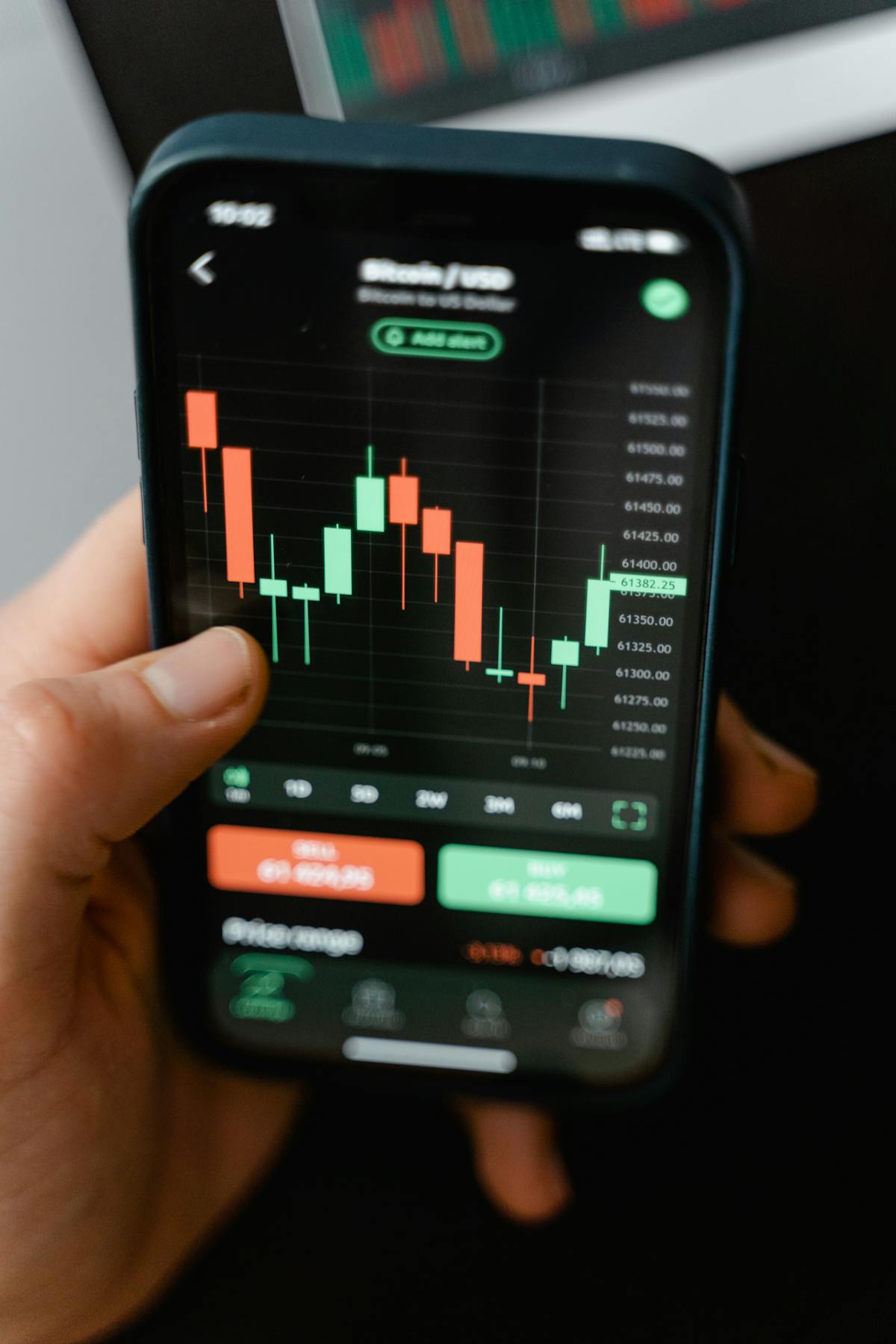
4. Treat Crypto as a Speculative Satellite, Not a Religion
Crypto has matured in some ways—regulated spot ETFs, institutional custody, clearer taxation rules in many countries—yet it’s still intensely volatile and sentiment-driven. That combination makes it potentially rewarding, but dangerous if oversized.
A pragmatic framework for crypto allocation
- Cap your exposure: for most non-professional investors, a total crypto allocation of 1–5% of net worth keeps risk contained while still meaningful.
- Focus on quality and simplicity: large-cap coins and, where available, regulated spot ETFs are usually safer than obscure tokens and complex DeFi schemes.
- Use dollar-cost averaging (DCA): instead of trying to time every crash or pump, automate small regular buys and periodically rebalance.
- Accept the full downside: mentally treat your crypto stake as money you can afford to see drop 70–90% without derailing your life goals.
When framed this way, crypto becomes a controlled bet on a potential new financial and technological layer—not the foundation of your retirement.
5. Make Volatility Your Employee, Not Your Boss
The next few years are likely to feature continued “burst” volatility—sharp moves around economic data, central bank meetings, earnings surprises, and political events. You can’t eliminate that, but you can decide whether it helps or hurts you.
Three ways to turn volatility to your advantage
- Automate contributions: set up recurring investments into your core ETFs. Volatility then averages your entry price over time.
- Use a written rebalancing rule: for example, once or twice a year, or when an asset class drifts more than 5 percentage points from its target. This forces you to sell some winners, buy some laggards systematically.
- Predefine your “pain thresholds”: know in advance what you’ll do if markets drop 20%, 30%, or more. Writing down “If markets drop 30%, I will keep contributing and rebalance; I will not sell my core holdings” reduces panic selling.
You don’t need to love volatility, but you do need a plan that doesn’t fall apart when it shows up.
6. Strengthen Your Personal Balance Sheet Before You “Reach” for Returns
In uncertain environments, the line between investing and personal finance gets blurry—and that’s a good thing. Your portfolio is only as strong as the financial life around it.
Priority checklist for the next 12–18 months
- Emergency fund: aim for 3–6 months of essential expenses in safe, liquid accounts. If your income is variable, consider 6–12 months.
- High-interest debt: pay down credit cards and other high-rate loans aggressively. A 20% interest rate is a guaranteed “negative return.”
- Tax-advantaged accounts: maximize retirement or similar tax-sheltered accounts if available in your country. Tax savings are a built-in boost to returns.
- Income resilience: invest in your skills and career options. A stronger earning power often beats squeezing extra 1–2% from your portfolio.
These moves reduce the odds you’ll be forced to sell investments at the worst possible time because of an unexpected bill or job shock.

7. A Simple 60-Minute Action Plan
To turn all of this into action, block one focused hour and work through these steps:
- List your accounts and balances: brokerages, retirement accounts, savings, crypto, and debts.
- Assign each asset to a time horizon: 0–2 years, 3–7 years, 7+ years.
- Compare your current mix to a simple target allocation (for example, 70% stocks / 25% bonds / 5% cash for a long-term investor; adjust for your age and risk tolerance).
- Identify 2–3 specific trades or transfers: maybe shifting some idle cash into a short-term bond ETF, trimming a concentrated stock, or reducing speculative exposure.
- Set up or increase automatic contributions: even a small recurring monthly investment compounds meaningfully over time.
- Write a one-page “investing policy”: your rules for contributions, rebalancing, maximum drawdown you’ll tolerate, and how you’ll react to big market moves.
You don’t need perfection. You just need a system you can stick to when the headlines get scary or euphoric.
Bottom Line: Build for Many Futures, Not Just One
We’re in a transition period: from zero rates to positive yields, from one-way tech dominance to a more balanced market, from “number go up” speculation to more sober expectations. That’s not a bad thing—it’s an opportunity to build a portfolio on realistic assumptions instead of hopes.
By locking in reasonable yields, upgrading your stock exposure, treating crypto as a controlled satellite, embracing volatility with a plan, and fortifying your personal finances, you give yourself something rare in investing: optionality. You don’t have to know exactly what 2026 will look like—you just have to be prepared for several versions of it.
If this resonated, share it with someone who’s feeling overwhelmed by today’s markets. Most people don’t need more predictions; they need a simple, resilient playbook. Now you have one.
