
Why 6,000 Airbus Jets Were Briefly Grounded – And What It Teaches Us About Aviation Software Safety
Visual overview: Airbus jets back in the air
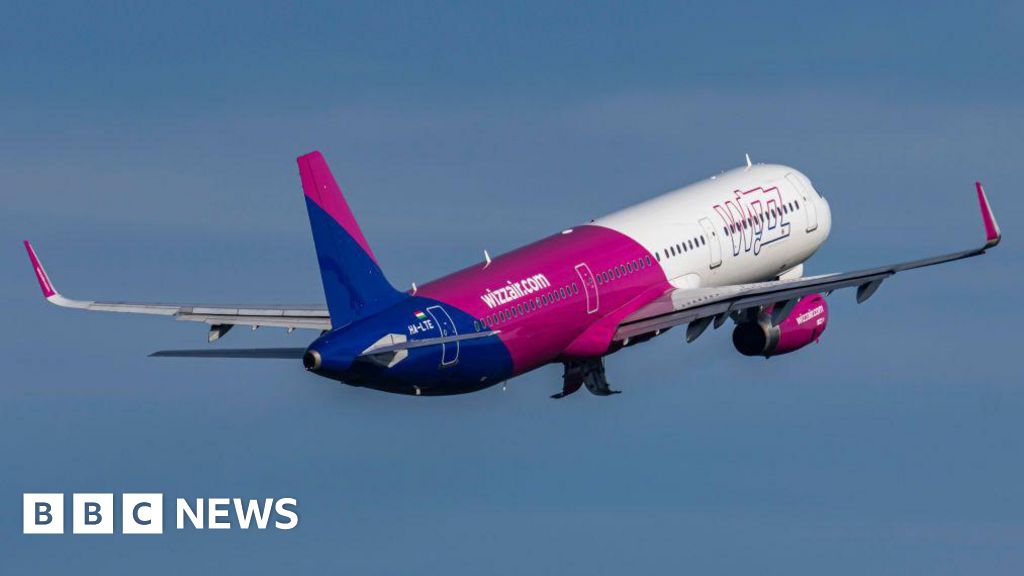
The image above, widely circulated in news coverage, captured the surreal scene at several major airports: modern Airbus jets temporarily parked while engineers rushed to patch flight control software exposed to a rare combination of solar activity and onboard system vulnerability.
What happened: From software warning to global disruption
Around 6,000 Airbus aircraft worldwide were affected after engineers identified a potential issue in flight control computers: under specific conditions, intense solar radiation – often linked to solar flares and geomagnetic storms – could corrupt certain data used by onboard systems.
According to industry reports and airline statements as of late November 2025:
- Airbus issued an urgent advisory to operators of popular models, including A320‑family, A330 and some newer variants.
- Some airlines proactively grounded flights or delayed departures for several hours while software checks and updates were performed.
- Regulators worked with Airbus and carriers to ensure no aircraft operated without the required mitigation steps in place.
- Within hours, updated software and operational work‑arounds were deployed, and flights gradually resumed normal schedules.
Importantly, there were no accidents or in‑flight incidents linked to the warning. The disruption stemmed from the aviation industry’s “safety first” culture: act early, act conservatively, and restore full confidence before returning to business as usual.
How real was the risk for passengers?
Any mention of “flight control computers” can be unsettling. Yet, aviation safety relies on layers of redundancy and conservative risk assessment. The warning did not mean that 6,000 planes suddenly became unsafe; it meant that a remote edge‑case vulnerability was discovered and handled decisively.
Understanding the vulnerability
Publicly available briefings suggest the following risk chain:
- High solar radiation events can generate energetic particles that occasionally affect electronic components.
- A specific combination of hardware state and software logic in certain Airbus flight control computers left a narrow window for data to be corrupted.
- If left unmitigated, under very rare circumstances, corrupted data might feed into automated control logic and require crew intervention.
Modern jets are designed for such contingencies:
- Critical systems are duplicated or triplicated (sometimes more) with cross‑checking logic.
- Pilots are trained to revert to alternate control laws and manual flying when automation misbehaves.
- Independent monitoring systems cross‑validate sensor and computer outputs.
“In aviation, safety is achieved not by assuming systems will work, but by preparing thoroughly for the moments when they don’t.”
— International Civil Aviation Organization (ICAO) safety guidance
By acting early, Airbus and airlines ensured that passengers were never exposed to that hypothetical edge case. The inconvenience of delays and groundings effectively bought down an already tiny risk close to zero.
Solar radiation and airplanes: Why space weather matters
The incident drew attention to a topic often confined to specialist circles: space weather. Our Sun occasionally emits bursts of energy and charged particles that can disturb Earth’s atmosphere and electromagnetic environment. For aviation, these events matter in three main ways:
- Electronics and avionics: High‑energy particles can flip bits in memory or disrupt sensitive components – known as single‑event upsets.
- Navigation and communications: Solar storms can interfere with GPS accuracy and high‑frequency radio communications, particularly on polar routes.
- Radiation exposure: At cruising altitude, especially on long polar flights, crews and frequent flyers encounter slightly elevated radiation levels, carefully monitored by regulators.
What experts are watching in the current solar cycle
Scientists track the Sun’s 11‑year cycle; recent years have seen an uptick in strong solar flares and coronal mass ejections. Organizations like NOAA’s Space Weather Prediction Center publish real‑time alerts that airlines and air‑traffic controllers increasingly integrate into their operational planning.
While the Airbus issue was a software‑specific vulnerability, it underscores a broader trend: as electronics become more powerful and more packed, they can become more sensitive to the extreme edge cases produced by nature.
Why aviation is becoming a software‑first safety challenge
Modern airliners are flying data centers. The Airbus incident highlighted a profound shift: many of the most serious emerging risks in aviation are no longer about engines or metal fatigue, but about code, data and digital dependencies.
From mechanical redundancy to digital resilience
Historically, safety engineering focused on physical redundancy – extra hydraulic circuits, backup cables, multiple engines. Today, software and integrated avionics demand new strategies:
- Formal verification and testing: Critical flight software is verified to standards like DO‑178C, with millions of test cases and scenario simulations.
- Digital twins: Airlines and manufacturers use virtual replicas of aircraft systems to test updates before deployment.
- Patch management: Coordinating software updates across thousands of aircraft, dozens of airlines and multiple time zones is now a routine, but delicate, safety operation.
Incidents like this one are less a sign of failure than evidence of active safety governance: vulnerabilities are hunted, publicized to operators and fixed, even at the cost of immediate disruption.
How airlines responded: Communication, confidence and continuity
Airlines faced a difficult balance: protect passengers, respect regulatory guidance, and avoid unnecessary panic. Responses varied by carrier and region, but common threads emerged.
Typical airline actions during the grounding
- Temporarily grounding specific Airbus fleets or delaying departures while updates were applied.
- Prioritizing aircraft on long‑haul or high‑traffic routes for immediate checks.
- Rebooking passengers or swapping aircraft types where possible.
- Issuing public statements emphasizing safety and clarifying that no in‑flight incidents had occurred.
Aviation journalists and analysts on platforms like FlightGlobal and LinkedIn’s aviation community largely praised the speed of the response, while urging better public communication to avoid speculative fear on social media.
“In the age of real‑time social media, the toughest part of crisis management isn’t the technical fix – it’s the information vacuum before you have all the facts.”
— Paraphrased from multiple airline crisis‑communication consultants
What passengers should know – and ask – when flights are delayed for safety
For travelers, few sentences are more unsettling than “technical issue with the aircraft.” Yet, as this Airbus episode demonstrates, those words often signal exactly what you want from an airline: a refusal to compromise on safety margins.
Questions passengers can reasonably ask
When facing a delay or aircraft change linked to technical concerns, it is fair and constructive to ask:
- Is this delay related to a safety directive or software update?
- Has the relevant aviation authority been informed or issued guidance?
- Will we be re‑accommodated if the issue cannot be resolved promptly?
- Where can we read an official explanation after the fact? (e.g., airline newsroom, regulator website)
Reputable carriers typically post detailed explanations on their news pages, while regulators such as the FAA and EASA publish airworthiness directives and safety bulletins that can be accessed by the public.
For a deeper dive into aviation safety from a pilot’s perspective, many frequent flyers follow captains like Mentour Pilot on YouTube, who regularly breaks down technical issues in clear, accessible language.
Inside the fix: How a critical aviation software update is rolled out
While Airbus and airlines did not publish line‑by‑line code changes, the overall pattern of the response fits a familiar engineering playbook for safety‑critical updates.
Typical steps in a rapid aviation software campaign
- Detection: Internal testing, in‑service anomaly reports or supplier notifications flag a potential vulnerability.
- Risk assessment: Engineers and safety teams model worst‑case scenarios, probability, and detectability.
- Mitigation design: Developers and systems engineers define software changes and, where needed, operational procedures or additional checklists.
- Regulatory coordination: Manufacturers liaise with authorities like EASA/FAA for approval, advisories or mandates.
- Deployment: Airlines receive update packages, installation instructions and training/briefing material for crews and maintenance staff.
- Verification in service: Early feedback is monitored closely, with additional refinements if anomalies appear.
Each step is documented extensively, not only for current safety, but so that any future investigation can reconstruct how decisions were made—a discipline honed over decades of aviation learning.
Aviation, cybersecurity and the growing attack surface
Although the Airbus event stemmed from physical solar radiation, it intersects conceptually with another 21st‑century concern: cybersecurity. The more aircraft rely on connected digital systems, the more carefully engineers must defend against both natural and human‑made threats.
Research groups, including those highlighted in IATA’s cybersecurity program, stress several priorities:
- Segregating safety‑critical flight systems from passenger connectivity networks.
- Hardening update mechanisms so only authenticated, validated software can be installed.
- Monitoring for anomalies that could signal either hardware faults or malicious interference.
- Training staff to recognize social‑engineering attempts targeting maintenance and operations.
While there is no public evidence linking this specific solar‑radiation vulnerability to cyber risk, both highlight the same principle: assume that digital systems will be stressed, and design them to fail safely.
Tech behind the cockpit: Tools that help engineers and enthusiasts understand incidents
Incidents that briefly ground thousands of jets inevitably spark public curiosity. A growing ecosystem of tools helps professionals, students and enthusiasts follow and understand such events.
Real‑time flight and safety data sources
- FlightRadar24 – for tracking how fleets are deployed and how disruptions ripple through global schedules.
- Aviation Safety Network – for incident and accident databases with detailed narratives.
- EASA safety publications – for official directives related to aircraft types, including Airbus models.
For readers wanting to explore the engineering mindset that underpins modern aircraft design, high‑quality introductory books and models can make the subject more tangible. For instance:
- How Airplanes Fly: A Physical Description of Lift (Second Edition) – a respected technical yet accessible guide for aviation geeks and engineering students.
What this means for Airbus and the future of commercial jets
For Airbus, this episode is both a challenge and an opportunity. Grounding thousands of aircraft, even briefly, is costly and reputationally sensitive. But transparently addressing a vulnerability, coordinating a global response, and restoring service quickly also demonstrates system‑level maturity.
Looking ahead, expect to see:
- More proactive monitoring: Enhanced in‑service data analytics to catch rare anomalies earlier.
- Hardening against radiation: Wider use of radiation‑tolerant components and algorithmic safeguards in critical avionics.
- Smarter update pipelines: Secure, possibly more automated, software rollout procedures that can patch fleets in hours rather than days, with clear audit trails.
- Closer space‑weather integration: Airlines and manufacturers incorporating solar activity forecasts into operational risk models.
The broader market will watch how quickly the industry translates the lessons learned into updated standards and cross‑manufacturer cooperation, benefiting not just Airbus but Boeing, Embraer and emerging players.
Additional context: How to stay informed and travel confidently
For frequent flyers, engineers in training, or anyone fascinated by aviation technology, staying informed is the best antidote to anxiety and misinformation whenever stories like this break.
Practical tips for informed travelers
- Bookmark your national regulator (e.g., FAA, EASA) for official statements.
- Cross‑check breaking news with specialist outlets like Simple Flying or The Air Current.
- Follow experienced aviation professionals on platforms like LinkedIn or X (formerly Twitter) for real‑time expert commentary.
- Remember that diversions, aircraft swaps and last‑minute inspections are signs of a robust safety culture—not reasons to avoid flying.
As aircraft become smarter and more connected, similar stories—about software patches, sensor updates, or satellite‑navigation tweaks—will likely surface more often. Understanding the forces behind them helps transform alarming headlines into a deeper appreciation of how much coordinated effort goes into every safe take‑off and landing.
