
Is Your Sofa Sabotaging Your Salad? How to Style a Home That’s Health‑Happy, Cozy, and Completely You
Welcome to the Home of Healthy Chaos (a.k.a. Your Place)
Your home might be quietly shaping your habits just as much as your fridge or fitness tracker. That’s right: your throw pillows and lighting could be on Team Healthy… or secretly working for the Ultra‑Processed Snack Empire.
While the internet is busy arguing about ultra‑processed foods and GLP‑1 weight‑loss drugs, I’d like to gently point at your living room and ask: “And what exactly is your contribution here?” Because your space can either nudge you toward better sleep, calmer meals, and realistic routines—or straight into the arms of late‑night scrolling and cereal for dinner.
Today’s mission: decorate and style your home so it looks fabulous and
Trending Now: “Feel‑Good” Decor That’s More Than a Pretty Face
Current home trends are quietly teaming up with the health conversation happening around ultra‑processed foods and GLP‑1 meds. The vibe for 2025? Homes that look good on Instagram but feel good in real life:
- Soft wellness colors: Warm whites, clay, chamomile yellow, eucalyptus green, and inky blue—colors that feel like a deep breath, not a hospital waiting room.
- Snack‑smart kitchens: Open shelves with glass jars, pretty bowls for fruit, and less clutter so healthier options are easy to grab.
- “Third spaces” at home: Little nooks that feel like your favorite café, yoga studio, or reading corner—without the membership fee.
- Biophilic everything: Plants, natural textures, sunlight, and views of anything not made of plastic are still trending hard.
Translation: you get to create a space that gently makes good choices easier, without having to announce to guests, “Welcome to my Behavior Modification Lab.”
1. The “Snack‑Proof” Kitchen That Still Loves Carbs
No, we’re not banning chips. We’re just giving carrots a fighting chance.
The way you style your kitchen can tip the scales (literally) toward fresh, minimally processed foods without you needing Olympian willpower. A few science‑backed tweaks, disguised as decor:
- Put the good stuff in the spotlight.
Use a pretty ceramic or wooden bowl on the counter for fruit. Keep colorful veggies prepped in clear glass containers at eye level in the fridge. Your brain loves “grab and go”; we’re just changing what it grabs. - Hide the chaos, not the joy.
Ultra‑processed snacks? Stash them in opaque bins in a lower cabinet. They’re still there, just not winking at you every time you walk by like, “Hey stranger…” - Upgrade your “health props.”
A big glass water carafe on the table, a stylish electric kettle, colorful mugs for herbal tea—these are tiny decor moves that whisper, “Hydrate, darling.” - Make cooking feel like a treat, not a chore.
Hang your prettiest cutting board, display a jar of wooden spoons, and add a small plant near the sink. We decorate for guests; decorate for your Tuesday‑night self too.
2. Dining Spaces that Encourage Actual Sitting (and Chewing)
If most of your meals happen hunched over the sink or perched on the sofa arm, your decor might be the problem… not your self‑discipline.
Creating a real(ish) dining zone, even in a tiny apartment, can make meals feel intentional instead of accidental:
- Create a “micro dining room.”
No separate room? No problem. A small round table, two comfy chairs, and a pendant light above instantly say, “We sit here like functioning humans.” - Use lighting as a mood remote.
Soft, warm light (think 2700–3000K bulbs) makes meals feel relaxed and helps you actually slow down. A dimmable lamp or plug‑in sconce can turn even a corner into a cozy bistro. - Tablescapes with purpose.
A simple runner, a small plant, and a tray with napkins and salt/pepper keep the table inviting but not cluttered. If your table is buried under laundry, you’re more likely to eat anywhere else. - Sneaky screen‑free cues.
Add a small stack of magazines, a puzzle book, or a vase of fresh flowers. When the table looks “set,” it silently suggests, “Maybe we eat without TikTok today?”
3. The Living Room: Cozy, Cute, and Not a 24/7 Snack Lounge
Your living room is where comfort, entertainment, and the munchies like to hold hands. Instead of fighting that, we’ll design around it.
Think of your living room as your “behavioral stage”: set the scene for how you actually want to spend weeknights—resting, connecting, reading, stretching—not just doom‑scrolling with a family‑size bag of something crunchy.
- Re‑position your sofa like a life coach.
If your seating points directly at the TV and only the TV, guess what happens. Try arranging one chair or a chaise to face a window, bookshelf, or conversation area instead. Multiple “zones” = multiple ways to spend time. - Side tables: choose calm over crumbs.
Keep drinks coasters, a lamp, and maybe a book or journal on your side table. Avoid styling it like a snack throne. If you have to physically get up for snacks, you’ll think twice. - Basket strategy, a love story.
Use attractive baskets for blankets, yoga mats, or hand weights near the sofa. They’re decor, but they also say, “Stretch? Quick workout? Movie under a blanket?” Much better than “Where are the chips?” - Texture therapy.
Mix soft throws, boucle cushions, linen, and a textured rug. The more sensory comfort your room gives you, the less you rely on food for that same feeling of “aaaah.”
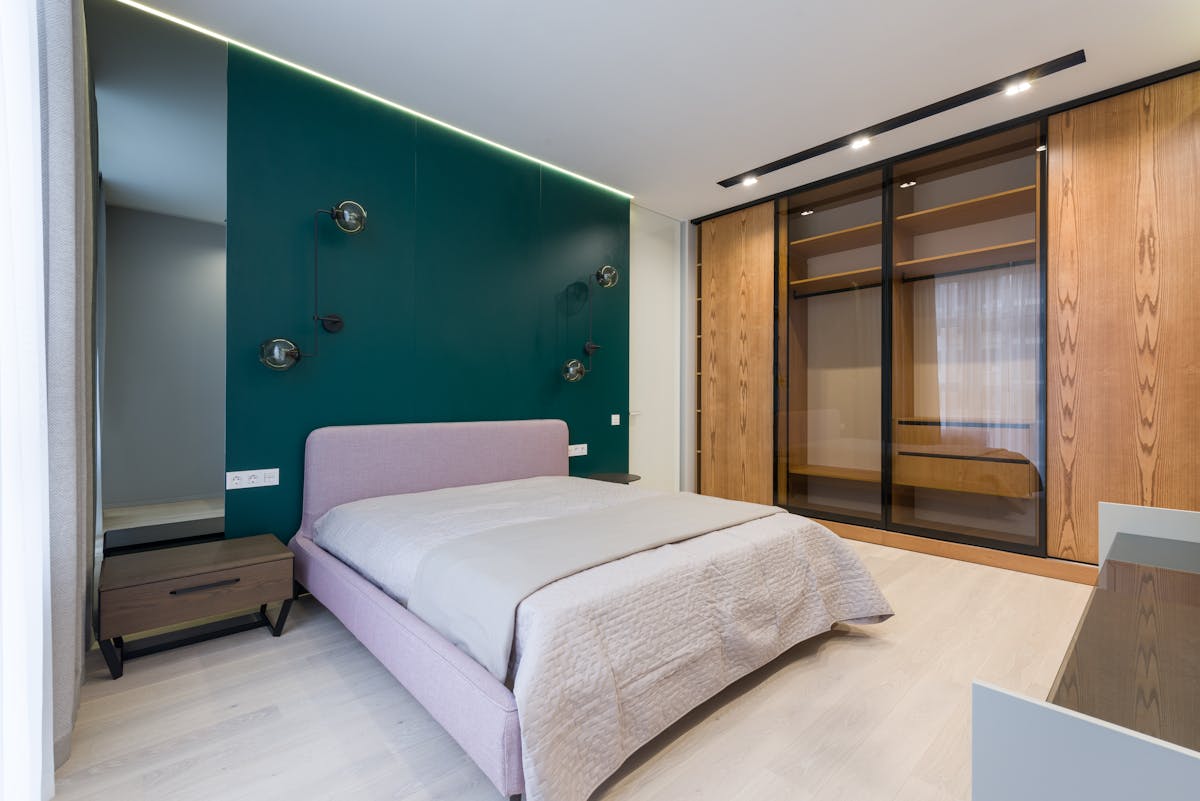
4. Bedroom Glow‑Up: Because Sleep Is the Ultimate Wellness Hack
Between discussions of GLP‑1 meds and ultra‑processed foods, researchers keep circling back to one unsexy hero: sleep. And your bedroom decor has a major role to play.
Design it like your body’s nightly reset studio:
- Color like a lullaby.
Soft blues, greens, mushroom taupes, and dusty rose are all trending—and they happen to be soothing. If you love bold color, keep it on accents instead of every wall screaming at your nervous system. - Layered lighting = layered calm.
Use at least two light sources: a soft table lamp or wall sconce near the bed and a main ceiling light. Aim for warm bulbs and consider a small salt lamp or dimmable lamp for pre‑sleep wind‑down. - Nightstands with boundaries.
Style them with intention: a carafe of water, a real book, lip balm, maybe a tiny plant. If there’s no physical space for your phone, that’s a hint. Try a cute charging station across the room. - Textile heaven.
Invest in sheets that feel good on your skin, not just good in the product description. Add a quilt or duvet in a breathable fabric. Visual comfort often translates to physical relaxation.
Your decor doesn’t have to be perfect; it just has to be kind to the future you who has to wake up in it.
5. A “Barely There” Home Workout Zone (That Doesn’t Look Like a Gym Exploded)
If GLP‑1 meds and diet trends have you rethinking movement, good news: you don’t need a full home gym. You need a spot that makes moving your body slightly more convenient than not moving it.
The secret is to integrate fitness into your decor:
- Dedicated but discreet.
Store resistance bands, a yoga mat, and hand weights in a lidded basket or an ottoman with storage. When it’s attractive and easy to access, you’re more likely to use it. - Visual cues that don’t scream “boot camp.”
Add a motivational print or calming art above your workout spot. Think “I am a person who moves” rather than “NO PAIN NO GAIN” energy. - Floor space is queen.
When arranging furniture, intentionally leave one clear, rug‑covered area big enough for a yoga mat. That open space is basically a daily invitation. - Mirror, mirror on the wall.
A full‑length mirror doubles as decor and helps with form if you do at‑home workouts. Plus, it bounces light and makes the room look bigger. Triple win.

6. Decluttering Without Losing Your Personality
Decluttering is having another big moment, but we’re retiring the idea that your home has to look like a rental staging photo to be “healthy.” You are allowed objects, color, and evidence of life. We’re just evicting the stress.
Think of it as “curated chaos”:
- Visible surfaces, calm brain.
Pick three major surfaces—coffee table, kitchen counter, bedroom dresser—and give them a 60% rule: 60% clear, 40% styled with purposeful items. Enough personality, not enough to induce panic. - Upgrade your storage, not just your willpower.
Woven baskets, lidded boxes, and slim cabinets mean you can hide the mess in style. Out of sight genuinely is out of mind for a lot of stress triggers. - The “Sunday 10‑minute reset.”
Put on a podcast, set a timer for 10 minutes, and reset one room: plump cushions, fold throws, clear surfaces. It’s decor maintenance meets mental health check‑in. - Keep the joy objects.
A quirky vase? Your travel mugs? Grandma’s lamp? Keep them. Display them. The goal is less mental clutter, not less identity.
7. Accessibility, Comfort, and Kindness in Every Room
A truly beautiful home is one you—and the people you love—can move through comfortably and safely. Even if you don’t use a mobility aid, design with future‑you and guests in mind.
- Leave clear pathways at least 32 inches wide where possible so people can walk or roll through easily.
- Mind the rug situation: use rug pads and avoid tiny “trip‑hazard chic” scatter rugs.
- Think reachable: keep everyday items between knee and shoulder height so no one has to climb, lunge, or perform furniture yoga.
- Lighting = safety + mood: use nightlights or motion lights in hallways and bathrooms for late‑night navigation.
These choices are not just practical—they’re a form of decor kindness. And that might be the chicest trend of all.
Your Home, Your Habits, Your Rules
In a world debating ultra‑processed foods, GLP‑1 meds, and who’s “responsible” for what, your home can be a quiet place where the pressure drops. Where the layout gently supports your goals, but the style still screams you.
You don’t have to overhaul everything. Start with one small shift:
- Put a fruit bowl or water carafe where you see it most.
- Clear one surface and style it with intention.
- Re‑aim one chair toward a window instead of a screen.
- Create a tiny corner that says, “You’re allowed to rest here.”
Your home doesn’t need to be perfect to be powerful. It just needs a few decorating decisions that make it a better co‑conspirator in the life you’re building—one cushion, one color, one corner at a time.
