
How Quttera’s “Evidence-as-Code” API Is Reinventing SOC 2 and PCI DSS v4.0 Compliance
Tel Aviv–based cybersecurity firm Quttera has announced a major update to its platform: an “Evidence-as-Code” API designed to automate security compliance for SOC 2 and PCI DSS v4.0. Backed by an AI-powered Threat Encyclopedia and new API capabilities, this release targets one of the most persistent pain points for modern security teams—turning operational security data into audit-ready evidence.
Instead of treating compliance as a periodic, documentation-heavy project, Quttera’s approach treats evidence like software artifacts: versioned, testable, and continuously updated. This aligns with the broader industry movement toward continuous compliance, where organizations can prove their security posture any day of the year, not just at audit time.
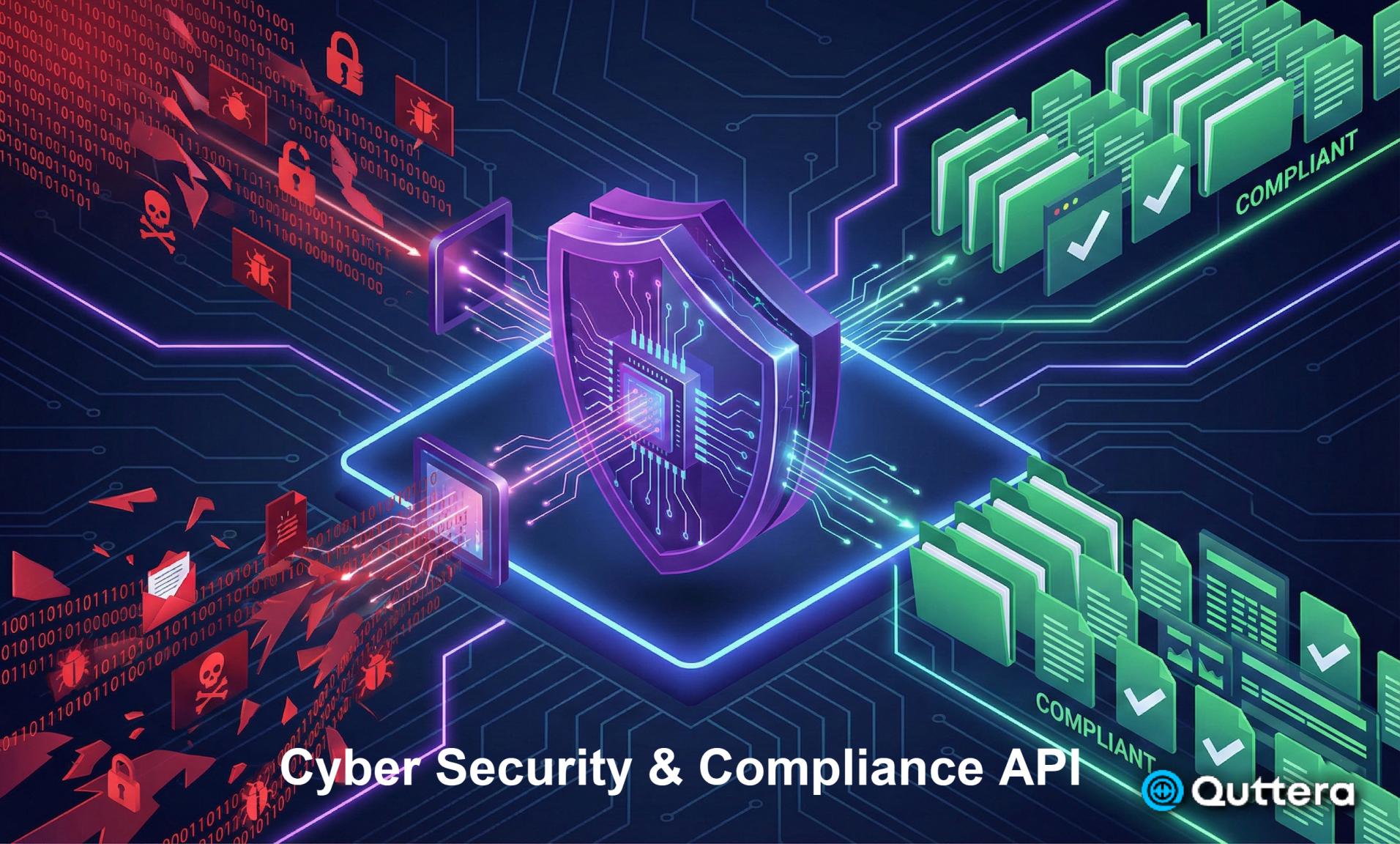
Mission Overview: From Manual Evidence to Evidence-as-Code
Security compliance has historically lagged behind the pace of software delivery. While engineering teams adopt DevOps and DevSecOps practices, many organizations still collect audit evidence using ad hoc screenshots, exported CSVs, ticket histories, and shared drives. This creates:
- High operational costs in the weeks before an audit
- Risk of human error, outdated screenshots, and missing artifacts
- Limited visibility into the current state of controls between audits
Quttera’s stated mission with Evidence-as-Code is to encode compliance evidence into APIs, automation, and data models that can be consumed programmatically by auditors, GRC platforms, and internal stakeholders. Instead of “collecting evidence,” teams can now query it.
“Compliance should not be a once-a-year theater exercise—it should be a live reflection of your security posture,” a senior security architect familiar with continuous compliance practices noted in a recent industry discussion.
Technology: Inside Quttera’s Evidence-as-Code API
At the core of Quttera’s launch is an extensible API that ingests telemetry and configuration data from existing security and infrastructure tools, then maps this data to SOC 2 and PCI DSS v4.0 control requirements.
Key Architectural Components
- Data Ingestion Layer: Collects signals from web application firewalls (WAFs), vulnerability scanners, EDR/XDR platforms, CI/CD pipelines, and cloud providers (e.g., AWS, Azure, GCP).
- Normalization and Correlation Engine: Converts heterogeneous data into a standard schema, performs entity resolution (e.g., mapping hosts, services, and identities), and correlates events across sources.
- AI-Powered Threat Encyclopedia: Uses machine learning and curated threat intelligence to contextualize events, classify findings, and associate them with known attack patterns and compliance implications.
- Evidence-as-Code Model: Represents each control requirement as a machine-readable object with:
- Defined evidence inputs (logs, configs, reports, tickets)
- Validation rules and thresholds
- Pass/fail logic and supporting metadata
- Compliance API: Provides RESTful endpoints to query:
- Control status (compliant, non-compliant, at-risk)
- Linked evidence artifacts and timestamps
- Historical trends and remediation history
This architecture aligns with emerging “compliance as code” patterns seen in tools like HashiCorp Sentinel and Open Policy Agent, but Quttera focuses specifically on evidence management for audits.

Scientific and Industry Significance
While compliance might sound bureaucratic, the shift to Evidence-as-Code has deeper implications for cybersecurity research, risk modeling, and systems engineering.
Turning Compliance into a Data Science Problem
By standardizing evidence into structured, queryable data, Quttera enables:
- Statistical analysis of control effectiveness over time
- Machine learning models that predict control failures based on leading indicators
- Automated anomaly detection in compliance posture (e.g., sudden spikes in high-severity findings)
“The future of security is measurable. If you can’t treat your controls as data, you can’t meaningfully manage risk,” noted security researcher and author Dr. Nicole Perlroth in a panel on quantitative risk, echoing a sentiment increasingly shared across the industry.
Bridging Security Engineering and Governance
Evidence-as-Code also closes the long-standing gap between:
- Security engineers focused on detection, response, and hardening
- GRC teams focused on frameworks, policies, and attestations
When both groups operate from the same real-time evidence plane, questions like “Are we PCI DSS v4.0 compliant today?” or “Which SOC 2 controls are drifting?” become directly answerable rather than speculative.

How It Supports SOC 2 Compliance
SOC 2 (System and Organization Controls 2) focuses on five Trust Services Criteria: Security, Availability, Processing Integrity, Confidentiality, and Privacy. Auditors require consistent evidence that controls are designed and operating effectively over time.
Typical Evidence Pain Points in SOC 2
- Collecting access review logs and approvals from multiple identity providers
- Demonstrating change management controls across CI/CD and ticketing systems
- Proving timely vulnerability remediation across infrastructure and applications
- Maintaining evidence of incident detection and response activities
Quttera’s API can automate much of this by:
- Integrating with IAM and SSO systems to generate evidence of access reviews and MFA adoption
- Pulling change data from Git, CI pipelines, and ITSM tools to show segregation of duties and approvals
- Aggregating vulnerability scan and patching data, mapped to SOC 2 CC and AICPA criteria
- Indexing security incidents, response times, and outcomes from SIEM/XDR platforms
The net effect is fewer evidence-chasing tasks and a more defensible, data-backed audit trail.
How It Supports PCI DSS v4.0 Compliance
PCI DSS v4.0 introduces more flexible, risk-based approaches and a stronger emphasis on continuous security outcomes around payment card data. It also increases the rigor of technical controls for web applications, authentication, encryption, and monitoring.
Evidence-as-Code for PCI DSS v4.0 Controls
Quttera’s technology is particularly relevant to:
- Requirement 6 – Secure application development and vulnerability management
- Requirement 10 – Log monitoring and security event reporting
- Requirement 11 – Regular testing of security systems and processes
By continuously ingesting:
- Web application scan reports
- WAF logs and anomaly detections
- Intrusion detection/prevention alerts
- Configuration baselines of payment systems
the platform can maintain a near-real-time evidence register for cardholder data environments (CDEs). This is critical for organizations subject to quarterly scans, regular penetration tests, and strict change management.
“PCI DSS v4.0 is designed to support a range of innovative technologies while maintaining strong security,” notes the PCI Security Standards Council, emphasizing the need for adaptable, evidence-backed approaches.
Key Milestones in Quttera’s Evidence-as-Code Journey
The November 27, 2025 launch reflects a broader roadmap Quttera has been executing toward security automation. While the full internal roadmap is proprietary, the public-facing trajectory can be summarized in several milestones:
- Website Malware and Threat Detection: Quttera’s early products focused on detecting malware, defacements, and suspicious behavior on websites.
- Threat Intelligence Expansion: Integration of curated threat feeds and behavioral analytics to classify threats across industries.
- Threat Encyclopedia: Launch of an AI-supported knowledge base mapping observed indicators to known attack families and tactics.
- API-First Security Evidence: Exposure of detection and classification capabilities via APIs, enabling integration into SIEMs and GRC tools.
- Evidence-as-Code for SOC 2 and PCI DSS v4.0: The current step, operationalizing evidence as codified, testable objects tied directly to regulatory and assurance frameworks.

Challenges and Limitations
Despite its promise, Evidence-as-Code is not a magic switch. Organizations adopting Quttera’s API will still face several practical and strategic challenges.
1. Integration Complexity
Real-time evidence requires deep integration with:
- Legacy systems and on-premises infrastructure
- Multiple cloud providers and SaaS platforms
- Existing GRC, ITSM, and security tooling
For large enterprises, mapping all these data sources and standardizing identity and asset models can be a multi-month effort.
2. Data Quality and Context
Automation is only as good as the data it consumes. Missing logs, misconfigured agents, or inconsistent asset tagging can create blind spots. Organizations will need to invest in:
- Robust asset inventory and CMDB hygiene
- Consistent logging and observability practices
- Clear data ownership across teams
3. Auditor Acceptance and Human Factors
While many auditors welcome automation, some will still expect:
- Manual walk-throughs of critical controls
- Interviews with system owners
- Sample-based testing alongside automated evidence
Quttera’s Evidence-as-Code can significantly reduce effort, but organizations must still cultivate strong relationships with auditors and clearly explain their automated evidence model.
4. Governance and Change Management
Treating evidence as code implies version control, testing, and review processes akin to software engineering. This requires:
- Defined ownership for each control and evidence pipeline
- Peer review of evidence logic and mappings
- Continuous monitoring for drift in both systems and requirements
Complementary Tools, Practices, and Learning Resources
To get the most value out of Quttera’s Evidence-as-Code API, organizations often combine it with modern DevSecOps, infrastructure-as-code, and policy-as-code practices.
Recommended Tooling Approaches
- Infrastructure as Code (IaC) using Terraform or AWS CloudFormation to standardize environments.
- Policy as Code via Open Policy Agent (OPA) or HashiCorp Sentinel to enforce security baselines.
- Automated CI/CD security checks (SAST, DAST, SCA) integrated with pipelines.
Learning and Reference Material
For professionals wanting to deepen their understanding of SOC 2, PCI DSS v4.0, and continuous compliance, the following resources are valuable:
- PCI Security Standards Council – Official PCI DSS v4.0 documentation
- AICPA – SOC 2 guidance and Trust Services Criteria
- YouTube talks on continuous compliance and DevSecOps
- LinkedIn articles from security leaders on “compliance as code”
Hands-On Reading (Amazon)
For practitioners who prefer structured, in-depth reading, these popular books are frequently recommended:
- Modern SOC 2 – A Step-by-Step Guide – A practical walkthrough of designing and maintaining SOC 2 programs.
- PCI DSS – A Comprehensive Guide to Payment Card Security – Detailed coverage of PCI DSS requirements and implementation patterns.
Conclusion: Compliance That Moves at the Speed of Code
Quttera’s launch of its Evidence-as-Code API for SOC 2 and PCI DSS v4.0 is more than a feature release—it is a signal of where the industry is headed. As architectures become more distributed and attacks more automated, manual, retrospective audits are no longer sufficient.
By embedding evidence directly into APIs, automation workflows, and AI-assisted context, Quttera offers organizations a way to:
- Reduce audit preparation from weeks to days—or even hours
- Gain real-time visibility into compliance posture and drift
- Free up security teams to focus on risk reduction, not paperwork
However, success depends on more than tooling. Organizations must pair Quttera’s capabilities with strong engineering discipline, clean data pipelines, and a culture that treats compliance as a continuous, measurable aspect of security—not an annual hurdle.
As more vendors and frameworks embrace the Evidence-as-Code paradigm, we are likely to see compliance evolve from a static certification to a living, quantifiable property of digital systems. Quttera’s November 2025 announcement is an important step in that direction.
Practical Next Steps for Security and Compliance Teams
Organizations interested in adopting Evidence-as-Code—whether via Quttera or similar platforms—can begin with a phased approach:
- Map your current evidence sources: Identify which tools already hold audit-relevant data (SIEM, EDR, WAF, IAM, ticketing, cloud logs).
- Prioritize high-impact controls: Start automating evidence for controls that are frequently sampled by auditors or historically challenging (e.g., vulnerability management, access reviews).
- Define your source of truth: Choose where evidence objects will be stored, versioned, and queried (e.g., Quttera’s platform, GRC system, or data warehouse).
- Pilot with one framework: Focus on either SOC 2 or PCI DSS v4.0 for your first implementation to reduce complexity.
- Engage auditors early: Share your Evidence-as-Code model and API outputs with your audit firm before the engagement, so expectations are aligned.
Over time, this foundation can support not only SOC 2 and PCI DSS but also ISO 27001, HIPAA, and sector-specific regulations—turning compliance from a burden into a reusable capability.
References / Sources
- Quttera – Official site and product information (accessed 2025-11-29): https://quttera.com
- NextBigFuture coverage of Quttera’s Evidence-as-Code launch (2025-11-27), CyberNewsWire syndication: https://www.nextbigfuture.com
- PCI Security Standards Council – PCI DSS v4.0: https://www.pcisecuritystandards.org/document_library
- AICPA – SOC for Service Organizations: https://www.aicpa.org/resources/section/audit-assurance/soc
- NIST Cybersecurity Framework (for broader control mapping context): https://www.nist.gov/cyberframework
