
How Micro-Documentaries Are Turning TikTok and YouTube Shorts Into the World’s Fastest Classroom
On a late-night flight somewhere over the Atlantic, I watched an entire crash course in world history, behavioral psychology, and personal finance—without ever opening a book or queueing a full-length documentary. Instead, I was scrolling through a river of 60‑second stories on TikTok and YouTube Shorts, each one a tiny “micro-documentary” that compressed a big idea into a breathless minute. By the time the cabin lights dimmed, I’d traveled from Cold War Berlin to the Mariana Trench to the balance sheet of a failing startup, all through vertical video.
These bite-sized educational clips—part documentary, part social media experiment—have quietly become one of the most influential storytelling formats of 2025. They’re fast, dense, and strangely addictive, promising viewers that in the time it takes to wait for a coffee, they can learn a piece of history, decode a scientific concept, or unravel a true‑crime mystery.
This is the age of the micro-documentary: 30–180 second narratives that turn TikTok, YouTube Shorts, Instagram Reels, and Facebook Reels into the world’s busiest—and most chaotic—classroom.
The Rise of Micro-Documentaries: When Vertical Video Becomes a Classroom
Micro-documentaries are ultra-condensed, documentary-style videos designed for short-form platforms. Typically running between 30 and 180 seconds, they aim to deliver a complete narrative arc: hook, context, payoff, and takeaway. Unlike traditional vlogs or skits, these clips feel structured and intentional—miniature episodes that reward attention rather than just scrolling momentum.
The topics are as varied as the internet itself. On any given day, you might see:
- History explainers unraveling forgotten revolutions or obscure royal scandals.
- Science breakdowns clarifying black holes, CRISPR, or why we experience déjà vu.
- Personal finance primers on credit scores, inflation, or how compound interest actually works.
- True crime summaries that condense long-form cases into tightly written timelines.
- Geopolitical briefings that decode coups, elections, and shifting alliances in under a minute.
What unites them isn’t the subject matter but the storytelling muscles they flex: aggressive hooks, dense scripting, rapid visuals, and a promise that your time will feel well spent—because you’ll leave each video with at least one new fact, story, or perspective.
How Micro-Documentaries Work: Hooks, Cuts, and Compressed Storytelling
Micro-documentaries live or die in the first three seconds. Creators know this, which is why the opening line often feels like a dare: “This is the heist that changed banking forever,” or “Here’s how a typo almost started a nuclear war.” This immediate tension is designed to halt the thumb mid-scroll.
From there, the format tends to follow a familiar yet effective structure:
- Hook: A surprising fact, question, or image that demands an answer.
- Setup: Ultra-lean context, often delivered via voiceover and bold on-screen captions.
- Unfolding: A sequence of rapid cuts, stock footage, maps, or simple animations that build the story.
- Payoff: The twist, fact, or resolution that satisfies the initial curiosity.
- Takeaway: A brief reflection, moral, or call to action—sometimes pointing viewers to a longer video or resource.
Technically, these clips lean hard on visual density. You’ll see split screens, archival stills, zooms on headlines, and highlighted text layered over footage. The narrations are tightly scripted; every word has a job. Captions are almost mandatory, both for accessibility and because so many people watch silently in public spaces.
“Think of it like a trailer for an idea,” one London-based Shorts creator told me. “A feature-length documentary gives you the whole forest; a micro-doc hands you one unforgettable tree.”
Why Algorithms Love Micro-Documentaries
The micro-documentary boom isn’t just cultural; it’s algorithmic. TikTok, YouTube Shorts, Instagram Reels, and Facebook Reels all share an obsession with watch time and completion rate—the percentage of viewers who stick around until the very end of a clip. A well-structured 60‑second explainer, with a cliffhanger baked into the middle, is engineered to maximize both.
Educational creators who once lived exclusively on long-form YouTube have noticed. Many now produce:
- Parallel content—a long-form deep dive plus a short vertical summary on the same topic.
- Repurposed edits of existing videos cut into 60-second arcs tailored to Shorts feeds.
- Short-first series designed from the ground up as snackable, episodic micro-docs.
For many creators and educational brands, Shorts and Reels now function as the discovery engine, while newsletters, podcasts, courses, or full-length documentaries act as the destination. The short-form clip is both the front door and the trailer for everything else they produce.
AI, Solo Creators, and the Industrialization of Short-Form Education
One underappreciated driver of the micro-documentary wave is the quiet proliferation of AI tools. What once required a small team—researcher, writer, editor, voiceover artist—can now be attempted by a single creator armed with smart software.
Common workflows in 2025 include:
- AI-assisted scripting to outline or polish dense explainers about history, science, or finance.
- Generated or cloned voiceovers for consistent narration without the need for studio-quality recording.
- Automated editing tools that assemble footage, add captions, and time cuts to music in minutes.
- Smart stock-footage search that surfaces relevant visuals based on the script.
The result is an explosion of channels specializing in formats like “one fact you didn’t know about…” or “the story behind this everyday thing.” Quality varies, but the volume is staggering: a kind of industrial revolution of short-form nonfiction, powered by apps that promise a publishable video in less time than it takes to commute across town.
The Upside: Accessible, Habit-Forming Learning for a Distracted Age
For all the justified concern about attention spans, micro-documentaries have unlocked something quietly radical: they’ve made self-directed learning feel as natural as scrolling. A teenager idly flicking through TikTok might stumble into a series on the Roman Empire, climate science, or behavioral economics without ever searching for it.
This frictionless discovery matters. Traditional educational content asks you to opt in—to hit “play” on a 45‑minute lecture or open a dense article. Short-form feeds flip the equation: they bring the ideas to you. The entry cost is low (a minute of attention), but the cumulative effect of watching dozens of clips over weeks or months can be astonishingly high.
For educators, museums, NGOs, and newsrooms, micro-documentaries have become:
- A way to surface underreported stories to audiences who may never visit a homepage.
- A bridge between entertainment and rigor—hooking viewers with narrative, then guiding them to richer resources.
- A tool for demystifying complex fields such as AI ethics, public health, or personal finance.
The Downside: Oversimplification, Misinformation, and the Illusion of Mastery
Compressing tangled, nuanced subjects into under a minute has obvious hazards. Nuance is the first casualty; uncertainty rarely trends. The temptations are clear: sharper claims, cleaner villains, tidier endings. It’s easy for a micro-documentary to drift from “useful summary” into “overconfident oversimplification.”
In 2025, fact-checkers, journalists, and subject-matter experts increasingly respond in kind—with their own short-form videos rebutting viral inaccuracies, adding missing context, or correcting skewed historical timelines. Platforms experiment with:
- Context cards linking to authoritative sources on sensitive topics.
- Labels and banners on certain categories, particularly health or civic content.
- Recommendation tweaks intended to surface credible explainers alongside controversial clips.
For viewers, the challenge is cognitive. A steady diet of “one-minute everything” can create the feeling of being well-informed without the substance to match. Micro-documentaries work best when they are framed as introductions, not replacements—trailheads to a topic, not the entire hike.
How Educators and Brands Can Use Micro-Documentaries Responsibly
For institutions, schools, and thoughtful creators, the goal isn’t to compete with every viral trend but to design micro-documentaries that respect the viewer’s intelligence. That means accepting the limitations of the format while exploiting its strengths: speed, reach, and narrative punch.
Effective strategies in 2025 include:
- Transparent framing: Clearly presenting the video as “the 60‑second version” and inviting viewers to explore deeper resources.
- Sources in the caption: Linking to articles, books, or longer videos for those who want to go beyond the surface.
- Series-based storytelling: Dividing big topics into multi-part arcs that build nuance across multiple clips.
- Collaborations with experts: Partnering with historians, scientists, or analysts to review scripts and add credibility.
- Accessible design: Using clear captions, high-contrast text, and descriptive audio or alt-text where possible to meet accessibility needs.
Done well, micro-documentaries can turn passive viewers into curious learners: people who finish a clip feeling not just informed, but motivated to keep digging.
A Viewer’s Guide: How to Watch Micro-Documentaries Critically
Navigating this landscape as a viewer means treating micro-documentaries as starting points, not final verdicts. The format rewards curiosity, but it also rewards skepticism—a willingness to ask what’s missing, who’s speaking, and how they know what they claim.
A few simple habits can make your feed a lot smarter:
- Check the creator’s track record: Do they cite sources, admit uncertainty, or correct past mistakes?
- Pause on strong claims: If a story sounds too clean or too outrageous, look for corroboration.
- Follow specialists: Historians, scientists, and analysts who live in a field usually offer more grounded content than generalists chasing views.
- Use micro-docs as a trigger: Let a compelling clip be the reason you read an article, watch a full documentary, or pick up a book.
In other words: enjoy the speed, but don’t outsource your judgment to the algorithm.
Visual Storytelling in 60 Seconds: What Micro-Docs Look Like
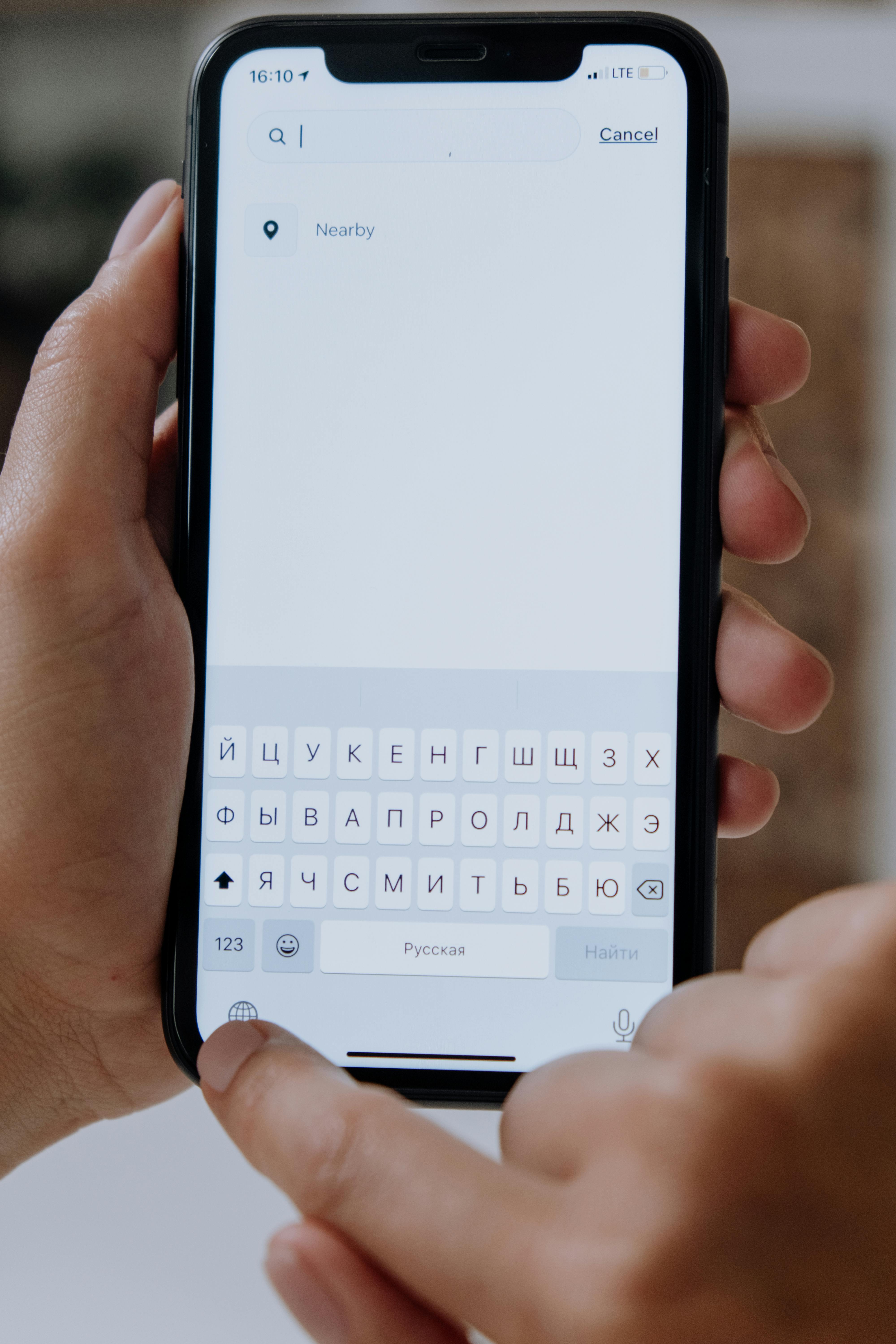
Micro-documentaries are as visual as they are verbal. Strong thumbnails, vertical framing, and dynamic editing help these stories stand out in an endlessly scrolling feed. The best creators treat each second like a frame in a comic strip: no dead air, no wasted shots.


What Comes Next: Beyond the One-Minute Documentary
By late 2025, micro-documentaries are no longer a quirky niche; they’re a backbone of social media culture. As platforms extend maximum lengths and refine monetization, expect more hybrid formats: three-minute mini-lectures, interactive timelines, and serialized vertical documentaries that unfold over dozens of episodes.
We’re also likely to see tighter integration between shorts and long-form experiences. A 45‑second briefing on a historical uprising might link directly into a full-length documentary, a podcast series, or even an interactive map that lets you explore the streets where events unfolded. The line between “social clip” and “serious media” will continue to erode.
The deeper question is cultural: will we treat these micro-docs as sparks or substitutes? As invitations to explore, or as a finishing line? The answer will determine whether this format becomes one more distraction—or one of the most effective gateways into lifelong learning that digital media has ever produced.
For now, the next time you swipe through TikTok or YouTube Shorts, pause when a story grabs you. Behind that 60‑second timeline is a creator trying to compress a complex world into a fragment you can carry in your pocket. The real journey starts when you decide that one fragment isn’t enough.
