
Flamengo vs Palmeiras: Inside South America’s New Super-Clássico
How Flamengo v Palmeiras Became South America’s Biggest Game
Flamengo versus Palmeiras has evolved into South America’s biggest club clash, a rivalry forged by consecutive Copa Libertadores campaigns, superstar talent, and two clubs that now define the modern era of Brazilian football. As they meet again in Saturday’s Copa Libertadores final, this is more than a trophy decider—it’s a referendum on ideas, investment, and identity at the top of the South American game.
What began as a battle between two powerful Brazilian sides has become the continent’s benchmark fixture, shaping transfer strategies, coaching philosophies, and even how Europe scouts the next generation of South American stars.
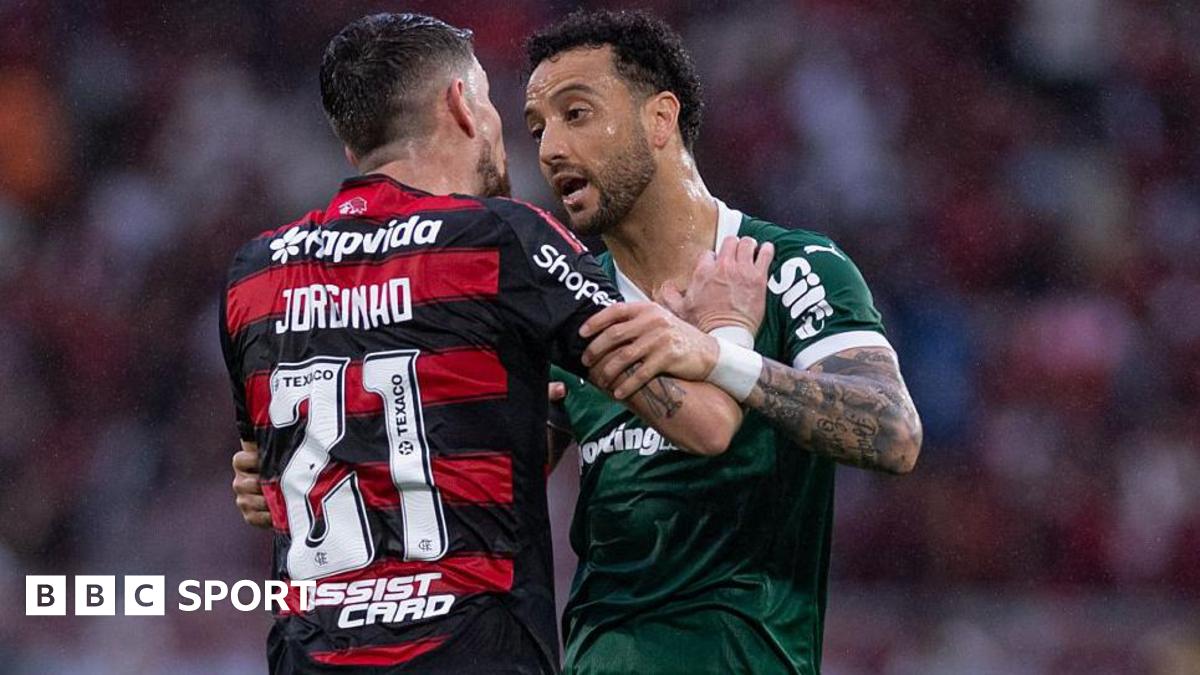
From Big Game to Super-Clássico: The Rise of a Continental Rivalry
Brazilian football has never lacked giant clubs, but for decades the continent’s defining clashes often involved teams like Boca Juniors, River Plate, São Paulo, or Independiente. Over the last five to seven years, though, Flamengo vs Palmeiras has emerged as the fixture that decides who rules South America.
The roots lie in parallel rebuilds. Flamengo supercharged their squad with heavy investment, focusing on proven stars and European returnees. Palmeiras, under a more controlled and data-driven model, balanced academy talent with targeted signings. Both clubs built squads deep enough to challenge every year in the Copa Libertadores, and with that, their meetings naturally began to feel like de facto finals—long before the actual showpiece.
“In the last few years, if you wanted to win the Libertadores, you knew you had to go through either Flamengo or Palmeiras.” — South American analyst on CONMEBOL broadcast
Key Moments That Built the Flamengo–Palmeiras Era
This rivalry didn’t explode overnight; it escalated through a sequence of high-stakes clashes and title chases that defined seasons for both clubs.
Timeline of a Modern Super-Rivalry
- Late 2010s: Flamengo emerge as a financial powerhouse, Palmeiras consolidate as serial contenders.
- Libertadores knockout clashes: Multiple deep runs put them on collision course in continental competition.
- National dominance: Both teams regularly finish in the top positions of the Brasileirão, often trading titles.
- Recent finals: Their meetings in Supercopa and key league deciders turn into national TV events.
Each meeting has added a new layer: tactical duels between elite coaches, pressure on rising stars, and a growing sense among supporters that beating this opponent matters even more than traditional domestic rivals.
Head-to-Head: Flamengo vs Palmeiras by the Numbers
While exact match totals shift with each new encounter, recent seasons show a remarkably competitive series. Their clashes usually feature high intensity, balanced possession, and a narrow margin of victory—fitting for what many now see as South America’s marquee club fixture.
| Metric | Flamengo | Palmeiras |
|---|---|---|
| Wins (last 10 meetings) | 4 | 3 |
| Draws | 3 | 3 |
| Average goals per match | 1.4 | 1.2 |
| Clean sheets | 3 | 3 |
The balance in these numbers explains the tension. Neither side has been able to dominate outright, so every final, every knockout tie, feels like a chapter that could tilt the long-term narrative.
Clashing Philosophies: Flamengo’s Firepower vs Palmeiras’ Structure
At the heart of Flamengo v Palmeiras is a footballing contrast. Flamengo’s identity leans heavily into attacking flair, individual brilliance, and sustained pressure in the final third. Palmeiras under modern management have thrived on structure: compact defending, intelligent pressing triggers, and ruthless efficiency in transition.
- Flamengo: Heavy use of creative wide players and advanced midfielders, relying on combinations around the box and quick switches of play.
- Palmeiras: Emphasis on tactical discipline, zonal defending, and exploiting space left by aggressive opponents.
This tactical contrast creates a natural narrative: can Flamengo’s individual quality break down Palmeiras’ system, or will Palmeiras’ organisation and game management suffocate Flamengo’s rhythm?
Palmeiras’ Reset: Life After Estevão and a Tough Club World Cup
Coming into this Libertadores final cycle, Palmeiras faced a significant transition. The sale of prodigy Estevão to Chelsea removed one of their most exciting attacking outlets, while a disappointing FIFA Club World Cup campaign raised questions about their ceiling against different styles of opposition.
The response was not panic but recalibration. With Estevão gone, Palmeiras leaned even harder into collective mechanisms: rotating the front line, demanding more vertical runs from midfield, and spreading creative responsibility across several players instead of one standout talent.
“We lost a fantastic individual, but the team can become even stronger if we use this to evolve our structure.” — Palmeiras staff member speaking to Brazilian media
Their domestic form after these changes signalled that while the loss of a star hurts, Palmeiras’ system-first approach is built to survive it.
Vitor Roque’s Turning Point and Ferreira’s Tactical Gamble
Against this backdrop, Vitor Roque’s early performances became a focal point. Initially, the striker’s integration was unconvincing. He found himself isolated between centre-backs, starved of service, and often drifting away from dangerous zones just to touch the ball.

That changed when coach Ferreira made a deliberate adjustment. Rather than asking Roque to constantly drop deep, Palmeiras shifted the attacking structure:
- Wide players tucked in to play closer to Roque, compressing the attacking zone.
- Full-backs provided aggressive width to stretch defensive lines.
- Midfield runs were timed to arrive just as Roque pinned centre-backs, opening space for layoffs and cut-backs.
Suddenly, the same striker who had looked disconnected became a constant threat. His pressing triggered turnovers, his diagonal runs opened channels, and Palmeiras’ attack took on a more vertical, decisive edge.
“Roque didn’t change as a player; we changed the environment around him. Once the puzzle fit, his qualities were obvious.” — Tactical analyst on Brazilian TV
How the Styles Match Up in the Copa Libertadores Final
Going into Saturday’s Copa Libertadores final, the tactical chessboard looks finely balanced. Flamengo bring firepower, Palmeiras bring structure, and Roque’s resurgence adds a new dimension to Palmeiras’ attacking threat.

Expect Flamengo to push high with their front line, looking to pin Palmeiras back and create overloads on the flanks. Palmeiras, meanwhile, will attempt to drag Flamengo into uncomfortable spaces—inviting pressure, then breaking with speed when lines are stretched.
Key Tactical Battlegrounds
- Wide Areas: Flamengo’s wingers vs Palmeiras’ full-backs and covering midfielders.
- Transition Moments: Can Palmeiras punish Flamengo’s adventurous full-backs on the counter?
- Set Pieces: With both sides boasting aerial threats, dead balls could tilt the final.
Star Power and Emerging Heroes
One reason this matchup has overtaken others in South America is the sheer talent on the pitch. Flamengo and Palmeiras consistently field players closely tracked by European clubs, alongside experienced leaders who have already tested themselves abroad.
| Player | Club | Role | Recent G+A* |
|---|---|---|---|
| Star Forward A | Flamengo | Creative scorer, drifts wide | 8 in last 10 |
| Midfield General B | Flamengo | Tempo controller, long passing | 4 assists |
| Vitor Roque | Palmeiras | Central striker, pressing leader | 6 in last 9 |
| Defensive Anchor C | Palmeiras | Shield in front of back four | N/A (defensive) |
*G+A = goals plus assists; values indicative of recent form rather than official tallies.
Beyond the headline names, both squads are stacked with role players who could produce decisive moments—full-backs delivering that one perfect cross, or a backup goalkeeper stepping in under pressure.
Beyond Tactics: The Human Drama of the Final
For all the tactical nuance and data, this final is also a human story. Flamengo’s veterans carry the weight of expectation from one of the world’s largest fanbases. Palmeiras’ core group is driven by the desire to prove that their model can keep winning even as star names depart for Europe.
Young talents face a different pressure: a standout performance here can accelerate a move to a major European league, while a mistake might linger in memory for years. Staff and coaches, meanwhile, are judged not only on the result, but on whether their footballing vision stands up under the weight of the biggest stage in South America.
What This Final Means for the Future of South American Football
Regardless of who lifts the trophy, the impact of Flamengo vs Palmeiras will ripple far beyond one night. Their dominance in Copa Libertadores campaigns has already reshaped expectations: financial planning, youth development, and tactical innovation across the continent are increasingly measured against the standards set in Rio and São Paulo.

If Flamengo prevail, it reinforces the idea that assembling elite individual talent and playing aggressively can still overwhelm even the most disciplined systems. If Palmeiras triumph, it validates a model that survives major sales, embraces tactical flexibility, and trusts in a strong collective framework.
Either way, the central question for South American football becomes clear:
Can any other club consistently challenge the Flamengo–Palmeiras duopoly, or will this rivalry continue to be the path every contender must navigate to reach the top?
For now, all eyes turn to Saturday’s final—South America’s biggest game, once again, with the continent’s football future written in 90 minutes (or more).
For fixtures, live updates, and official statistics, visit CONMEBOL’s official site, Flamengo’s official website, and Palmeiras’ official club page.
