
Unveiling the Marvels of Generation Ship Design: Winners of Project Hyperion
Breaking Ground in Interstellar Travel
The Initiative for Interstellar Studies (i4is) has successfully concluded its Project Hyperion Design Competition. This eagerly anticipated contest encouraged participants to envision and design a generation ship, a type of interstellar craft capable of sustaining human life across multi-generational space journeys. The task was grueling but fascinating, urging teams to challenge their understanding of space habitation, sustainability, and propulsion technologies.
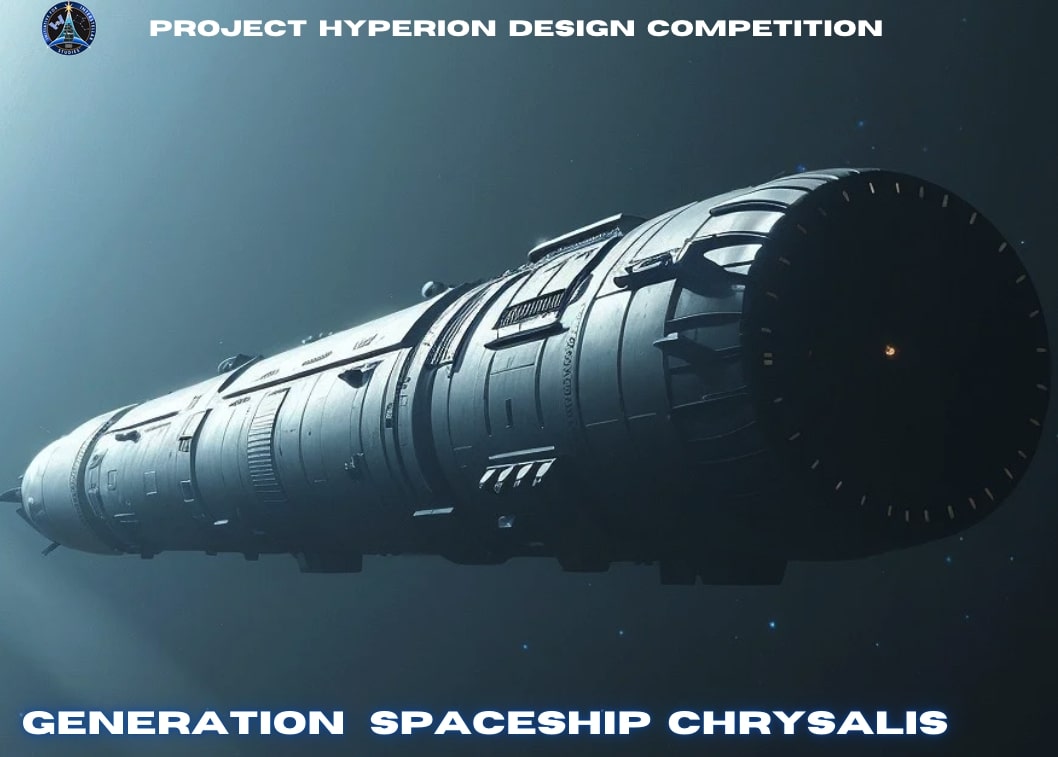
Among the varied and innovative designs submitted, three emerged as winners, each pushing the boundaries of interstellar travel potential. The winners' designs specifically highlighted innovative solutions to fundamental challenges related to life support, energy generation, and long-term space travel sustainability.
The Winning Designs
- The Astrophila Team: This team presented a ship with a groundbreaking approach to artificial gravity, utilizing rotating modules to simulate gravitational pull within the spacecraft, aiding in human physiological health over extensive voyages.
- Biogenesis Crusaders: Their design focused on bioregenerative systems, integrating advanced agricultural technologies to produce food and recycle life-support resources efficiently, modeling sustainable living environments in cosmic spaces.
- Starward Innovators: Distinguished by its energy management systems, this craft design employed a hybrid fusion-fission reactor, ensuring a sustainable and powerful energy source for the ship's long journey.
Expert Opinions on Generation Ships
"The viability of humanity's future rests not on insularity but on our expansion to the stars," - Professor Stephen Hawking
This notion is echoed in the goals of Project Hyperion. Dr. Rachel Armstrong, a notable astrobiologist, emphasized the importance of such endeavors by stating, "Our exploration into space isn't just about the journey; it's about ensuring humanity's continuity and understanding our place in the universe."
Implications for Future Explorations
As humanity looks towards the stars, generation ships may become the cornerstone for cosmic colonization. Researchers believe these crafts could one day carry thousands of people to new star systems, offering a lifeline for Earth's burgeoning population and potential resource scarcity. The bioengineered systems demonstrated by the competition's entrants showcase the possibility of self-sufficient, closed-loop ecosystems, imitating Earth's natural processes.
To explore more about sustainable technologies and innovative ship designs, you might find this enlightening book on Amazon to delve into how current scientific discoveries pave the way towards our interstellar future.
For further reading on the implications of space colonization, check out articles on popular technology websites and NASA's dedicated section on space exploration advancements.
The enthusiasm and innovation showcased in the Project Hyperion Design Competition provide a glimpse into what may soon become humanity's next great journey. As scientific and technological collaborations continue to flourish, we inch closer to making these once-imaginary concepts a reality. Whether through educational programs or global conferences, anyone can contribute to this monumental cause by staying informed and supportive of interstellar exploration initiatives.
```
