
The Enigma of Mirror Cells: Science’s Brave New World
The Ambitious Quest for Mirror Cells
Dr. Kate Adamala's journey into synthetic biology began with a bold ambition: to craft a cell where the natural molecular structures were reversed. The idea, rooted in the concept of chirality, promised a revolutionary leap in understanding life's building blocks. However, as this journey progressed, concerns about the ethical and practical implications surfaced.
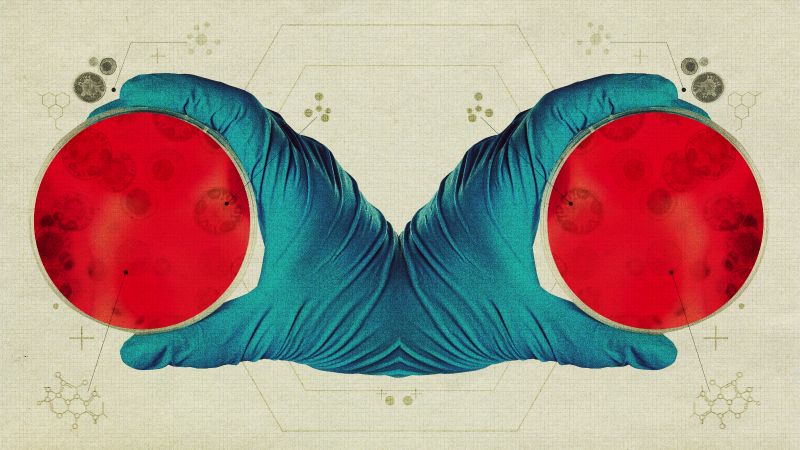
The pursuit of creating mirror cells wasn't just about scientific curiosity but also about unraveling the mysteries of life. Dr. Adamala's lab, equipped with cutting-edge technology and a team of dedicated researchers, embarked on what seemed an impossible mission. Yet, the specter of unintended consequences loomed large.
Unveiling the Dangers
As the research progressed, a doomsday scenario became evident. Mirror cells, in their theoretical potential, could outcompete natural cells, leading to unanticipated ecological consequences. This echoed concerns voiced by leading figures in science and philosophy, highlighting the thin line between progress and peril.
"Progress, far from consisting in change, depends on retentiveness. When change is absolute, there remains no being to improve and no direction is set for possible improvement: and when experience is not retained, as among savages, infancy is perpetual." - George Santayana
Scientists' Reactions and Ethical Concerns
Many in the scientific community share Adamala's caution. The ethical implications are manifold, raising questions parallel to those encountered with technologies like CRISPR. Should humanity create new forms of life? If such powers fall into the wrong hands, what safeguards are essential?
- The need for robust ethical guidelines.
- Ensuring transparency in scientific research.
- International collaboration to oversee synthetic biology advancements.
The Future of Synthetic Biology
Despite the inherent risks, mirror cells present a tantalizing future for medicine and industrial biology. Hyperlinked to renowned research papers (e.g., synthetic biology research paper), this field continues to capture interest worldwide. The transformative potential of this technology is undeniable.
For those keen on exploring the ramifications of such breakthrough science, the possibilities range from advanced therapeutic interventions to novel materials with unique properties. Further reading suggests synthetic biology could redefine societal norms as we know them.
Navigating the Unknown
At its core, the narrative of Dr. Adamala’s work serves as a testament to the spirit of scientific exploration. While challenges persist, the pursuit of understanding nature’s code remains relentless, guiding future generations in the delicate dance between innovation and responsibility.
Stay updated and explore the latest news from the realm of synthetic biology on LinkedIn and join the conversation around the ethics and innovations in this exciting field.
