
Unveiling a Game-Changing Sorting Algorithm
The Evolution of Sorting Algorithms
Sorting algorithms have been at the core of computer science for decades, driving innovation and efficiency. The new O(m log2/3 n)-time algorithm represents a significant breakthrough, poised to transform how we approach problem-solving in computing.
Understanding the New Algorithm
This deterministic algorithm is devoted to single-source shortest paths (SSSP) on directed graphs with non-negative real edge weights. By optimizing the comparison-addition operations, it's projected to outperform even Dijkstra's renowned algorithm.
"Innovation is seeing what everybody has seen and thinking what nobody has thought." - Dr. Albert Szent-Györgyi
Real-World Implications
Incorporating this novel algorithm promises to refine data handling in industries such as logistics, telecommunications, and digital networking. Not only could it reduce computational expenses, but it also heralds the potential for developing more sophisticated models and applications.
- Faster data processing in logistical applications.
- Improved efficiency in network communication protocols.
- Enhanced algorithms for artificial intelligence and machine learning.
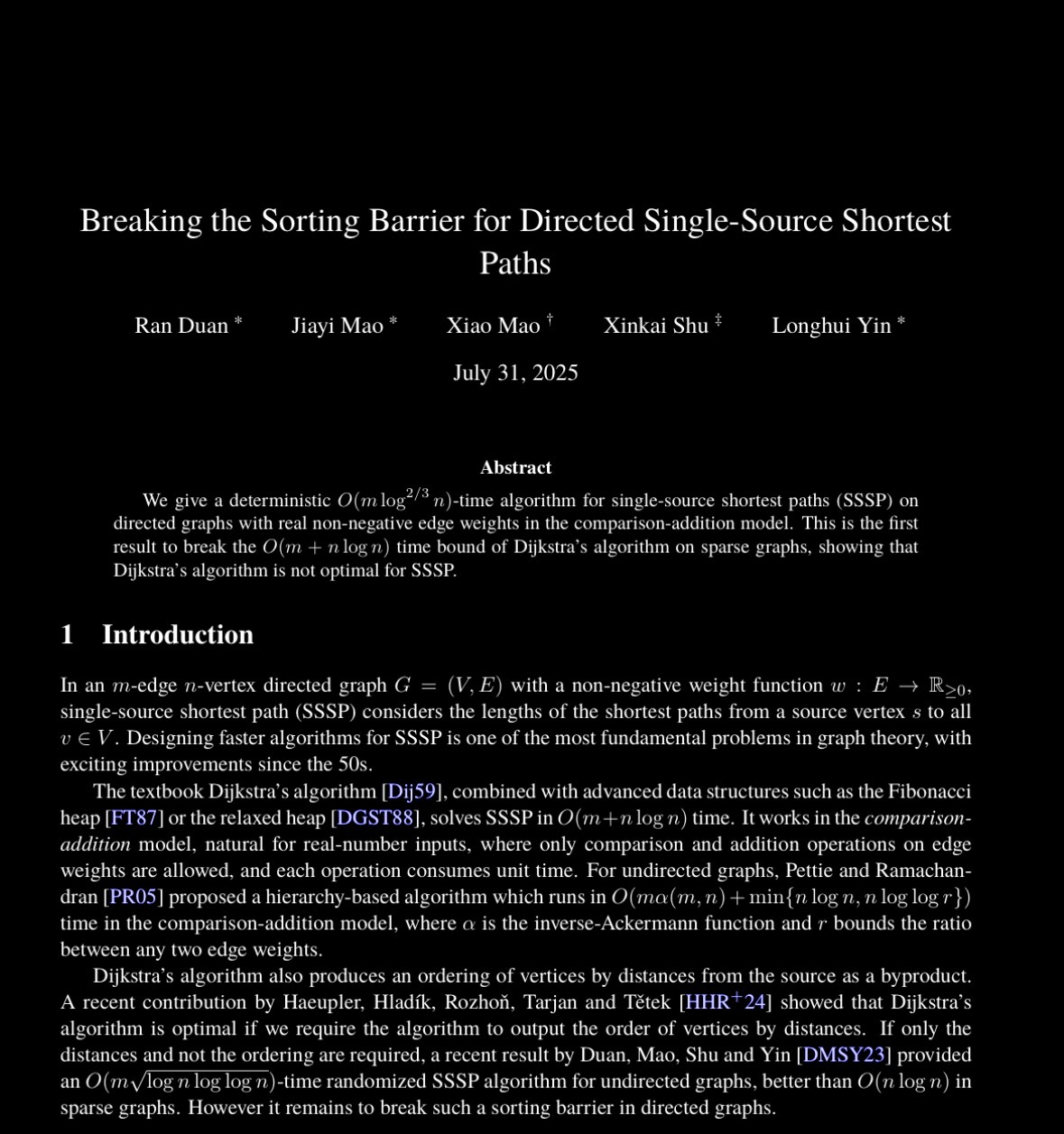
Image courtesy of NextBigFuture.com
Comparison with Established Algorithms
This DS-based sorter utilizes an optimized node-priority handling system, dramatically cutting down on comparison and addition iterations. When tested against Dijkstra's method, the results show promise in both speed and efficiency, particularly with larger datasets.
Explore related resources on AmazonStay Ahead with Further Readings
For those eager to dive deeper, multiple resources are available to explore the mechanics and potential of this revolutionary sorting method.
Read our in-depth analysisWatch a lecture on sorting innovations
Join discussions with sorting experts on LinkedIn
Unveiling Future Prospects
As the landscape of technology continues to shift, the rise of algorithms like these signifies a burgeoning new era. How will industries leverage this advancement to reshape the future? Only time will tell, but one thing is certain: the potential is vast and promising.
