
Trump's Unexpected Moves Shake Up the Federal Reserve
Understanding the President's Unprecedented Action
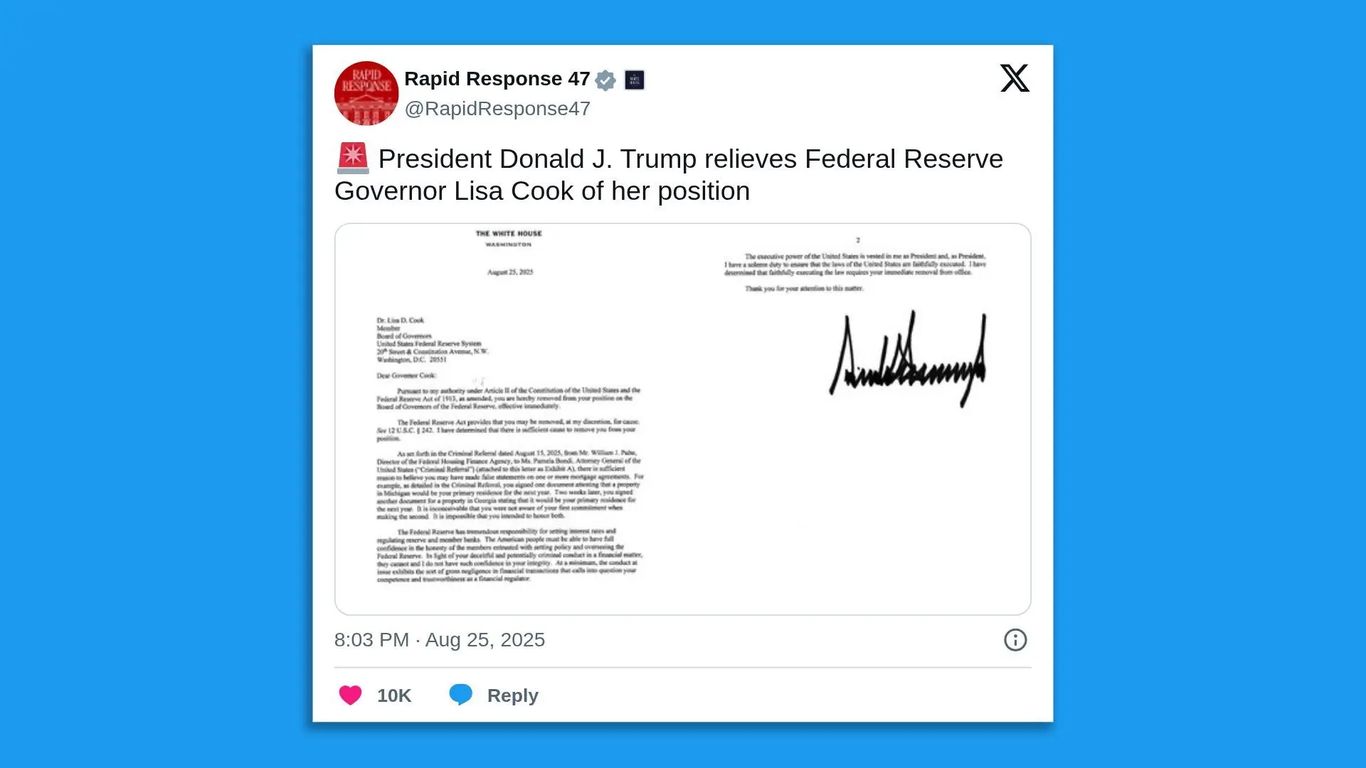
In the latest chapter of tumultuous American politics, President Trump made headlines by asserting his authority to remove a member of the Federal Reserve Board. This act has brought forth a critical discussion about the powers vested in the executive branch versus independent economic institutions.
The Legal Controversy
President Trump's decision to remove a Federal Reserve governor citing Article II of the Constitution has led to a significant legal debate. The question remains whether such a maneuver aligns with the legal boundaries set by the 1913 Federal Reserve Act. While presidential advisors point to constitutional empowerment, legal experts argue for a more stringent interpretation.
"The independence of the Federal Reserve is crucial to maintaining a stable economic policy, free from political influence," stated John Smith, a renowned economist and author of Economic Independence.
The Impact on Economic Policy
The ripple effects of Trump's actions on the economy are yet to be fully understood. Economists are closely monitoring how these political maneuvers will affect market stability and investor confidence. Historically, the Federal Reserve operates independently from governmental changes to ensure unbiased economic strategies.
- Potential shifts in interest rates
- Changes in monetary policy direction
- Impact on international markets
A Historical Perspective
The notion of a president influencing the Federal Reserve has minimal historic precedent. Such moves challenge the foundation of economic autonomy and suggest a potential shift towards increased executive control over monetary policy. Experts and historians continue to evaluate similar past instances to forecast future implications.
Check out this informative YouTube documentary analyzing previous challenges to Fed independence.
Public Reactions and Political Implications
The reaction to Trump's decision has been polarizing, with supporters praising a bold move towards economic accountability, while critics warn of the dangers of politicizing financial institutions. The unfolding drama may shape the upcoming political landscape, influencing both domestic and international policy.
For more detailed insights, explore our coverage on New York Times.
As the story develops, the intersection of politics and economics will remain under close scrutiny. Stakeholders across all sectors anticipate further clarifications and potential amendments to existing policies.
