
A Glimpse into New Frontiers: Inflatable StarShade Revolutionizes Exoplanet Imaging
The Concept Behind Inflatable StarShade
The Inflatable StarShade, a project led by NASA's John Mather, represents a leap forward in exoplanetary research. Its unique design aims to block the light from stars, enabling telescopes to capture clearer images of planets orbiting them. This technology is crucial for the detection of Earthlike exoplanets and understanding their atmospheres and potential habitability.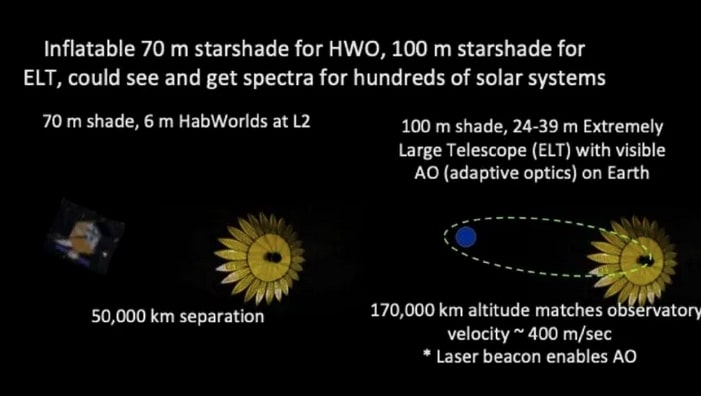
Understanding the Mechanics of StarShade
Design and Implementation
The StarShade's inflatable design allows for varied sizes, from 35 to 100 meters in diameter. This flexibility is key in accommodating different telescope configurations. The design process incorporates advanced materials that ensure durability and reliability in the harsh conditions of space.Operational Advantages
- Enhanced Image Quality: By blocking out the stellar light, telescopes can obtain high-resolution images.
- Cost Efficiency: The inflatable nature reduces launch costs compared to rigid structures.
- Scalability: Can be adjusted for various missions based on specific requirements.
"StarShade's development marks a new era in space exploration, promising to unlock mysteries of planets outside our solar system." - John Mather
Broader Implications in Astronomy
Beyond discovering new planets, the StarShade could provide insights into the atmospheres of these worlds, offering clues about potential life or habitability conditions. Its ability to differentiate light waves will be crucial in understanding chemical compositions, possibly revealing biomarkers or signs of life.Expanding Knowledge Horizons
NASA's continuous advancements in this field are inspiring a new generation of scientists and researchers. By pushing the boundaries of current astronomical capabilities, innovations like the StarShade promise a future where sight into distant worlds is more accessible than ever before.Further Reading and Resources:
Continue Reading at Source : Next Big Future
Tags:
Science
