
Unlocking the Acoustic Stealth Cloak of Moths: What Insects Can Teach Us About Dealing with Noise
Key Highlights :
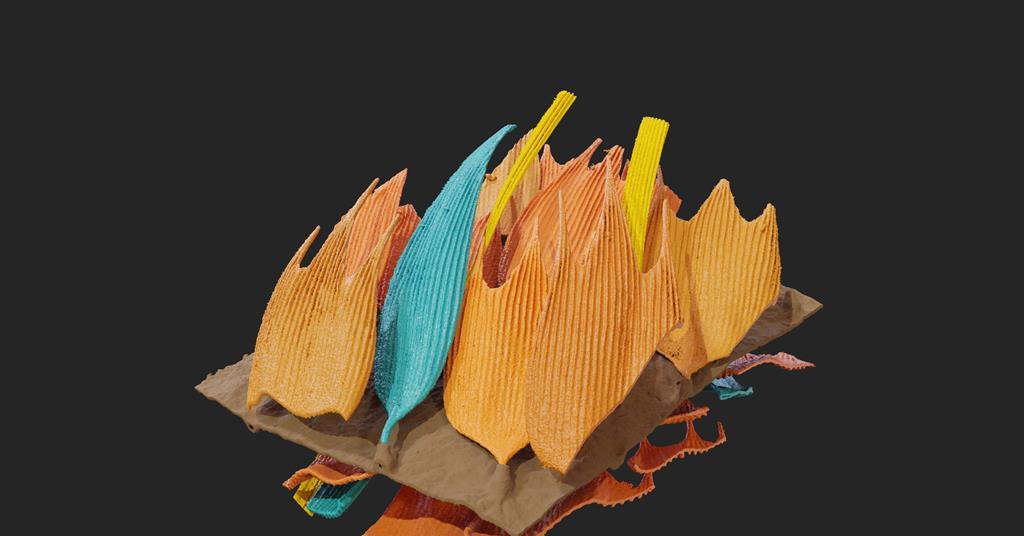
In the modern world, noise pollution is a growing issue that affects the health and wellbeing of many people. In urban environments, noise stands as the second-largest environmental health risk, causing substantial negative health effects and incurring substantial costs. Researchers from the University of Bristol and Diamond Light Source have uncovered how moths create a powerful stealth cloak that prevents detection by biosonar, providing a potential solution for dealing with noise.
Led by Professor Marc Holderied, Professor of Sensory Biology and a sensory ecologist and bio-acoustician, the research team has dedicated over 20 years to studying bats and their extraordinary ability to navigate and catch prey using echolocation. Drawing lessons from an anti-echolocation stealth cloak he discovered in the insect world, Professor Holderied has now embarked on a mission to develop bio-inspired sound absorbers to help make the world quieter and healthier.
By harnessing the ingenious properties of moth wings, a sound absorber can be created that offers high absorption with minimal space requirements. The goal is to improve living conditions as such moth-inspired sound absorbers can be 90% thinner and lighter than existing solutions, bringing exotic materials like sound absorbing wallpaper in reach.
One captivating discovery from Prof Holderied's research revolves around the remarkable adaptation of moths, particularly silk moths. These night-flying insects lack more typical defensive mechanisms like ultrasound sensitive ears, instead they rely solely on acoustic camouflage provided by their furry bodies and the thin layer of overlapping scales on their wings. The removal of the fur or the scales makes their echoes louder. This means fur and scales absorb the sounds used by bats creating a powerful stealth cloak against detection by biosonar and a fascinating acoustic defense.
Additionally, the team discovered the thin layer of overlapping scales on their wings also acts as an acoustic metamaterial —the only one known to occur in nature- with exceptional sound-dampening properties. This discovery holds tremendous potential for replicating this exceptional natural sound absorber in noise control applications that can profit all of us.
To further investigate the acoustic-structural properties of the wings, the imaging of moth wings at Diamond Light Source, the UK's national synchrotron, played a crucial role. With in-line phase contrast tomography, the minute details of the structures were explored, providing key data for the acoustic simulations.
Using a method called ptychography, the pattern of the scattered X-ray light waves was reconstructed and is not constrained by the resolution of detectors or X-ray optics. This provides an unprecedented high-resolution imaging capability, necessary for the simulation of the acoustic simulations in the following.
Overall the multi-scale capabilities of the I13 Beamline for Imaging and Coherence provide a holistic approach to identify and understand the different sound absorbing structures, protecting moths from their predators. Beyond noise control, Professor Holderied emphasizes the crucial role of biodiversity and the need to defend every organism sharing our habitat.
By embracing nature's teachings, we can unlock a wealth of solutions for a more sustainable and harmonious world. The work of Professor Holderied and his team in bio-inspired sound absorbers showcases the immense potential of nature's adaptations in solving complex health challenges.
